Anatolian Shepherd Dog
Anatolian Shepherds are calm, watchful guardians who form deep bonds with their families. Bred for centuries to protect livestock, they bring that same steady, observant nature into the home — often choosing to quietly watch over the household rather than demand constant attention. With their own family, including children they've grown up with, they tend to be patient and gentle, though their large size means supervision is always wise. They can be aloof with visitors and naturally suspicious of unfamiliar people and animals, so early socialization is essential.
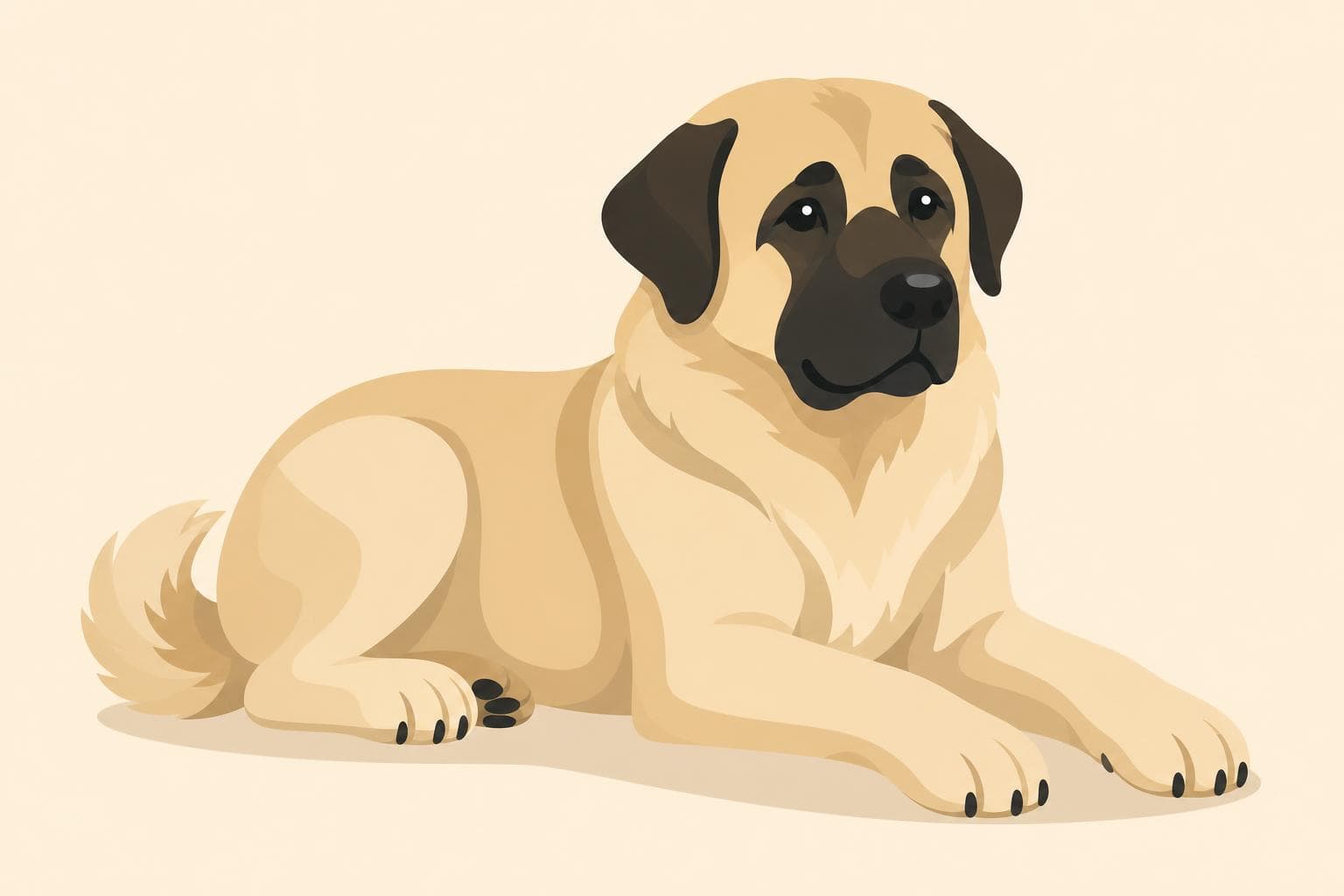
Behavior & traits
- devoted to family
- naturally protective
- gentle with their own children
- independent thinker
- wary of strangers
Health concerns
Anatolian Shepherds are generally a hardy, long-lived giant breed, but families should watch for hip and elbow dysplasia, hypothyroidism, and bloat (gastric torsion), which is a serious risk in deep-chested dogs. Like many large breeds, they can also be sensitive to anesthesia, so it's worth finding a vet experienced with giant working breeds. Routine joint care and weight management go a long way toward keeping them comfortable into their senior years.
Responsible breeding and regular check-ups go a long way. Always ask breeders about health testing.
Feeding & nutrition
Expect to feed a high-quality large-breed formula, typically 4–6 cups per day split into two meals to reduce bloat risk. Puppies especially need a large-breed growth diet to support slow, steady bone development — overfeeding a young Anatolian can lead to lifelong joint problems. Always provide fresh water and avoid heavy exercise right after meals.
Exercise needs
Despite their size, Anatolians have moderate exercise needs — a couple of long daily walks plus secure yard time usually does the trick. They're not built for jogging or repetitive fetch sessions; they prefer purposeful activity like patrolling the yard, hiking, or simply keeping an eye on the family. A securely fenced yard is essential, as they have a strong roaming and territorial instinct.
Living with a Anatolian Shepherd Dog
Living with an Anatolian Shepherd is a bit like sharing your home with a wise, quiet sentry who happens to adore you. They're surprisingly calm indoors, often content to stretch out near the family while keeping one ear tuned to every sound outside. Expect serious barking at night — it's their job, and they take it seriously — along with twice-yearly heavy shedding seasons that will test your vacuum. They're independent thinkers, so they may weigh your requests before deciding to comply, which can surprise first-time owners expecting eager obedience. Families who appreciate a dignified, devoted companion (and don't mind a dog who thinks the mail carrier is highly suspicious) will find them deeply rewarding.
Recommended products
A sturdy, no-pull harness and a strong 6-foot leash are must-haves for managing their size and strength on walks. Invest in an elevated, large-breed feeder and consider a slow-feed bowl to help reduce bloat risk, plus an extra-large orthopedic bed to support their joints. A heavy-duty undercoat rake and de-shedding brush will become your best friends during shedding season, and durable chew toys made for powerful jaws (like rubber Kong Extreme or natural antlers) help keep them mentally satisfied.
Reads for Anatolian Shepherd Dog owners
![[header] A calm owner sitting on the floor with a relaxed dog leaning](/_next/image?url=https%3A%2F%2Fimages.ctfassets.net%2Fq8y32akc6zms%2F2ciptjZRZ8GgpFJqmXxaM6%2F4e013e2dced5e35a2072e8087e60bb16%2Fheader.jpg&w=3840&q=75)
The Calm Anchor: The Owner Archetype Reactive and Nervous Dogs Settle Best With
The Calm Anchor is the owner whose nervous system doesn't join in when a walk goes sideways — and that steadiness is exactly what a reactive or anxious dog needs to borrow from. If your assessment landed you here, this is the full portrait: what your calm does for a dog, the dog personalities most likely to thrive under your roof, and the one habit that quietly holds you back.
![[header] Border Collie with puzzle toys](/_next/image?url=https%3A%2F%2Fimages.ctfassets.net%2Fq8y32akc6zms%2F7eTvC6qBF3gqDFvQSzcpXM%2Fa35b628bfd670bfc52bf4bcd532fc1b6%2Fheader.jpg&w=3840&q=75)
Engaging Activities for Border Collies: A How-To Guide
Is your Border Collie always on the lookout for something to do? Dive into engaging mental activities that will keep their sharp minds busy and entertained!
![[header] Senior dog resting on an orthopedic bed while a puppy waits](/_next/image?url=https%3A%2F%2Fimages.ctfassets.net%2Fq8y32akc6zms%2F4EwnObSBED8EN4IbvFJgaN%2Fc15a1446d531fd28d8e6854c46c3de7f%2Fheader.jpg&w=3840&q=75)
Before the Puppy Arrives: A Pre-Arrival Checklist for Your Senior Dog
Your calm senior dog has been quietly compensating for aches, stiffness, and fading senses for years — and a new puppy is about to expose all of it. This pre-arrival checklist walks you through the vet workup, pain baseline, and home setup to tackle in the weeks *before* pickup day, so your older dog isn't blindsided by the chaos.