Basset Hound
Basset Hounds are mellow, lovable companions with a soft spot for their humans, especially the little ones. They tend to be laid-back around the house but light up on walks when their incredible nose takes over. Originally bred to hunt in packs, they're naturally social and usually get along beautifully with kids, other dogs, and even cats. Just be prepared for a healthy dose of stubbornness paired with that famous soulful expression.
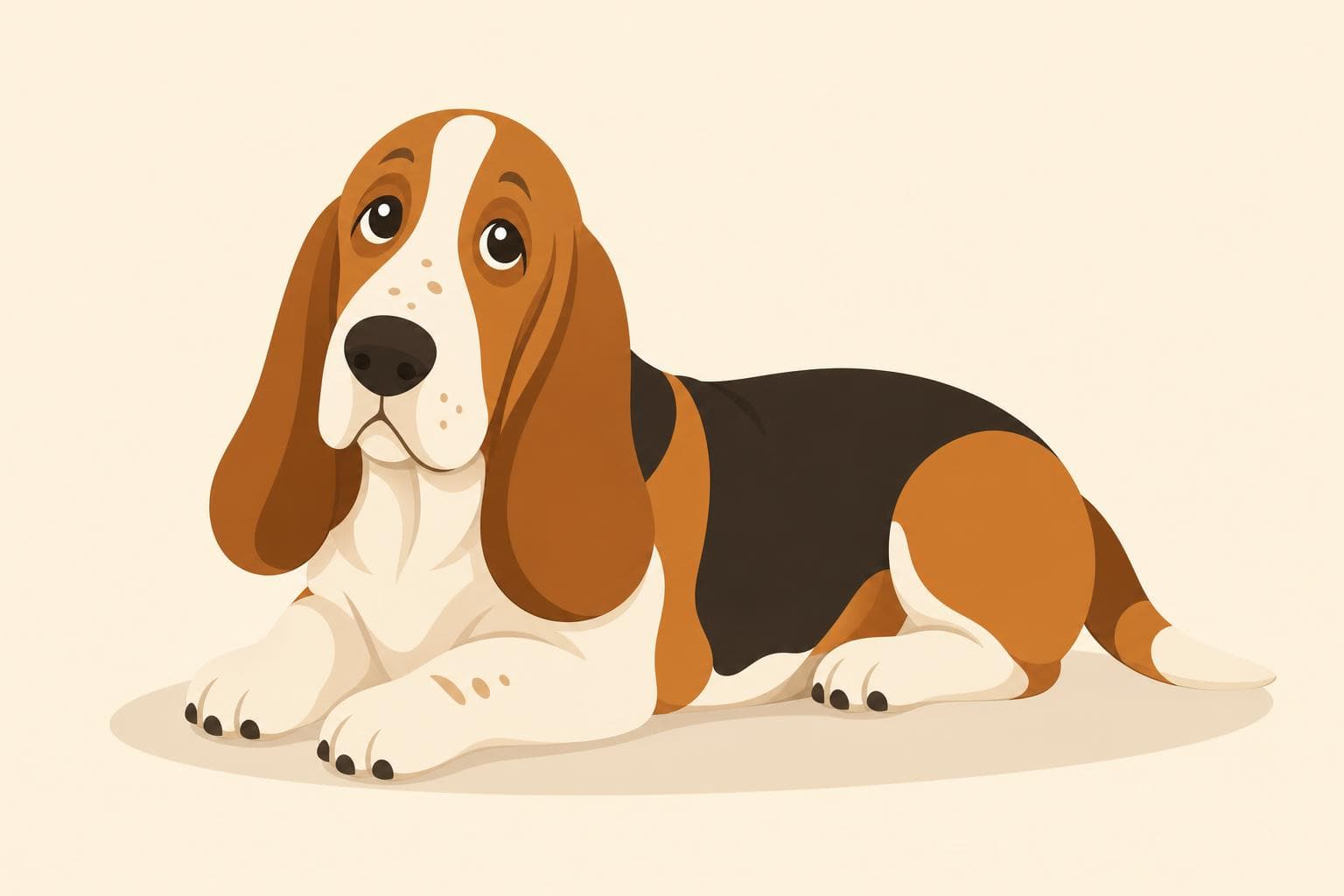
Behavior & traits
- wonderful with kids
- calm indoors
- scent driven
- sociable with other pets
- famously stubborn
Health concerns
Because of their long backs and short legs, Bassets are prone to spinal issues like intervertebral disc disease, as well as hip and elbow dysplasia. Their long, floppy ears trap moisture and need regular cleaning to prevent infections. Families should also watch for obesity, bloat, and eye conditions like glaucoma and cherry eye.
Responsible breeding and regular check-ups go a long way. Always ask breeders about health testing.
Feeding & nutrition
A high-quality dog food appropriate for medium breeds works well, but portion control is critical — Bassets will happily eat far more than they need and gain weight quickly. Splitting meals into two measured servings a day and limiting table scraps helps protect their back and joints. Always have fresh water available, especially after their nose-led outdoor adventures.
Exercise needs
Despite their lazy reputation, Bassets need a solid 30–60 minutes of daily exercise to stay healthy and trim. A couple of leisurely walks and some sniff-heavy backyard time usually does the trick, and families with kids will find the dog happily tags along on neighborhood strolls. Avoid stairs and jumping from furniture whenever possible to protect their long spine.
Living with a Basset Hound
Living with a Basset Hound means embracing a slower, sweeter pace of life. They're famously cuddly couch companions who somehow manage to take up the whole sofa despite their short stature, and their deep bay or mournful howl is something every family quickly learns to love (or laugh at). Expect drool on your jeans, ears that need weekly cleaning, and a dog who selectively ignores you the moment an interesting smell enters the picture. Kids adore them because Bassets are remarkably patient and gentle, often tolerating tail tugs and dress-up sessions with a wag and a sigh. They're not the dog for tidy households — between shedding, drool, and a love of food — but they make up for it with unmatched affection and a goofy charm that wins everyone over.
Recommended products
A no-pull harness is essential since Bassets pull hard when their nose catches a scent, and a sturdy leash gives you better control on walks. Stock up on ear-cleaning solution and soft cotton pads for weekly ear care, plus a rubber curry brush to manage their year-round shedding. A raised, shallow food bowl helps with their build, and a slow-feeder can curb their tendency to inhale meals. Finally, an orthopedic dog bed and a ramp for the couch or car will protect their long back for years to come.
Reads for Basset Hound owners
Meet The Professional Napper: The Dog Archetype Who Turns Rest Into an Art Form
If your dog treats the couch like a career, this one's for them. The Professional Napper is a gentle, sociable, low-gear archetype — the dog who wants a sunbeam, a short walk, and you in the same room. Here's what it means, who they thrive with, and the one thing owners get wrong about "low energy."
![[header] A calm owner reading in an armchair with a small dog curled](/_next/image?url=https%3A%2F%2Fimages.ctfassets.net%2Fq8y32akc6zms%2F7F3uPDUQoNFW8TMbODtMjk%2Ffac8de70c2800e074aae0a155a228d2a%2Fheader.jpg&w=3840&q=75)
The Homebody Companion: An Owner Archetype for the Quietly Devoted
Got The Homebody Companion on your LiveLaughWoof assessment? You're the person who builds a slow, warm, deeply affectionate life with a dog — and there's a very specific kind of dog who dreams about a home like yours. Here's what your result actually means, the temperaments that match you best, and the one growth edge worth naming out loud.
![[header] A calm owner kneeling to gently greet a shy dog in a warm, c](/_next/image?url=https%3A%2F%2Fimages.ctfassets.net%2Fq8y32akc6zms%2F7pRiv1OyOYMEgI5bKgN03p%2Fe1c80b50be7e816be10966146bbe742d%2Fheader.jpg&w=3840&q=75)
The Devoted Nurturer: The Owner Archetype Where Sensitive Dogs Bloom
Some owners are the reason a nervous rescue finally exhales. If your assessment came back as The Devoted Nurturer, this is you — patient, routine-driven, and quietly exceptional with sensitive dogs. Here's what that says about how you show up, the one habit worth watching, and the dog personalities that fit you best.