Black and Tan Coonhound
Black and Tan Coonhounds are big, mellow softies who adore their families and tend to be wonderfully patient with children. Bred to work independently on a scent trail, they have a curious, single-minded streak that can lead them to follow their nose right out of the yard if given the chance. At home, they're surprisingly laid-back — often happy to sprawl on the couch after a good outing — but they're also famously vocal, with a deep, melodious bay that's part of their charm (and sometimes part of the chaos).
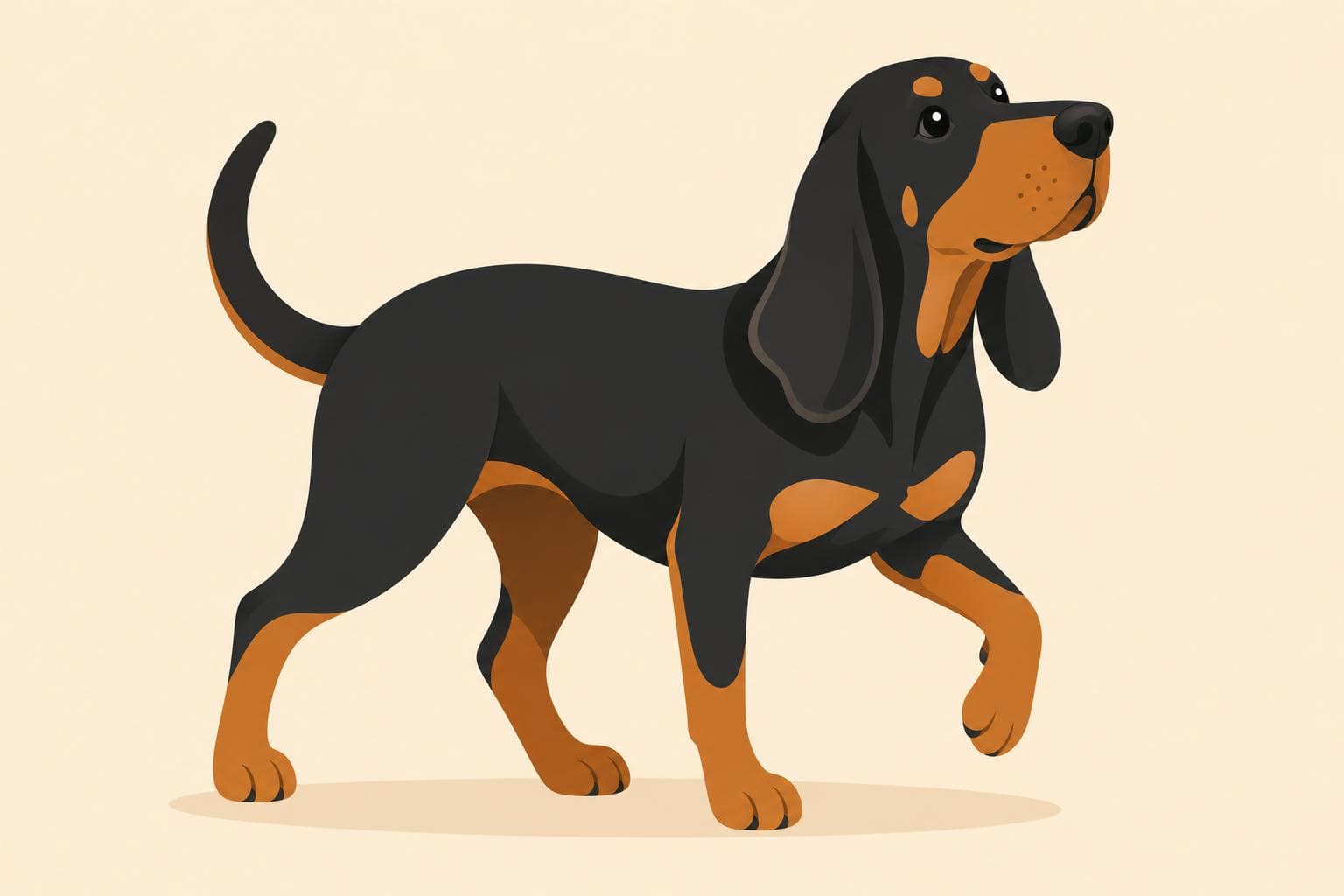
Behavior & traits
- gentle with kids
- scent driven
- sociable
- stubborn streak
- loud baying voice
Health concerns
Like many large hounds, Black and Tans can be prone to hip dysplasia, ear infections (those long floppy ears trap moisture), and bloat (gastric torsion). Families should also watch for eye issues like ectropion and keep an eye on weight, as extra pounds put stress on their joints. Routine vet checks and weekly ear cleanings go a long way toward keeping them healthy.
Responsible breeding and regular check-ups go a long way. Always ask breeders about health testing.
Feeding & nutrition
A high-quality large-breed dog food, measured into two meals a day, helps prevent both bloat and unwanted weight gain. Most adults eat around 3 to 5 cups daily depending on size and activity level, and puppies benefit from a large-breed formula to support steady joint growth. Avoid heavy exercise right after meals, and skip the table scraps — these hounds will absolutely beg with those soulful eyes.
Exercise needs
Plan on at least an hour of solid exercise daily, including long leashed walks, hikes, or securely fenced romps where they can sniff to their heart's content. Scent games, tracking activities, and puzzle toys are fantastic ways to tire out their busy noses and minds. Family bike rides, backyard play with the kids, and weekend trail adventures suit them beautifully.
Living with a Black and Tan Coonhound
Living with a Black and Tan Coonhound means embracing a happy mix of couch potato and outdoor adventurer. Mornings often start with a leisurely walk where every blade of grass must be investigated, and evenings usually end with a giant hound draped across someone's lap — they truly believe they're lap dogs. Families quickly learn that the famous coonhound bay is part of daily life, so close neighbors and apartment living usually aren't ideal. Kids tend to adore them because they're patient, playful without being frantic, and forgiving of the noise and bustle of family life. The biggest surprise for new owners? That nose. If they catch an interesting scent, training can go right out the window, so a fenced yard and a sturdy leash are non-negotiable.
Recommended products
A strong 6-foot leash and a well-fitted no-pull harness are essential for managing that scent-driven pull on walks. Invest in a gentle ear-cleaning solution and soft cotton pads to keep those long ears healthy, plus a large orthopedic bed to support aging joints. Snuffle mats, food puzzles, and durable chew toys help satisfy their nose and mind, and a slow-feeder bowl is a smart choice to reduce the risk of bloat at mealtime.
Reads for Black and Tan Coonhound owners
![[header] Border Collie with puzzle toys](/_next/image?url=https%3A%2F%2Fimages.ctfassets.net%2Fq8y32akc6zms%2F7eTvC6qBF3gqDFvQSzcpXM%2Fa35b628bfd670bfc52bf4bcd532fc1b6%2Fheader.jpg&w=3840&q=75)
Engaging Activities for Border Collies: A How-To Guide
Is your Border Collie always on the lookout for something to do? Dive into engaging mental activities that will keep their sharp minds busy and entertained!
![[header] Senior dog resting on an orthopedic bed while a puppy waits](/_next/image?url=https%3A%2F%2Fimages.ctfassets.net%2Fq8y32akc6zms%2F4EwnObSBED8EN4IbvFJgaN%2Fc15a1446d531fd28d8e6854c46c3de7f%2Fheader.jpg&w=3840&q=75)
Before the Puppy Arrives: A Pre-Arrival Checklist for Your Senior Dog
Your calm senior dog has been quietly compensating for aches, stiffness, and fading senses for years — and a new puppy is about to expose all of it. This pre-arrival checklist walks you through the vet workup, pain baseline, and home setup to tackle in the weeks *before* pickup day, so your older dog isn't blindsided by the chaos.
![[header] Small dog wearing a soft mesh harness walking on a sunny pat](/_next/image?url=https%3A%2F%2Fimages.ctfassets.net%2Fq8y32akc6zms%2F3p03PzT9zANgbTC9dAOMJ2%2Ff95efe8539856e9489ef9bd4e861c4ba%2Fheader.jpg&w=3840&q=75)
Comfortable Harnesses for Small Dogs Prone to Tracheal Collapse
Is your small dog coughing from their collar? Discover harnesses designed for pups prone to tracheal collapse, offering protection and comfort with every walk.