Bloodhound
Bloodhounds are famously gentle giants with a calm, affectionate nature that makes them wonderful family companions. They're patient with children and tend to be sociable with other dogs, though their world is ruled by their nose — once they catch a scent, the rest of the world fades away. Expect a dog that's mellow indoors, lovably stubborn, and prone to dramatic baying and houndy vocalizations when something piques their interest.
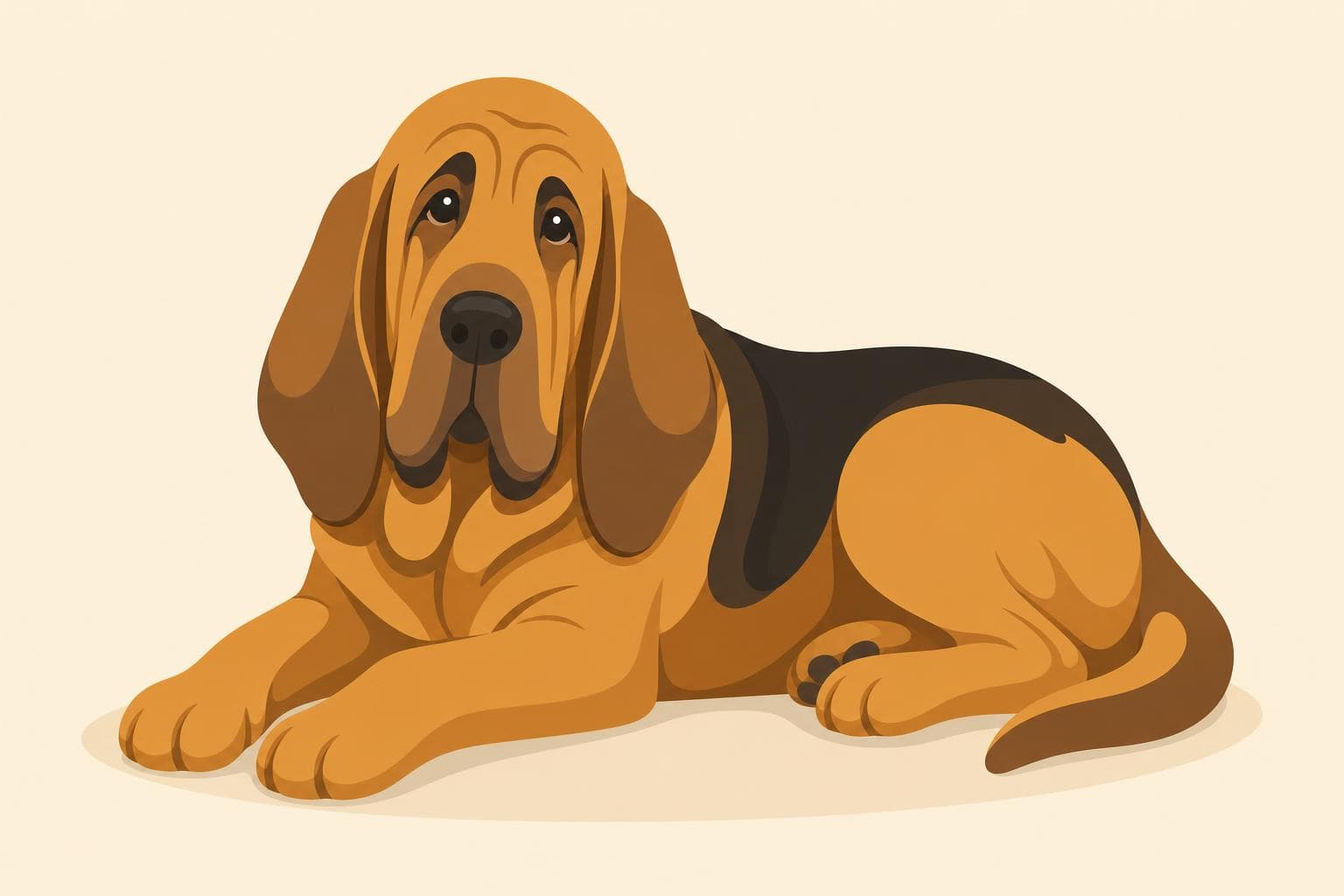
Behavior & traits
- gentle with kids
- scent driven
- sociable
- stubborn but sweet
- vocal
Health concerns
Bloodhounds are prone to bloat (gastric torsion), which can be life-threatening, so families should learn the warning signs and consider slow-feeder bowls. They're also susceptible to hip and elbow dysplasia, ear infections due to their long floppy ears, and skin fold irritation. Regular vet check-ups and proactive ear and wrinkle cleaning go a long way.
Responsible breeding and regular check-ups go a long way. Always ask breeders about health testing.
Feeding & nutrition
A high-quality large-breed dog food split into two or three smaller meals helps reduce bloat risk and supports their joints. Most adult Bloodhounds eat 4–8 cups daily depending on age and activity, and treats should be measured carefully since they can pack on weight quickly. Always keep fresh water available and avoid heavy exercise right before or after meals.
Exercise needs
Bloodhounds need about an hour of daily exercise — long, leashed walks where they can sniff to their heart's content are ideal, since their nose drives them to roam. A securely fenced yard is essential, as they will follow a scent for miles without looking back. Scent-based games like hide-and-seek with treats are a wonderful way for kids and parents to engage them mentally.
Living with a Bloodhound
Living with a Bloodhound is equal parts charming and comedic — they're laid-back loungers who often sprawl across the couch (or your feet) and follow the family from room to room. Be prepared for drool, lots of it, especially after meals and water breaks; keeping 'drool towels' around the house becomes a real thing. Their deep, melodic bay is unforgettable, and while they're not constant barkers, they will announce visitors or interesting smells with operatic flair. Families quickly learn that walks take twice as long because every blade of grass deserves investigation, and recall is unreliable once a scent is locked in. Despite the quirks, their sweet, soulful nature and tolerance of kids' antics make them deeply lovable household members.
Recommended products
A sturdy front-clip harness or martingale collar is essential for managing their powerful pull on scent trails, paired with a strong 6-foot leash (never trust off-leash). Stock up on drool towels, gentle ear-cleaning solution, and wrinkle wipes for their skin folds, plus a slow-feeder bowl and elevated feeder to help reduce bloat risk. A large orthopedic dog bed supports their joints, and snuffle mats or scent-based puzzle toys give their incredible nose a healthy outlet indoors.
Reads for Bloodhound owners
![[header] Border Collie with puzzle toys](/_next/image?url=https%3A%2F%2Fimages.ctfassets.net%2Fq8y32akc6zms%2F7eTvC6qBF3gqDFvQSzcpXM%2Fa35b628bfd670bfc52bf4bcd532fc1b6%2Fheader.jpg&w=3840&q=75)
Engaging Activities for Border Collies: A How-To Guide
Is your Border Collie always on the lookout for something to do? Dive into engaging mental activities that will keep their sharp minds busy and entertained!
![[header] Senior dog resting on an orthopedic bed while a puppy waits](/_next/image?url=https%3A%2F%2Fimages.ctfassets.net%2Fq8y32akc6zms%2F4EwnObSBED8EN4IbvFJgaN%2Fc15a1446d531fd28d8e6854c46c3de7f%2Fheader.jpg&w=3840&q=75)
Before the Puppy Arrives: A Pre-Arrival Checklist for Your Senior Dog
Your calm senior dog has been quietly compensating for aches, stiffness, and fading senses for years — and a new puppy is about to expose all of it. This pre-arrival checklist walks you through the vet workup, pain baseline, and home setup to tackle in the weeks *before* pickup day, so your older dog isn't blindsided by the chaos.
![[header] Small dog wearing a soft mesh harness walking on a sunny pat](/_next/image?url=https%3A%2F%2Fimages.ctfassets.net%2Fq8y32akc6zms%2F3p03PzT9zANgbTC9dAOMJ2%2Ff95efe8539856e9489ef9bd4e861c4ba%2Fheader.jpg&w=3840&q=75)
Comfortable Harnesses for Small Dogs Prone to Tracheal Collapse
Is your small dog coughing from their collar? Discover harnesses designed for pups prone to tracheal collapse, offering protection and comfort with every walk.