Bluetick Coonhound
Bluetick Coonhounds are warm-hearted, sociable dogs that bond deeply with their families and tend to be wonderfully patient with children. They have a goofy, laid-back side at home but switch into focused, nose-to-the-ground mode the moment they catch an interesting scent. Bred to hunt in packs, they generally get along well with other dogs and thrive on companionship — a lonely Bluetick is often a noisy, mischievous one.
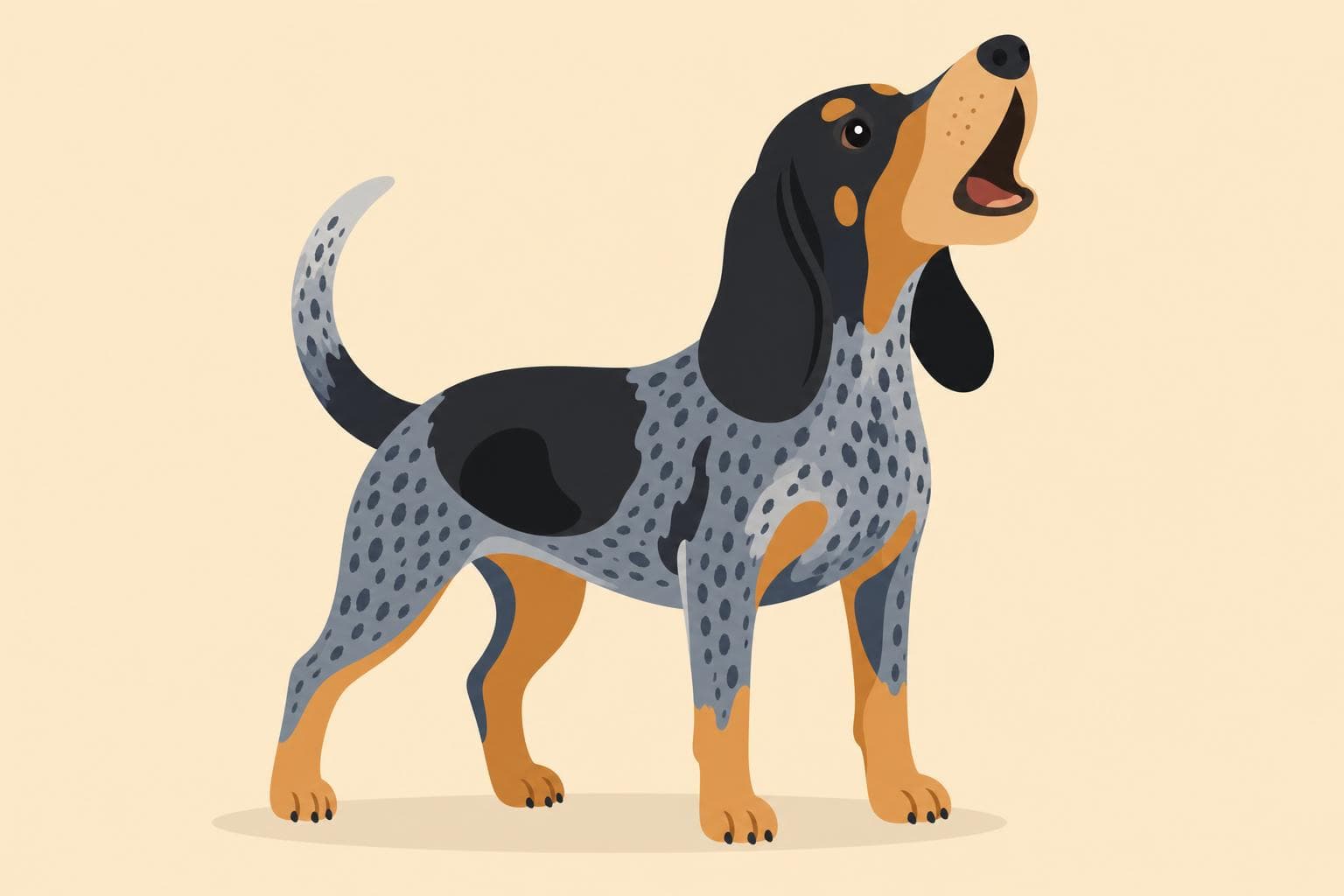
Behavior & traits
- affectionate with family
- great with kids
- social with other dogs
- strong scent drive
- loud bay
Health concerns
Blueticks are generally hardy, but their long, floppy ears can trap moisture and lead to ear infections if not checked regularly. Families should also be aware of hip dysplasia and bloat (gastric torsion), which is a concern in deep-chested breeds. Routine vet checkups and weight management go a long way in keeping them healthy.
Responsible breeding and regular check-ups go a long way. Always ask breeders about health testing.
Feeding & nutrition
Most Blueticks do well on a high-quality large-breed dog food, typically 2.5 to 4 cups per day split into two meals to help prevent bloat. Because they're scent-driven and food-motivated, treats are a great training tool — just watch the calorie count to avoid extra pounds. Always provide fresh water, especially after long walks or play sessions.
Exercise needs
This is an athletic, high-energy breed that needs at least 60–90 minutes of vigorous exercise daily, including long walks, hikes, or securely fenced romps. Scent games, sniff walks, and tracking activities are wonderful ways for families to engage their Bluetick's natural instincts. Without enough exercise, they can become restless, vocal, and creatively destructive.
Living with a Bluetick Coonhound
Living with a Bluetick Coonhound is equal parts joyful and entertaining — they're cuddly couch companions one minute and tracking a mystery scent across the yard the next. Families quickly learn that 'the bay' is real: that deep, melodious howl is charming but can surprise neighbors, so they're best suited to homes with a bit of space. They follow their noses everywhere, which means a securely fenced yard and a leash on walks are absolute musts. Kids tend to adore them because Blueticks are patient, playful, and rarely snippy, and they often form an especially sweet bond with one family member who becomes 'their person.' Expect muddy paws, drool on the couch, and a dog who will absolutely tell you when the mail carrier arrives.
Recommended products
A sturdy no-pull harness and a 6-foot leash are essential, since Blueticks will follow their nose with surprising strength — retractable leashes aren't recommended. Invest in a slow-feeder or elevated bowl to support healthy mealtime habits, plus weekly ear-cleaning solution to prevent infections in those long, floppy ears. For mental stimulation, snuffle mats and scent-based puzzle toys are perfect for this nose-driven breed, and a rubber curry brush will easily handle their short, shedding coat.
Reads for Bluetick Coonhound owners
![[header] Border Collie with puzzle toys](/_next/image?url=https%3A%2F%2Fimages.ctfassets.net%2Fq8y32akc6zms%2F7eTvC6qBF3gqDFvQSzcpXM%2Fa35b628bfd670bfc52bf4bcd532fc1b6%2Fheader.jpg&w=3840&q=75)
Engaging Activities for Border Collies: A How-To Guide
Is your Border Collie always on the lookout for something to do? Dive into engaging mental activities that will keep their sharp minds busy and entertained!
![[header] Senior dog resting on an orthopedic bed while a puppy waits](/_next/image?url=https%3A%2F%2Fimages.ctfassets.net%2Fq8y32akc6zms%2F4EwnObSBED8EN4IbvFJgaN%2Fc15a1446d531fd28d8e6854c46c3de7f%2Fheader.jpg&w=3840&q=75)
Before the Puppy Arrives: A Pre-Arrival Checklist for Your Senior Dog
Your calm senior dog has been quietly compensating for aches, stiffness, and fading senses for years — and a new puppy is about to expose all of it. This pre-arrival checklist walks you through the vet workup, pain baseline, and home setup to tackle in the weeks *before* pickup day, so your older dog isn't blindsided by the chaos.
![[header] Small dog wearing a soft mesh harness walking on a sunny pat](/_next/image?url=https%3A%2F%2Fimages.ctfassets.net%2Fq8y32akc6zms%2F3p03PzT9zANgbTC9dAOMJ2%2Ff95efe8539856e9489ef9bd4e861c4ba%2Fheader.jpg&w=3840&q=75)
Comfortable Harnesses for Small Dogs Prone to Tracheal Collapse
Is your small dog coughing from their collar? Discover harnesses designed for pups prone to tracheal collapse, offering protection and comfort with every walk.