Bracco Italiano
The Bracco Italiano is a wonderfully soulful, soft-natured hunting dog who genuinely adores being part of the family. Despite their dignified, almost regal looks, they're playful goofballs at home and form deep, velcro-like bonds with their people. They tend to be patient and gentle with children, taking the bustle of family life in stride as long as they get plenty of togetherness and a daily outlet for their energy.
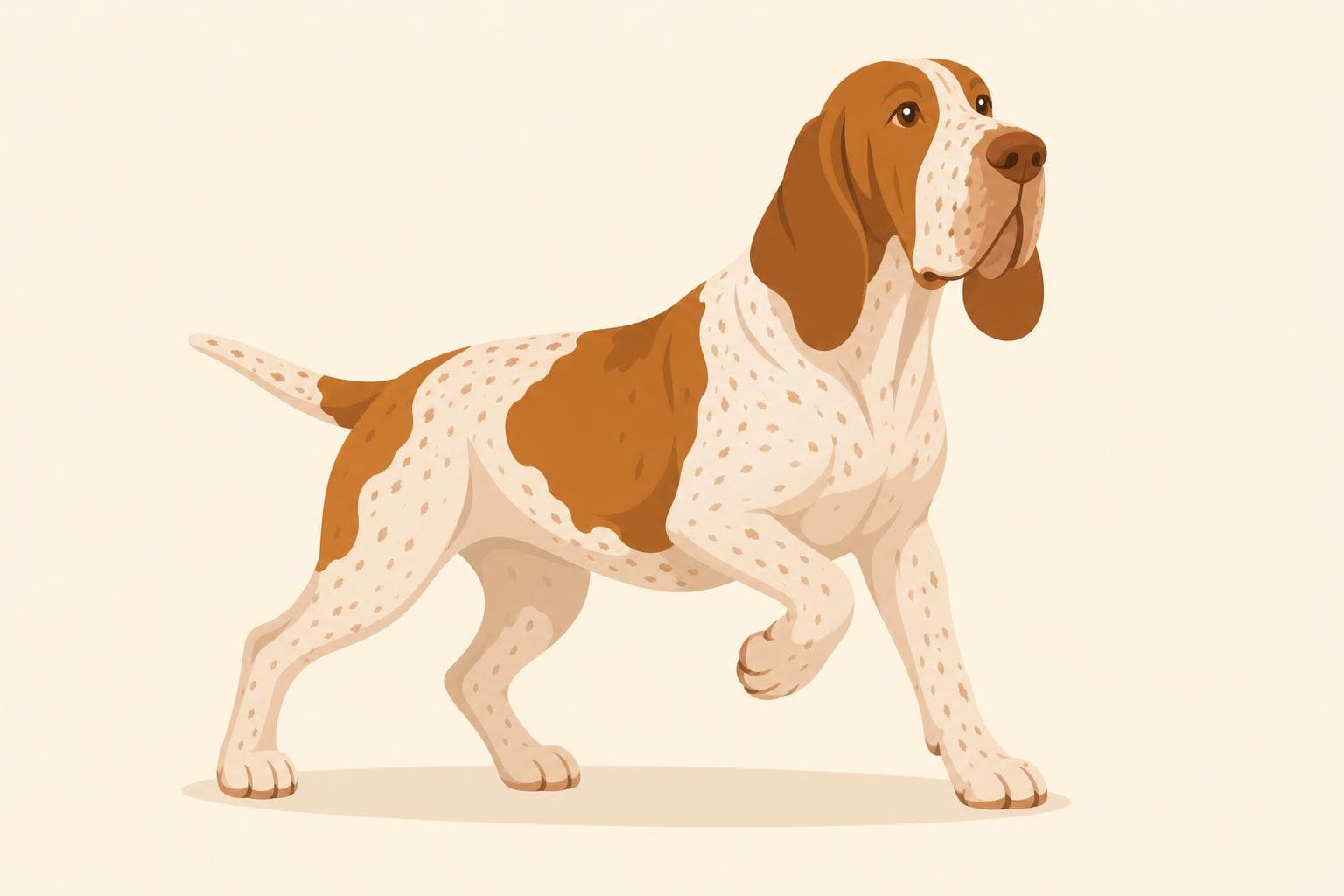
Behavior & traits
- gentle with kids
- people oriented
- sensitive
- playful
- patient
Health concerns
Braccos are generally a hearty breed but can be prone to hip and elbow dysplasia, bloat (gastric torsion), and certain eye conditions like entropion and ectropion. Some lines also carry a kidney condition known as Bracco kidney disease, so buying from a reputable breeder who screens for health issues is essential. Routine vet care, joint-friendly exercise, and feeding strategies to reduce bloat risk go a long way.
Responsible breeding and regular check-ups go a long way. Always ask breeders about health testing.
Feeding & nutrition
Feed a high-quality large-breed formula split into two meals a day to help reduce the risk of bloat, and avoid heavy exercise right after eating. Growing puppies do best on large-breed puppy food to support steady joint development. Keep an eye on portions, since Braccos can be food-motivated and put on weight if treats and table scraps add up.
Exercise needs
This is a true sporting breed that needs at least 1–2 hours of vigorous activity daily, including running, hiking, swimming, or scent-based games. Families can meet these needs with long off-leash romps in safe areas, fetch sessions, or dog sports like tracking and agility. Without enough exercise, a Bracco can become restless and mischievous indoors.
Living with a Bracco Italiano
Living with a Bracco Italiano means having a shadow — they'll follow you from the kitchen to the laundry room to the bathroom without hesitation. They're surprisingly mellow indoors once exercised, often sprawling across the couch (yes, they will claim furniture) or leaning their full weight against your leg for cuddles. Families are often charmed by their expressive, droopy faces and goofy personalities, though the drool, muddy paws, and habit of 'sharing' food smells around the house are all part of the package. They're sensitive souls who don't respond well to harsh corrections, and they truly thrive in homes where someone is around much of the day. Expect a dog that's deeply devoted, occasionally clownish, and always emotionally tuned in to the family's mood.
Recommended products
A sturdy front-clip harness is essential for walks, since Braccos are strong and can pull when they catch an interesting scent. Invest in a raised, slow-feeder bowl to support digestion and help reduce bloat risk, plus a large orthopedic bed to protect those big joints as they age. Durable scent and puzzle toys keep their busy nose engaged indoors, and a soft microfiber towel by the door is a lifesaver for wiping down muddy paws and drool-covered jowls after outdoor adventures.
Reads for Bracco Italiano owners
![[header] Border Collie with puzzle toys](/_next/image?url=https%3A%2F%2Fimages.ctfassets.net%2Fq8y32akc6zms%2F7eTvC6qBF3gqDFvQSzcpXM%2Fa35b628bfd670bfc52bf4bcd532fc1b6%2Fheader.jpg&w=3840&q=75)
Engaging Activities for Border Collies: A How-To Guide
Is your Border Collie always on the lookout for something to do? Dive into engaging mental activities that will keep their sharp minds busy and entertained!
![[header] Senior dog resting on an orthopedic bed while a puppy waits](/_next/image?url=https%3A%2F%2Fimages.ctfassets.net%2Fq8y32akc6zms%2F4EwnObSBED8EN4IbvFJgaN%2Fc15a1446d531fd28d8e6854c46c3de7f%2Fheader.jpg&w=3840&q=75)
Before the Puppy Arrives: A Pre-Arrival Checklist for Your Senior Dog
Your calm senior dog has been quietly compensating for aches, stiffness, and fading senses for years — and a new puppy is about to expose all of it. This pre-arrival checklist walks you through the vet workup, pain baseline, and home setup to tackle in the weeks *before* pickup day, so your older dog isn't blindsided by the chaos.
![[header] Small dog wearing a soft mesh harness walking on a sunny pat](/_next/image?url=https%3A%2F%2Fimages.ctfassets.net%2Fq8y32akc6zms%2F3p03PzT9zANgbTC9dAOMJ2%2Ff95efe8539856e9489ef9bd4e861c4ba%2Fheader.jpg&w=3840&q=75)
Comfortable Harnesses for Small Dogs Prone to Tracheal Collapse
Is your small dog coughing from their collar? Discover harnesses designed for pups prone to tracheal collapse, offering protection and comfort with every walk.