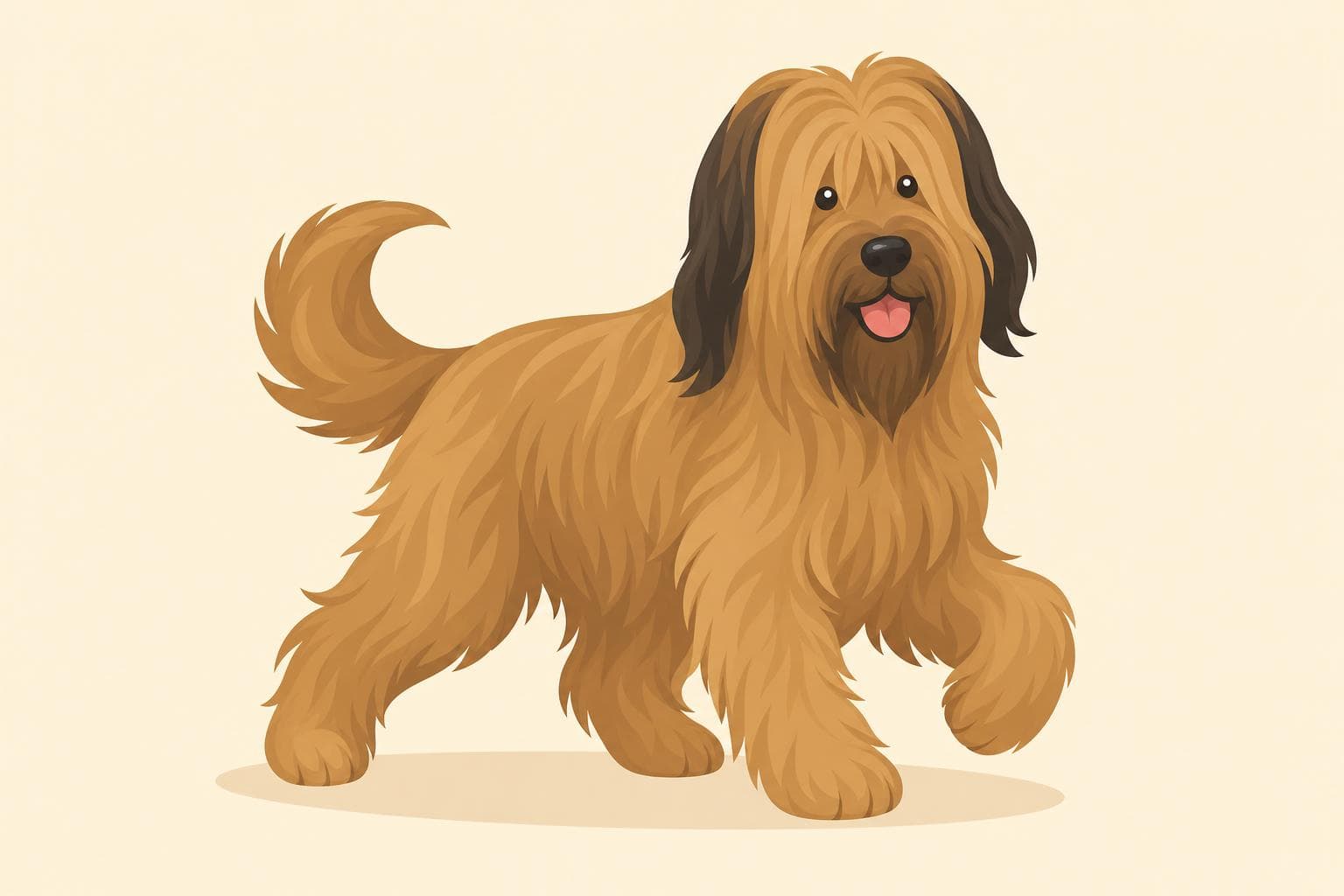
Briard
Briards are often called 'hearts wrapped in fur' for good reason — they bond deeply with their families and want to be involved in everything you do. They're confident, intelligent dogs with a strong protective streak, but at home they're affectionate goofballs who thrive on togetherness. With proper socialization, they're patient and gentle with children, though their herding instincts may show up as gentle nudges to keep the family 'flock' together.
Behavior & traits
- devoted to family
- gentle with kids
- natural herder
- watchful guardian
- playful
Health concerns
Briards can be prone to hip dysplasia, bloat (gastric torsion), and progressive retinal atrophy, so families should choose breeders who health-test their dogs. Congenital stationary night blindness is also seen in the breed. Regular vet checkups and being mindful of feeding routines to prevent bloat are important parts of ownership.
Responsible breeding and regular check-ups go a long way. Always ask breeders about health testing.
Feeding & nutrition
Briards do well on high-quality large-breed dog food, typically divided into two meals per day to reduce the risk of bloat. Puppies need large-breed formulas to support steady, healthy growth. Avoid heavy exercise right before or after meals, and keep an eye on portions since this active breed can still gain weight if overfed.
Exercise needs
Plan on at least 1–2 hours of daily exercise, including walks, runs, hikes, or fetch sessions in a securely fenced yard. Briards also crave mental stimulation, so activities like herding trials, agility, or puzzle games are wonderful outlets. Families with active lifestyles — kids who love the outdoors, weekend adventurers — will find the Briard a joyful partner.
Living with a Briard
Living with a Briard means having a constant, fuzzy shadow — they want to be wherever their people are, whether that's the kitchen, the couch, or the backyard. Expect a dog with strong opinions and a memorable personality; they're smart, sometimes stubborn, and famously expressive with their feelings. Their long coat will track in leaves, mud, and the occasional twig, so a good entryway mat and a grooming routine become part of family life. Many families are surprised by how attuned a Briard becomes to children — gently watching over them, herding strays back to the group, and tolerating toddler antics with patience. They're not background dogs; they're family members who'll make you laugh, keep you company, and quietly guard the household at the same time.
Recommended products
A sturdy slicker brush, metal comb, and dematting tool are essential for managing the Briard's long double coat and preventing painful mats. A well-fitted no-pull harness helps with leash manners during walks, and a slow-feeder bowl or elevated feeder can support healthy eating habits and reduce bloat risk. Durable puzzle toys and interactive games like flirt poles or treat-dispensing balls keep their sharp minds engaged. A large, supportive orthopedic bed is also a wise investment for this big-bodied breed.
Reads for Briard owners
![[header] Border Collie with puzzle toys](/_next/image?url=https%3A%2F%2Fimages.ctfassets.net%2Fq8y32akc6zms%2F7eTvC6qBF3gqDFvQSzcpXM%2Fa35b628bfd670bfc52bf4bcd532fc1b6%2Fheader.jpg&w=3840&q=75)
Engaging Activities for Border Collies: A How-To Guide
Is your Border Collie always on the lookout for something to do? Dive into engaging mental activities that will keep their sharp minds busy and entertained!
![[header] Senior dog resting on an orthopedic bed while a puppy waits](/_next/image?url=https%3A%2F%2Fimages.ctfassets.net%2Fq8y32akc6zms%2F4EwnObSBED8EN4IbvFJgaN%2Fc15a1446d531fd28d8e6854c46c3de7f%2Fheader.jpg&w=3840&q=75)
Before the Puppy Arrives: A Pre-Arrival Checklist for Your Senior Dog
Your calm senior dog has been quietly compensating for aches, stiffness, and fading senses for years — and a new puppy is about to expose all of it. This pre-arrival checklist walks you through the vet workup, pain baseline, and home setup to tackle in the weeks *before* pickup day, so your older dog isn't blindsided by the chaos.
![[header] Small dog wearing a soft mesh harness walking on a sunny pat](/_next/image?url=https%3A%2F%2Fimages.ctfassets.net%2Fq8y32akc6zms%2F3p03PzT9zANgbTC9dAOMJ2%2Ff95efe8539856e9489ef9bd4e861c4ba%2Fheader.jpg&w=3840&q=75)
Comfortable Harnesses for Small Dogs Prone to Tracheal Collapse
Is your small dog coughing from their collar? Discover harnesses designed for pups prone to tracheal collapse, offering protection and comfort with every walk.