Bullmastiff
Bullmastiffs are the gentle giants of the working group — affectionate, deeply loyal, and surprisingly mellow once they've had their exercise. At home, they tend to be calm, easygoing companions who love being near their people, often leaning against you for a cuddle despite their size. Their protective instincts are strong but rarely over-the-top; they're more likely to quietly assess strangers than bark wildly. With family, they're sweet, patient, and famously good-natured.
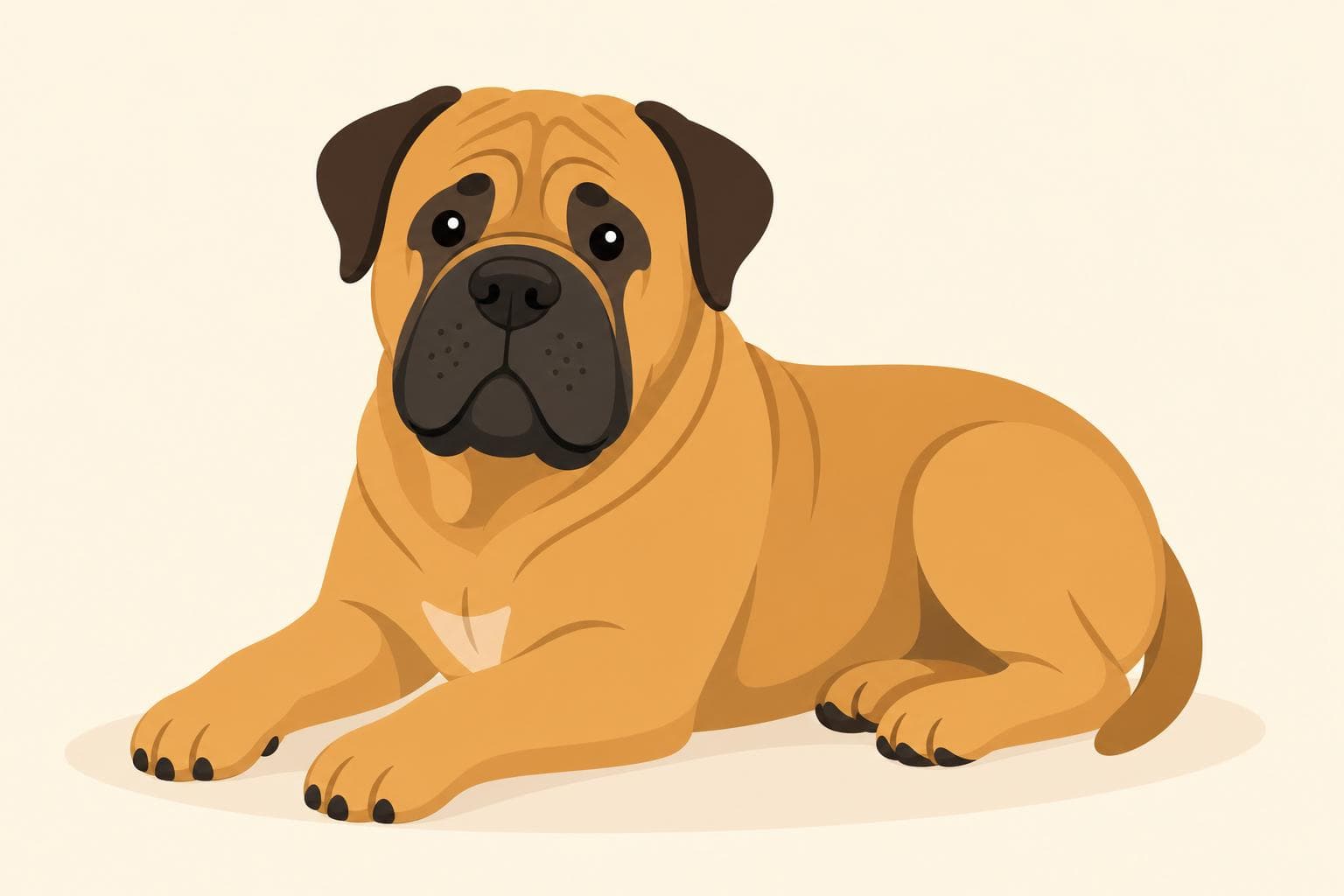
Behavior & traits
- devoted to family
- gentle with kids
- natural guardian
- calm indoors
- quietly confident
Health concerns
Like many giant breeds, Bullmastiffs are prone to hip and elbow dysplasia, bloat (gastric torsion), and certain heart conditions like subaortic stenosis. They can also be susceptible to certain cancers and have a shorter lifespan than smaller breeds. Regular vet checkups, weight management, and feeding from a raised, slow-feed bowl can help reduce risks.
Responsible breeding and regular check-ups go a long way. Always ask breeders about health testing.
Feeding & nutrition
Feed a high-quality large-breed formula designed to support joint health and controlled growth, especially during puppyhood. Most adult Bullmastiffs eat 4–6 cups of food per day split into two meals to reduce bloat risk. Avoid heavy exercise right after meals and keep an eye on portions — these dogs can pack on weight easily, which strains their joints.
Exercise needs
Bullmastiffs are surprisingly low-key for their size, needing about 30–45 minutes of moderate exercise daily — think a couple of relaxed walks and some backyard playtime. They're not built for long runs or intense heat, so families should aim for cooler parts of the day. A securely fenced yard and gentle activities like sniff walks or short training games keep them happy without overdoing it.
Living with a Bullmastiff
Living with a Bullmastiff is like sharing your home with a 120-pound shadow who thinks they're a lap dog. They follow their people from room to room, snore loudly on the couch, and have a knack for dramatic sighs when you get up. Expect some drool — especially after drinking or eating — and a bit of shedding year-round, so keep towels handy and a vacuum nearby. They're calm and quiet indoors, which surprises many first-time owners, but they're also strong and need consistent boundaries from puppyhood so their size never becomes a problem. Families often say their Bullmastiff becomes the heart of the household — endlessly devoted, gentle with the kids, and quietly watchful over everyone they love.
Recommended products
A heavy-duty orthopedic dog bed is essential to support their joints and giant frame, along with a raised, slow-feeder bowl to reduce bloat risk and ease eating. Invest in a sturdy no-pull harness and a strong leash since even a well-trained Bullmastiff can outmuscle you if startled. Keep drool towels in every room, and stock up on durable chew toys (like rubber Kong-style or tough nylon bones) made for powerful jaws. A good de-shedding brush used weekly will help keep loose hair under control.
Reads for Bullmastiff owners
![[header] Illustration of a watchful guardian dog sitting alertly besi](/_next/image?url=https%3A%2F%2Fimages.ctfassets.net%2Fq8y32akc6zms%2F2Oiyfk7KLxhUOTUScQ79ns%2F04806719648a4ceb6fbf10048f84b3bf%2Fheader.jpg&w=3840&q=75)
The Loyal Guardian: The Dog Who Quietly Appointed Themselves Your Bodyguard
Devoted, watchful, and quietly convinced you need protecting — The Loyal Guardian is the dog who reads the room before you do and picks their people for keeps. Here's what makes them tick, the owners who bring out their best, and the breeds that tend to land in this archetype.
![[header] Border Collie with puzzle toys](/_next/image?url=https%3A%2F%2Fimages.ctfassets.net%2Fq8y32akc6zms%2F7eTvC6qBF3gqDFvQSzcpXM%2Fa35b628bfd670bfc52bf4bcd532fc1b6%2Fheader.jpg&w=3840&q=75)
Engaging Activities for Border Collies: A How-To Guide
Is your Border Collie always on the lookout for something to do? Dive into engaging mental activities that will keep their sharp minds busy and entertained!
![[header] Senior dog resting on an orthopedic bed while a puppy waits](/_next/image?url=https%3A%2F%2Fimages.ctfassets.net%2Fq8y32akc6zms%2F4EwnObSBED8EN4IbvFJgaN%2Fc15a1446d531fd28d8e6854c46c3de7f%2Fheader.jpg&w=3840&q=75)
Before the Puppy Arrives: A Pre-Arrival Checklist for Your Senior Dog
Your calm senior dog has been quietly compensating for aches, stiffness, and fading senses for years — and a new puppy is about to expose all of it. This pre-arrival checklist walks you through the vet workup, pain baseline, and home setup to tackle in the weeks *before* pickup day, so your older dog isn't blindsided by the chaos.