Cavalier King Charles Spaniel
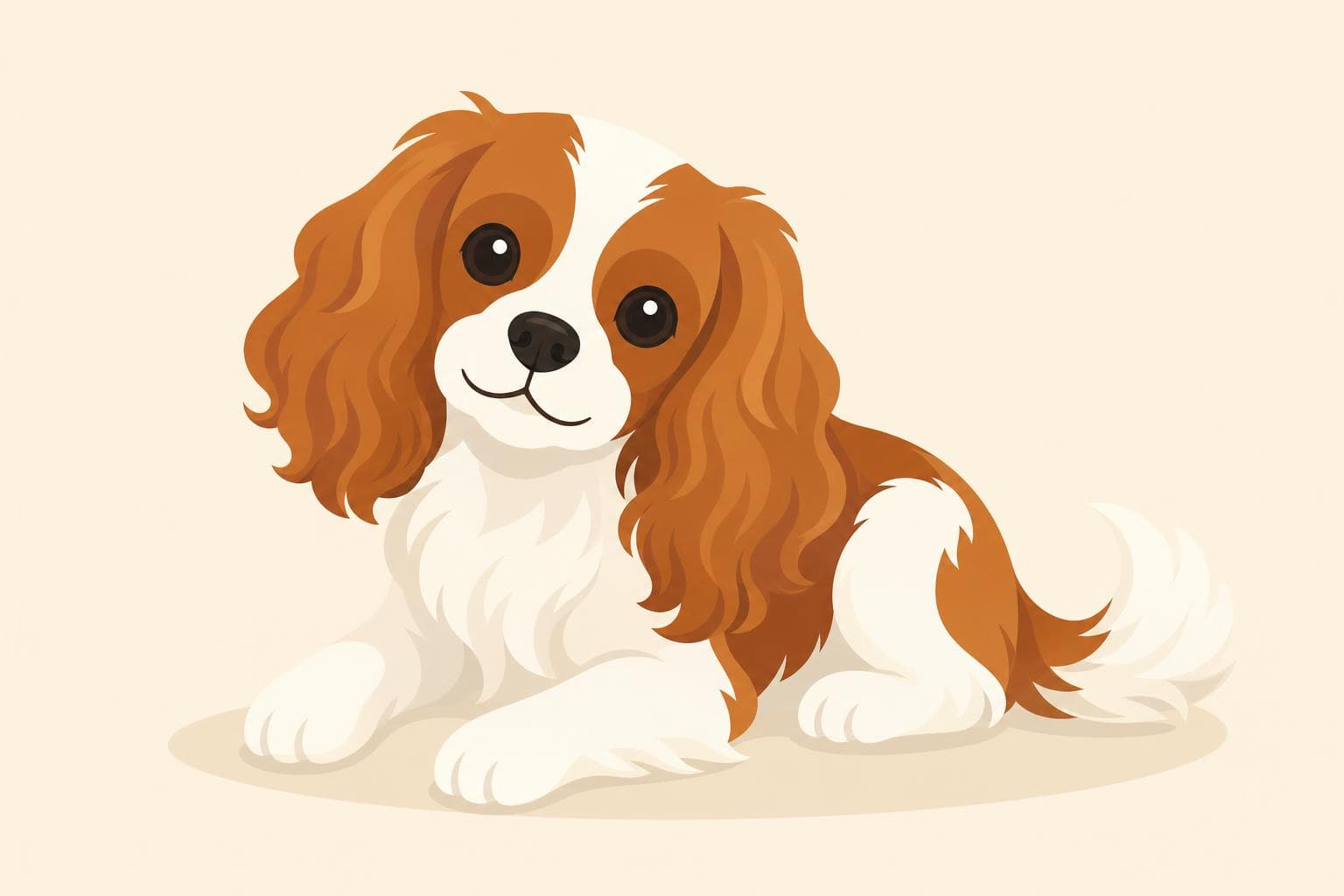
Cavalier King Charles Spaniels are the quintessential companion dog — sweet-natured, gentle, and absolutely devoted to their people. They tend to greet everyone (family, friends, even the mail carrier) as a long-lost friend, which makes them a joy in social households but a poor choice for guard duty. In a family home, you'll find them happily following someone from room to room, content to play with the kids one minute and curl up for a movie the next.
Behavior & traits
- loving lap dog
- gentle with kids
- sociable with strangers
- good with other pets
- people oriented
Health concerns
Cavaliers are prone to mitral valve disease, a heart condition that affects many of the breed as they age, so regular cardiac checkups are essential. They can also experience syringomyelia (a serious neurological condition), ear infections due to their long floppy ears, and patellar luxation. Choosing a reputable breeder who health-tests their dogs makes a real difference in long-term wellness.
Responsible breeding and regular check-ups go a long way. Always ask breeders about health testing.
Feeding & nutrition
A high-quality small-breed dog food fed in two measured meals per day works well for most Cavaliers. They love food and can easily become overweight, which puts extra strain on their hearts, so portion control and limiting table scraps is important. Always provide fresh water, and consider omega-3 supplements after consulting your vet for heart and coat support.
Exercise needs
Cavaliers need about 30–60 minutes of moderate exercise daily — a couple of walks, some backyard play, or a romp with the kids usually does the trick. They enjoy fetch and gentle hikes but are just as happy with indoor play on rainy days. Avoid overexertion in hot weather, as their short muzzles can make them less heat-tolerant.
Living with a Cavalier King Charles Spaniel
Living with a Cavalier means having a shadow — a silky, wagging shadow that wants to be wherever you are. They thrive on togetherness and don't do well left alone for long stretches, which makes them a great fit for families where someone is usually home. Expect a dog that's wonderful with children (though always supervise with toddlers, as Cavaliers are small and delicate), gets along with other pets, and adapts beautifully to both apartment life and big homes with yards. You'll find tufts of feathered hair on the couch and probably a Cavalier in your lap during every meal, but their affectionate, easygoing nature wins families over completely. They're surprisingly playful well into adulthood and have a sweet habit of greeting you at the door like you've been gone for years — even if it's just been five minutes.
Recommended products
A slicker brush and metal comb are must-haves for keeping their feathered ears, chest, and legs tangle-free, along with gentle ear-cleaning solution to prevent infections in those adorable floppy ears. A well-padded harness (rather than a collar) protects their delicate necks during walks, and a soft orthopedic bed gives them the cozy lounging spot they'll absolutely demand. Round things out with interactive puzzle toys to engage their clever minds and a portion-control measuring cup to help manage their food-loving tendencies.
Reads for Cavalier King Charles Spaniel owners
![[header] A friendly, relaxed dog sitting on a grassy hill, representi](/_next/image?url=https%3A%2F%2Fimages.ctfassets.net%2Fq8y32akc6zms%2FJ9sBqGl2JtWQn9LX2JCBf%2Fc459e0ddc8d3679a4109e20156422b93%2Fheader.jpg&w=3840&q=75)
The Best Friend: The Dog Who Fits Almost Anywhere
Meet The Best Friend — the well-rounded, go-anywhere dog with no real extremes. Friendly, adaptable, and quietly tuned into their person, this is the classic good egg of the dog world. Here's what life with one actually looks like, and the owners they click with best.
![[header] A calm owner sitting on the floor with a relaxed dog leaning](/_next/image?url=https%3A%2F%2Fimages.ctfassets.net%2Fq8y32akc6zms%2F2ciptjZRZ8GgpFJqmXxaM6%2F4e013e2dced5e35a2072e8087e60bb16%2Fheader.jpg&w=3840&q=75)
The Calm Anchor: The Owner Archetype Reactive and Nervous Dogs Settle Best With
The Calm Anchor is the owner whose nervous system doesn't join in when a walk goes sideways — and that steadiness is exactly what a reactive or anxious dog needs to borrow from. If your assessment landed you here, this is the full portrait: what your calm does for a dog, the dog personalities most likely to thrive under your roof, and the one habit that quietly holds you back.
Meet The Professional Napper: The Dog Archetype Who Turns Rest Into an Art Form
If your dog treats the couch like a career, this one's for them. The Professional Napper is a gentle, sociable, low-gear archetype — the dog who wants a sunbeam, a short walk, and you in the same room. Here's what it means, who they thrive with, and the one thing owners get wrong about "low energy."