Chinese Shar-Pei
The Chinese Shar-Pei is a dignified, deeply loyal breed that bonds closely with its family while remaining politely aloof with outsiders. At home, they're typically calm, quiet, and content to be near their people without demanding constant attention. They have an independent streak and a watchful nature, making them natural guardians who take their job of looking after the household seriously.
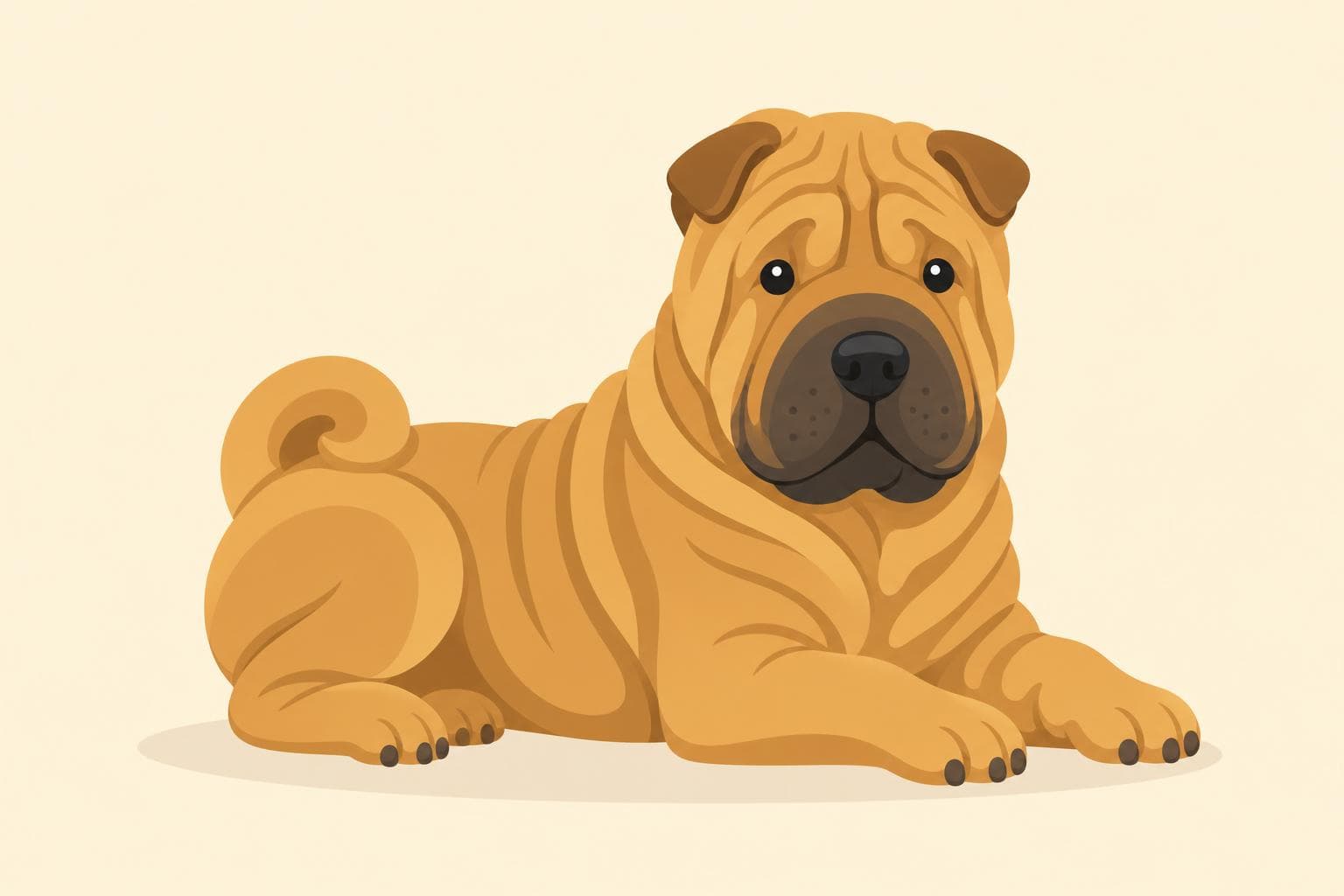
Behavior & traits
- devoted to family
- naturally protective
- reserved with strangers
- calm indoors
- strong willed
Health concerns
Shar-Peis are prone to a hereditary condition called Familial Shar-Pei Fever, as well as skin fold infections, entropion (eyelid issues), and allergies. Their distinctive wrinkles need regular checking to prevent irritation and yeast buildup. Working with a reputable breeder and a vet familiar with the breed makes a significant difference in long-term health.
Responsible breeding and regular check-ups go a long way. Always ask breeders about health testing.
Feeding & nutrition
A high-quality diet with limited common allergens often suits this breed best, since food sensitivities and skin issues frequently go hand-in-hand. Most adult Shar-Peis do well on two measured meals a day to maintain a lean weight, as extra pounds put strain on their joints. Always have fresh water available, especially after playtime with the kids.
Exercise needs
Shar-Peis need moderate daily exercise — a couple of brisk walks plus some backyard play usually does the trick. They're not marathon runners and can overheat easily due to their build, so families should keep activity shorter and more frequent in warm weather. Mental enrichment like puzzle toys or short training games also helps keep them satisfied.
Living with a Chinese Shar-Pei
Living with a Shar-Pei often surprises families with how peaceful and easygoing they are indoors — many owners describe them as 'cat-like' in their independence and cleanliness. They tend to pick a favorite spot in the house and quietly supervise the family's comings and goings, alerting you when something feels off. With children they've grown up with, Shar-Peis are typically gentle, patient, and protective, though they appreciate kids who respect their personal space and don't roughhouse excessively. Daily life includes wiping down wrinkles, checking ears, and being mindful of heat, but in return you get a deeply devoted companion who treats your family like their entire world. They're not party animals — they're loyal homebodies who love routine, soft beds, and being close to the people they trust most.
Recommended products
Soft, unscented grooming wipes are essential for keeping facial and body wrinkles clean and infection-free, along with a rubber curry brush to manage their bristly coat and seasonal shedding. A well-fitted harness works better than a collar for walks, since their broad necks and shorter snouts make pulling uncomfortable. Elevated food and water bowls suit their build, and durable chew toys or food puzzles help satisfy their thoughtful, problem-solving minds. A cooling mat is also a smart investment for warmer months.
Reads for Chinese Shar-Pei owners
![[header] Border Collie with puzzle toys](/_next/image?url=https%3A%2F%2Fimages.ctfassets.net%2Fq8y32akc6zms%2F7eTvC6qBF3gqDFvQSzcpXM%2Fa35b628bfd670bfc52bf4bcd532fc1b6%2Fheader.jpg&w=3840&q=75)
Engaging Activities for Border Collies: A How-To Guide
Is your Border Collie always on the lookout for something to do? Dive into engaging mental activities that will keep their sharp minds busy and entertained!
![[header] Senior dog resting on an orthopedic bed while a puppy waits](/_next/image?url=https%3A%2F%2Fimages.ctfassets.net%2Fq8y32akc6zms%2F4EwnObSBED8EN4IbvFJgaN%2Fc15a1446d531fd28d8e6854c46c3de7f%2Fheader.jpg&w=3840&q=75)
Before the Puppy Arrives: A Pre-Arrival Checklist for Your Senior Dog
Your calm senior dog has been quietly compensating for aches, stiffness, and fading senses for years — and a new puppy is about to expose all of it. This pre-arrival checklist walks you through the vet workup, pain baseline, and home setup to tackle in the weeks *before* pickup day, so your older dog isn't blindsided by the chaos.
![[header] Small dog wearing a soft mesh harness walking on a sunny pat](/_next/image?url=https%3A%2F%2Fimages.ctfassets.net%2Fq8y32akc6zms%2F3p03PzT9zANgbTC9dAOMJ2%2Ff95efe8539856e9489ef9bd4e861c4ba%2Fheader.jpg&w=3840&q=75)
Comfortable Harnesses for Small Dogs Prone to Tracheal Collapse
Is your small dog coughing from their collar? Discover harnesses designed for pups prone to tracheal collapse, offering protection and comfort with every walk.