Clumber Spaniel
Clumber Spaniels are the laid-back gentlemen of the sporting group — affectionate, easygoing, and famously devoted to their people. They tend to bond closely with the whole family rather than picking a single favorite, and they're known for a soft, sweet demeanor that makes them wonderful companions for children. While they enjoy a good romp outside, indoors they're typically content to lounge near you, often following family members from room to room like a quiet, four-legged shadow.
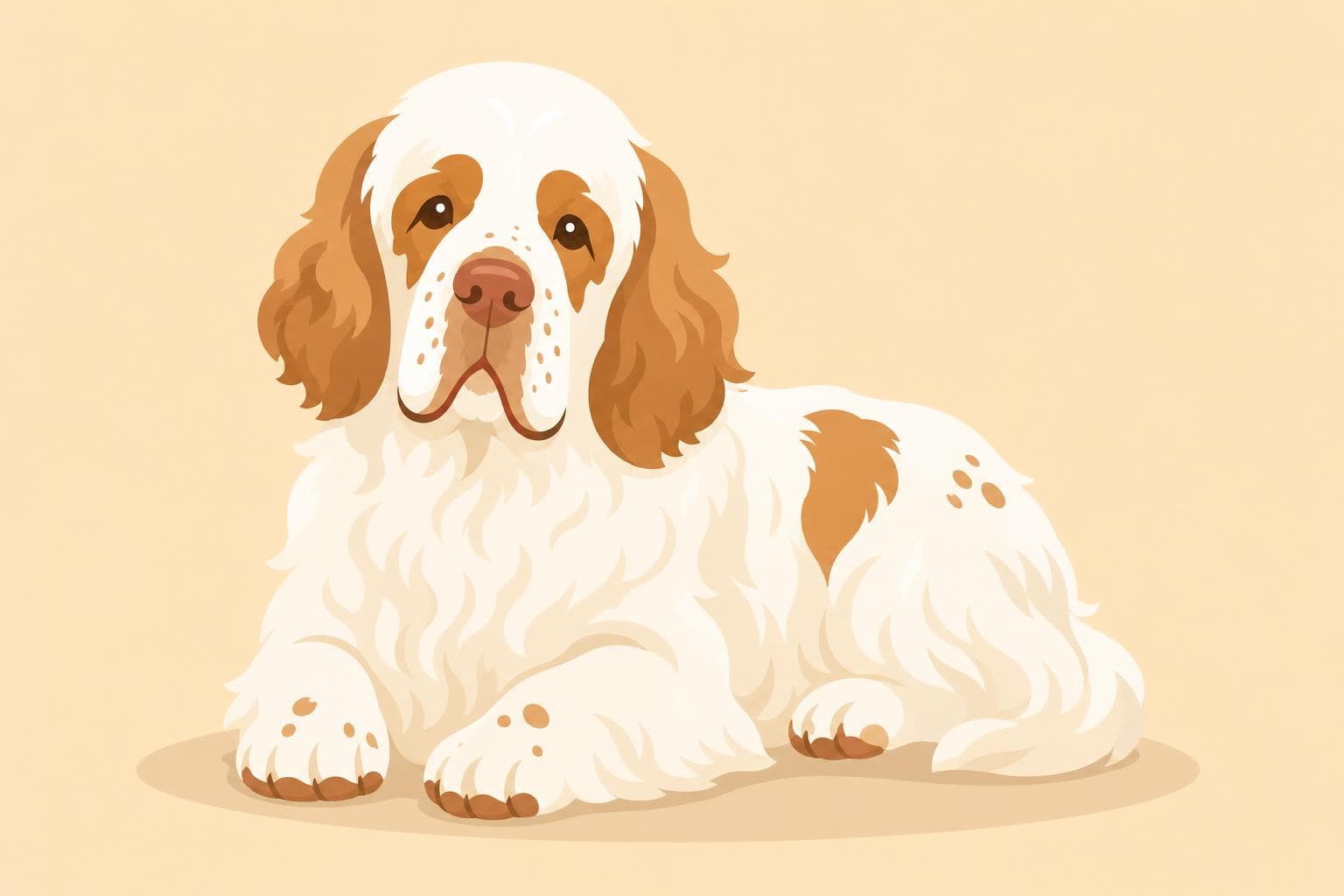
Behavior & traits
- gentle with kids
- calm indoors
- people oriented
- patient
- quietly playful
Health concerns
Clumbers can be prone to hip and elbow dysplasia, eye conditions like ectropion and entropion, and ear infections due to their long, heavy ears. Their deep chests also put them at some risk for bloat, so families should learn the warning signs. Weight management is critical — they love food and gain pounds easily, which can worsen joint issues over time.
Responsible breeding and regular check-ups go a long way. Always ask breeders about health testing.
Feeding & nutrition
Feed a high-quality large-breed formula split into two measured meals a day to help prevent bloat and keep weight in check. Clumbers are notorious chowhounds, so families need to be firm about portion control and limit table scraps, no matter how convincing those soulful eyes are. Joint-supporting nutrients like glucosamine and omega-3s are a smart addition as they age.
Exercise needs
A Clumber needs about 30–60 minutes of moderate daily exercise — think relaxed walks, backyard play, or gentle hikes rather than long runs. They enjoy retrieving games and sniffing adventures, which suits family outings well. Avoid overexertion in hot weather, since their heavy coat and build make them prone to overheating.
Living with a Clumber Spaniel
Living with a Clumber Spaniel is a bit like sharing your home with a calm, slightly goofy family member who happens to drool, shed, and adore you unconditionally. They're quiet and dignified indoors, often sprawled across the coolest patch of floor, but they have a surprisingly playful streak that delights kids — expect them to carry around socks, toys, or shoes as 'gifts.' Families should be prepared for tumbleweeds of white fur on the couch, regular ear cleanings, and the occasional slobber on the kitchen cabinets. They're patient with toddlers, tolerant of household chaos, and rarely bark without good reason, making them a wonderfully peaceful presence in a busy home. The biggest surprise for most owners? How deeply attached these dogs become — a Clumber doesn't just live with you, they quietly weave themselves into every part of your daily routine.
Recommended products
A sturdy slicker brush and metal comb are must-haves for managing their dense, feathered coat, along with gentle ear-cleaning solution to prevent infections in those long, droopy ears. Invest in a no-pull harness for walks (their strong, heavy build can tug hard) and an orthopedic dog bed to support their joints as they age. Slow-feeder bowls help curb their tendency to inhale meals, and soft retrieving toys or snuffle mats give them satisfying low-impact play that fits nicely into family life.
Reads for Clumber Spaniel owners
![[header] Illustration of a gentle spaniel resting quietly on a cushio](/_next/image?url=https%3A%2F%2Fimages.ctfassets.net%2Fq8y32akc6zms%2F5kVBa0L2dkGu7vvUX3JWxr%2Fa86fffc2f81e9719929c4f2a46899ac2%2Fheader.jpg&w=3840&q=75)
The Gentle Soul: A Dog Archetype for the Sensitive, Loyal, Slow-to-Warm Companion
Some dogs walk into a room ready to party. Others study it first — noticing every sound, every new face, every shift in your mood — before deciding it's safe to join. If that's your dog, meet The Gentle Soul: sensitive, quietly loyal, and at their very best in a calm, predictable home.
![[header] Border Collie with puzzle toys](/_next/image?url=https%3A%2F%2Fimages.ctfassets.net%2Fq8y32akc6zms%2F7eTvC6qBF3gqDFvQSzcpXM%2Fa35b628bfd670bfc52bf4bcd532fc1b6%2Fheader.jpg&w=3840&q=75)
Engaging Activities for Border Collies: A How-To Guide
Is your Border Collie always on the lookout for something to do? Dive into engaging mental activities that will keep their sharp minds busy and entertained!
![[header] Senior dog resting on an orthopedic bed while a puppy waits](/_next/image?url=https%3A%2F%2Fimages.ctfassets.net%2Fq8y32akc6zms%2F4EwnObSBED8EN4IbvFJgaN%2Fc15a1446d531fd28d8e6854c46c3de7f%2Fheader.jpg&w=3840&q=75)
Before the Puppy Arrives: A Pre-Arrival Checklist for Your Senior Dog
Your calm senior dog has been quietly compensating for aches, stiffness, and fading senses for years — and a new puppy is about to expose all of it. This pre-arrival checklist walks you through the vet workup, pain baseline, and home setup to tackle in the weeks *before* pickup day, so your older dog isn't blindsided by the chaos.