Cocker Spaniel
Cocker Spaniels are the quintessential family companion — sweet-natured, cheerful, and famously devoted to their people. They thrive on togetherness and tend to bond closely with every member of the household, often following kids from room to room just to be near the action. Their gentle, merry disposition makes them wonderful playmates, though they can be sensitive souls who do best in calm, loving homes rather than chaotic or harsh environments.
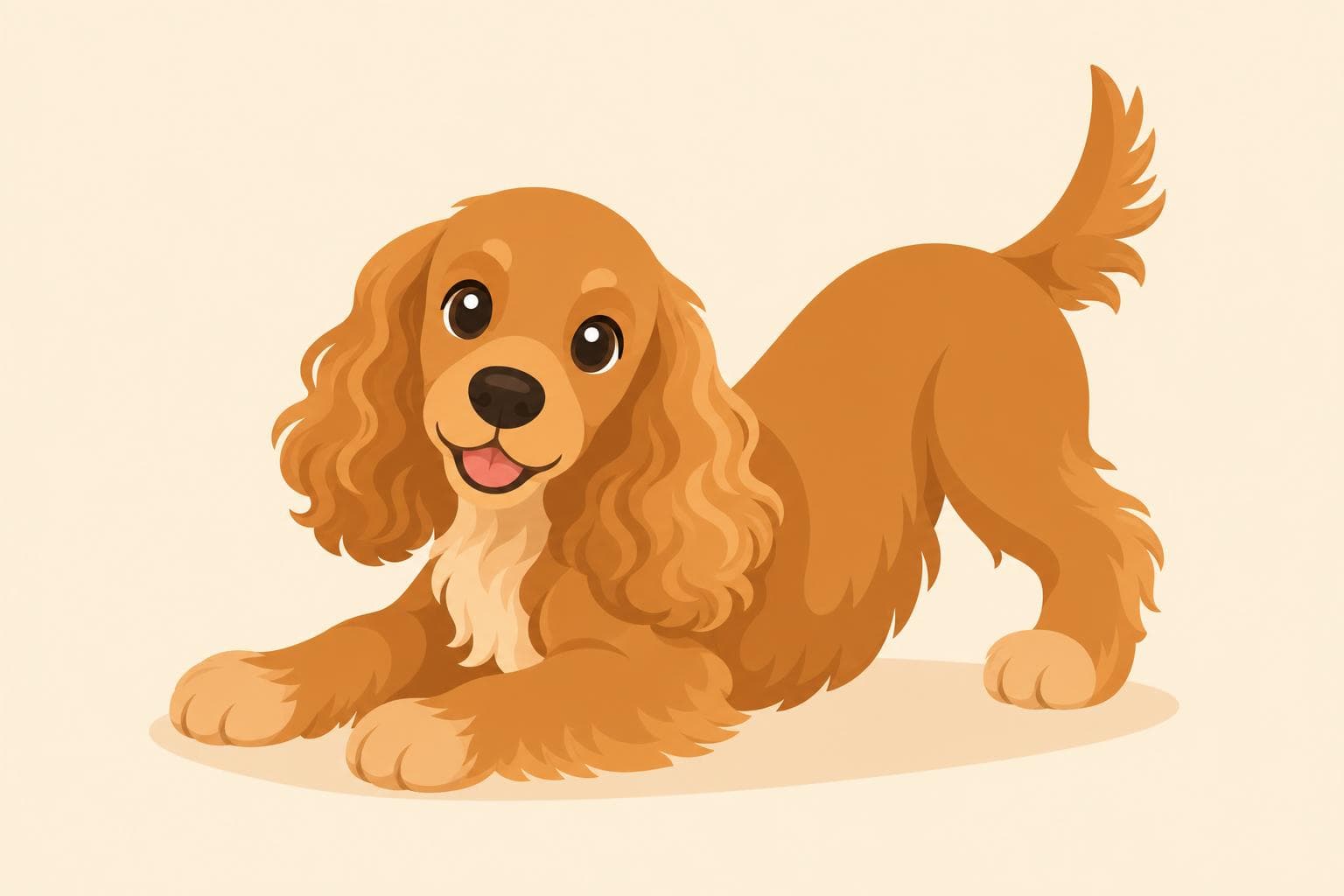
Behavior & traits
- gentle with kids
- eager to please
- affectionate
- sociable
- sensitive
Health concerns
Cocker Spaniels are prone to ear infections due to their long, floppy ears, so weekly ear checks are a must. They can also be susceptible to eye conditions like cataracts and progressive retinal atrophy, as well as hip dysplasia and certain heart issues. Choosing a reputable breeder and keeping up with annual vet visits goes a long way in catching concerns early.
Responsible breeding and regular check-ups go a long way. Always ask breeders about health testing.
Feeding & nutrition
Most adult Cockers do well on about 1 to 1.5 cups of high-quality dry food per day, split into two meals. Because they love food and can gain weight easily, it's important to measure portions and go easy on the treats. Look for a formula with balanced protein and omega fatty acids to support their beautiful coat and skin.
Exercise needs
Cocker Spaniels need around 45 to 60 minutes of daily exercise — think morning walks, backyard fetch, or a romp at the park. Their sporting background means they love sniffing, retrieving, and exploring, so games that engage their nose and instincts are a hit. Families with active kids will find a Cocker is happy to join in on bike rides, hikes, or weekend adventures.
Living with a Cocker Spaniel
Living with a Cocker Spaniel means having a cheerful shadow who's always nearby, tail wagging, hoping to be included in whatever you're doing. They're surprisingly intuitive — if a child is upset or someone's having a rough day, a Cocker often shows up to offer a snuggle. Mornings usually involve an enthusiastic greeting, a brisk walk, and breakfast eaten with gusto, while evenings tend to be cozy couch time with their favorite people. Families are often charmed by their expressive eyes and 'merry' wagging tail, but should be prepared for regular grooming sessions, muddy ears after rainy walks, and the occasional bout of separation anxiety if left alone too long. Overall, they're a joyful, loving presence who genuinely thrive on being part of family life.
Recommended products
A quality slicker brush and metal comb are essential for keeping their silky coat tangle-free, along with a gentle ear-cleaning solution to prevent infections. Invest in a padded, no-pull harness for comfortable walks, since their long ears and feathered legs make traditional collars less ideal. A few interactive toys like treat-dispensing puzzles and soft plush retrievers will satisfy their sporting instincts, and a raised, washable dog bed gives them a cozy spot to nap between family adventures.
Reads for Cocker Spaniel owners
The One-of-a-Kind: The Dog Who Doesn't Fit Any Single Profile
Your dog didn't fit any single profile — and that's the whole point. The One-of-a-Kind is the archetype for dogs whose traits blend in their own original way, and it comes with a specific challenge: it's easy to under-serve a dog who never quite complains. Here's what balanced really looks like, and how to build a life around the dog in front of you.
![[header] A calm owner sitting on the floor with a relaxed dog leaning](/_next/image?url=https%3A%2F%2Fimages.ctfassets.net%2Fq8y32akc6zms%2F2ciptjZRZ8GgpFJqmXxaM6%2F4e013e2dced5e35a2072e8087e60bb16%2Fheader.jpg&w=3840&q=75)
The Calm Anchor: The Owner Archetype Reactive and Nervous Dogs Settle Best With
The Calm Anchor is the owner whose nervous system doesn't join in when a walk goes sideways — and that steadiness is exactly what a reactive or anxious dog needs to borrow from. If your assessment landed you here, this is the full portrait: what your calm does for a dog, the dog personalities most likely to thrive under your roof, and the one habit that quietly holds you back.
![[header] A calm owner reading in an armchair with a small dog curled](/_next/image?url=https%3A%2F%2Fimages.ctfassets.net%2Fq8y32akc6zms%2F7F3uPDUQoNFW8TMbODtMjk%2Ffac8de70c2800e074aae0a155a228d2a%2Fheader.jpg&w=3840&q=75)
The Homebody Companion: An Owner Archetype for the Quietly Devoted
Got The Homebody Companion on your LiveLaughWoof assessment? You're the person who builds a slow, warm, deeply affectionate life with a dog — and there's a very specific kind of dog who dreams about a home like yours. Here's what your result actually means, the temperaments that match you best, and the one growth edge worth naming out loud.