Flat-Coated Retriever
Flat-Coated Retrievers are often called the 'Peter Pan' of the retriever world because they stay puppyish well into adulthood. They're joyful, bouncy, and endlessly affectionate, greeting everyone — family, friends, and strangers alike — with a wagging tail and a wide smile. In a family home, they thrive on being part of every activity, from breakfast chaos to backyard play, and they form deep bonds with both kids and adults.
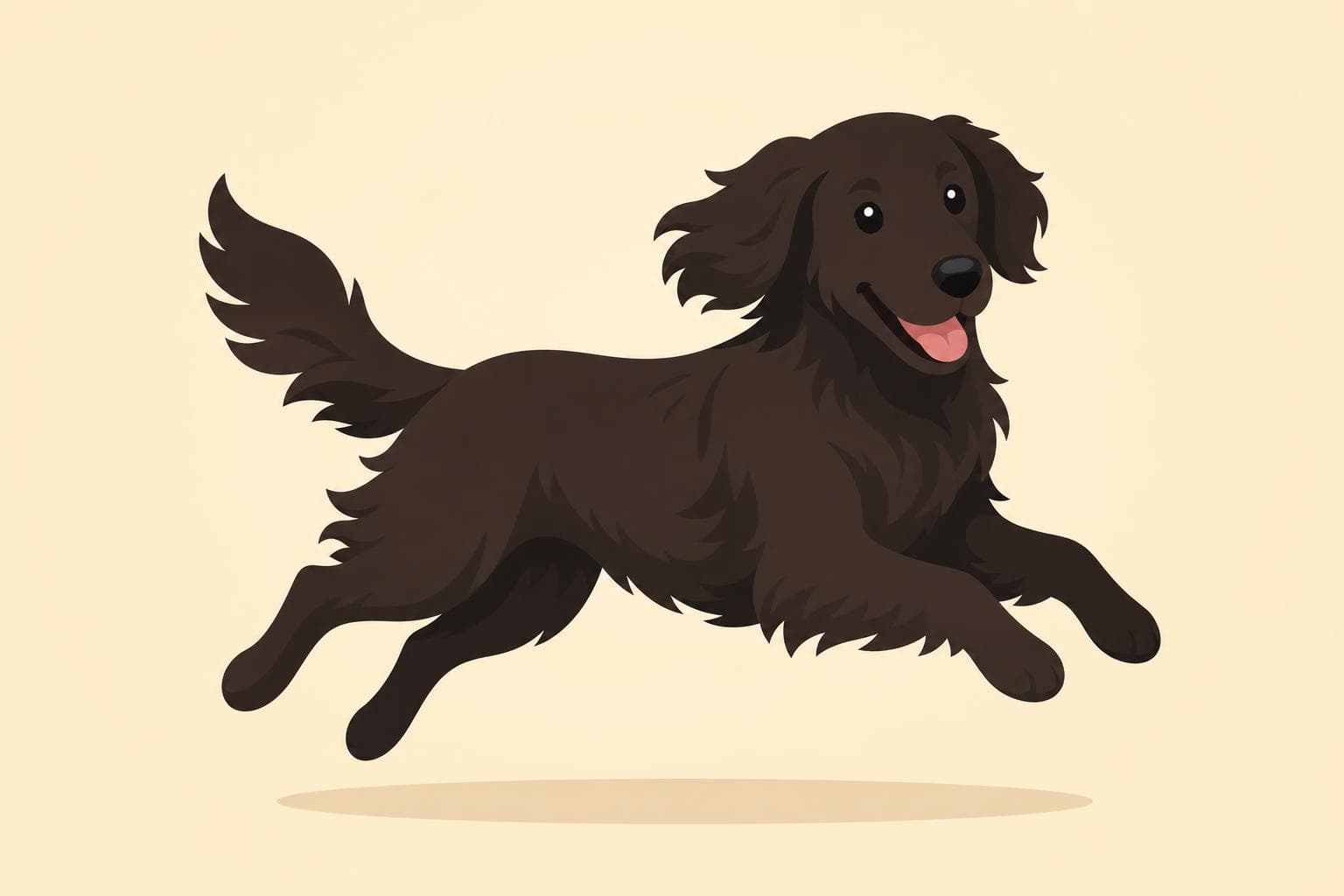
Behavior & traits
- gentle with kids
- social butterfly
- forever young at heart
- eager to please
- playful
Health concerns
Sadly, Flat-Coats have a higher-than-average risk of certain cancers, which is the breed's most significant health concern and why their lifespan tends to be shorter than other retrievers. They can also be prone to hip and elbow dysplasia and certain eye conditions like progressive retinal atrophy. Buying from a reputable breeder who health-tests parents and scheduling regular vet checkups can help families catch issues early.
Responsible breeding and regular check-ups go a long way. Always ask breeders about health testing.
Feeding & nutrition
A high-quality, large-breed dog food with balanced protein and healthy fats supports their active lifestyle and joint health. Most adults do well on 2.5–3.5 cups split into two meals a day, though active dogs may need more. Watch portion sizes carefully — Flat-Coats love food and can pack on pounds, which puts extra strain on their joints.
Exercise needs
Plan on at least 1–2 hours of vigorous exercise daily, including running, swimming, fetch, or hiking. These dogs were bred to retrieve all day, so a quick walk around the block won't cut it. Families with active lifestyles, big yards, or access to parks and water will find it easy to keep a Flat-Coat happy and well-behaved.
Living with a Flat-Coated Retriever
Living with a Flat-Coated Retriever means living with a permanent puppy — even at age eight, they may still bound through the house like a youngster. They're wonderful with kids, often gentle and patient with little ones, though their exuberant tail and bouncy greetings can knock over toddlers, so supervision matters. Expect a shadow: these dogs want to be wherever you are, whether you're cooking dinner, folding laundry, or watching TV. They shed moderately year-round with heavier seasonal blowouts, and you'll find black or liver-colored hair on couches and clothes. The biggest surprise for many families is just how much joy and silliness one dog can bring into a home — but also how much energy they need to stay balanced and well-mannered.
Recommended products
A sturdy slicker brush and undercoat rake are essential for managing their feathered coat and seasonal shedding, along with a good pair of grooming scissors to tidy ears and feet. Invest in a no-pull harness for walks since young Flat-Coats can be enthusiastic pullers, and stock up on durable retrieving toys like rubber bumpers, floating fetch toys, and tug ropes. A raised slow-feeder bowl helps with digestion and pacing, and a large crate or comfy orthopedic bed gives them a cozy retreat after long days of play.
Reads for Flat-Coated Retriever owners
![[header] A cheerful cartoon dog leaping after a butterfly in a sunny](/_next/image?url=https%3A%2F%2Fimages.ctfassets.net%2Fq8y32akc6zms%2F4vIViKWcIYHW6vrFzkpnLA%2Ffe93bb1682bf73f8e103d7796dc1af4a%2Fheader.jpg&w=3840&q=75)
The Lovable Goofball: A Dog Archetype Portrait
All heart, zero plan, and impossible not to adore — meet the Lovable Goofball. If your dog greets the mail carrier like a long-lost cousin and forgets the sit cue mid-sit, this portrait is going to feel familiar. Here's what makes them tick, and the kind of person who brings out their best.
![[header] Border Collie with puzzle toys](/_next/image?url=https%3A%2F%2Fimages.ctfassets.net%2Fq8y32akc6zms%2F7eTvC6qBF3gqDFvQSzcpXM%2Fa35b628bfd670bfc52bf4bcd532fc1b6%2Fheader.jpg&w=3840&q=75)
Engaging Activities for Border Collies: A How-To Guide
Is your Border Collie always on the lookout for something to do? Dive into engaging mental activities that will keep their sharp minds busy and entertained!
![[header] Senior dog resting on an orthopedic bed while a puppy waits](/_next/image?url=https%3A%2F%2Fimages.ctfassets.net%2Fq8y32akc6zms%2F4EwnObSBED8EN4IbvFJgaN%2Fc15a1446d531fd28d8e6854c46c3de7f%2Fheader.jpg&w=3840&q=75)
Before the Puppy Arrives: A Pre-Arrival Checklist for Your Senior Dog
Your calm senior dog has been quietly compensating for aches, stiffness, and fading senses for years — and a new puppy is about to expose all of it. This pre-arrival checklist walks you through the vet workup, pain baseline, and home setup to tackle in the weeks *before* pickup day, so your older dog isn't blindsided by the chaos.