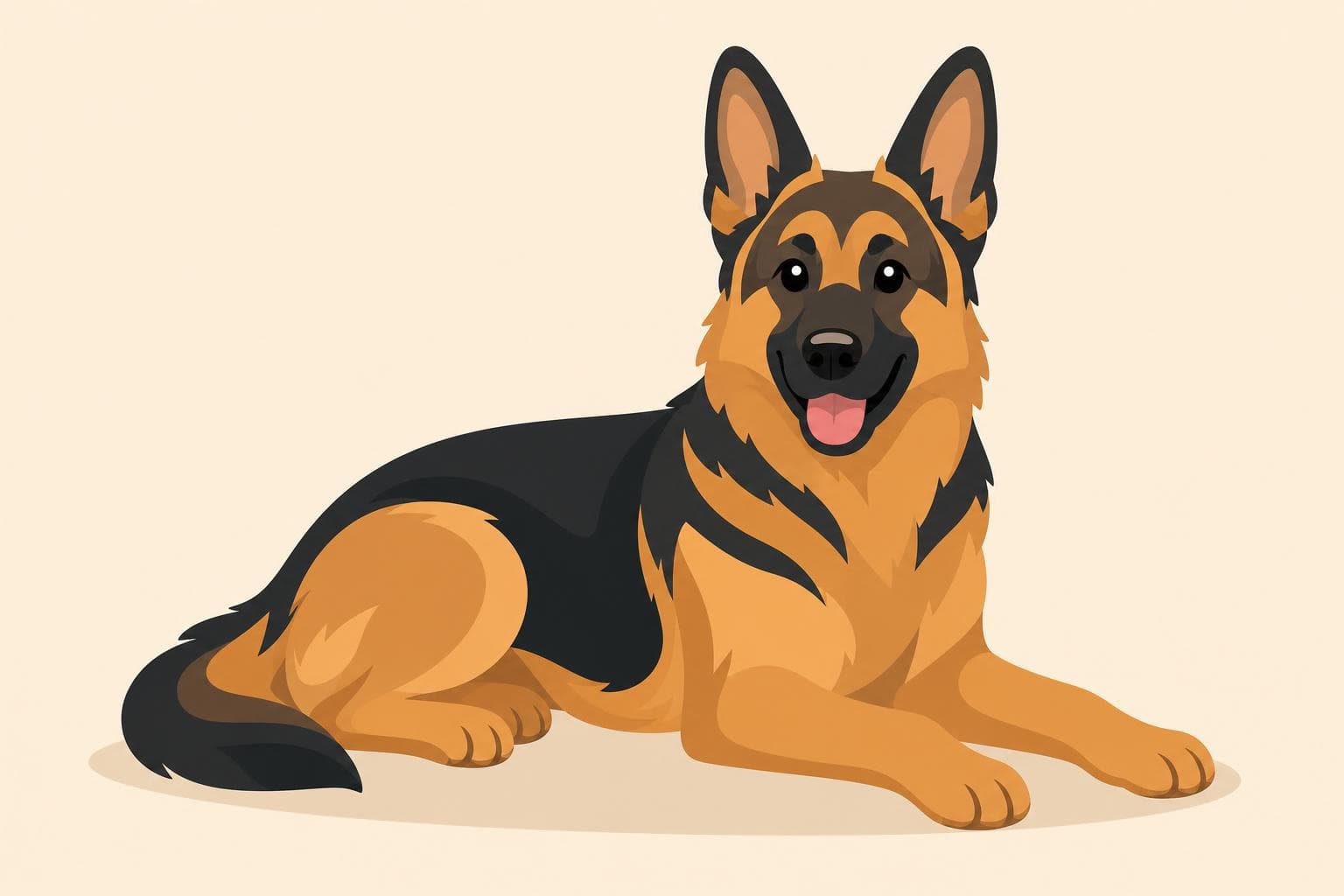
German Shepherd Dog
German Shepherds are famously devoted family dogs who form deep bonds with their people and take their 'job' as household companion seriously. They're smart, sensitive, and often pick up on the emotional tone of the home, which makes them wonderful companions for kids who treat them with respect. Expect a dog who wants to be near the family at all times, often shadowing you from room to room.
Behavior & traits
- devoted to family
- gentle with kids
- naturally protective
- eager to learn
- watchful
Health concerns
German Shepherds are prone to hip and elbow dysplasia, so reputable breeders screen for these conditions and families should avoid encouraging excessive jumping in puppies. They can also experience bloat (gastric torsion), degenerative myelopathy in older age, and skin allergies. Regular vet checkups and pet insurance are smart investments for this breed.
Responsible breeding and regular check-ups go a long way. Always ask breeders about health testing.
Feeding & nutrition
Adult German Shepherds typically eat 3–4 cups of high-quality large-breed food per day, split into two meals to help reduce the risk of bloat. Puppies need a large-breed puppy formula to support steady, controlled growth that protects developing joints. Avoid feeding right before or after vigorous exercise.
Exercise needs
This is a working breed that needs at least 1–2 hours of daily exercise, including walks, runs, fetch, or backyard play. Mental workouts matter just as much — puzzle toys, training sessions, and games like hide-and-seek with the kids help burn off that busy brain. A bored Shepherd will invent their own (often destructive) entertainment.
Living with a German Shepherd Dog
Living with a German Shepherd means having a constant, devoted shadow — they want to be wherever the family is, whether that's helping unload groceries or supervising bath time. They shed heavily year-round and 'blow' their coat twice a year, so expect tumbleweeds of fur and plan for regular vacuuming. Most Shepherds are naturally watchful and may bark at the doorbell or unfamiliar sounds, which families either love (built-in alarm system) or have to train through. With kids, they're often patient and protective, though their size and energy mean toddlers need supervision so no one gets accidentally bowled over. The reward is a deeply loyal companion who feels like a true member of the family.
Recommended products
A sturdy slicker brush and undercoat rake are non-negotiable for managing the heavy shedding, along with a powerful vacuum designed for pet hair. Invest in a well-fitted no-pull harness for walks, a raised slow-feeder bowl to support digestion, and durable chew toys like Kong Extremes that can stand up to strong jaws. Puzzle feeders and training treat pouches are also worthwhile to keep that sharp mind engaged during everyday family life.
Reads for German Shepherd Dog owners
![[header] A calm owner sitting on the floor with a relaxed dog leaning](/_next/image?url=https%3A%2F%2Fimages.ctfassets.net%2Fq8y32akc6zms%2F2ciptjZRZ8GgpFJqmXxaM6%2F4e013e2dced5e35a2072e8087e60bb16%2Fheader.jpg&w=3840&q=75)
The Calm Anchor: The Owner Archetype Reactive and Nervous Dogs Settle Best With
The Calm Anchor is the owner whose nervous system doesn't join in when a walk goes sideways — and that steadiness is exactly what a reactive or anxious dog needs to borrow from. If your assessment landed you here, this is the full portrait: what your calm does for a dog, the dog personalities most likely to thrive under your roof, and the one habit that quietly holds you back.
![[header] Illustration of a watchful guardian dog sitting alertly besi](/_next/image?url=https%3A%2F%2Fimages.ctfassets.net%2Fq8y32akc6zms%2F2Oiyfk7KLxhUOTUScQ79ns%2F04806719648a4ceb6fbf10048f84b3bf%2Fheader.jpg&w=3840&q=75)
The Loyal Guardian: The Dog Who Quietly Appointed Themselves Your Bodyguard
Devoted, watchful, and quietly convinced you need protecting — The Loyal Guardian is the dog who reads the room before you do and picks their people for keeps. Here's what makes them tick, the owners who bring out their best, and the breeds that tend to land in this archetype.
![[header] Flat cartoon illustration of an owner training an attentive](/_next/image?url=https%3A%2F%2Fimages.ctfassets.net%2Fq8y32akc6zms%2F7CllxL16iNPhcl8q0z6bIP%2F7fd060804f20a0c5d711a64ff4e038e8%2Fheader.jpg&w=3840&q=75)
The Coach: The Owner Archetype Who Turns Training Into a Love Language
Organised, driven, and happiest when there's a plan? You might be The Coach — the owner archetype who turns training into a love language and gets the best out of a smart, high-drive dog. Here's the portrait, the pairings that click, and the one growth edge worth watching.