German Shorthaired Pointer
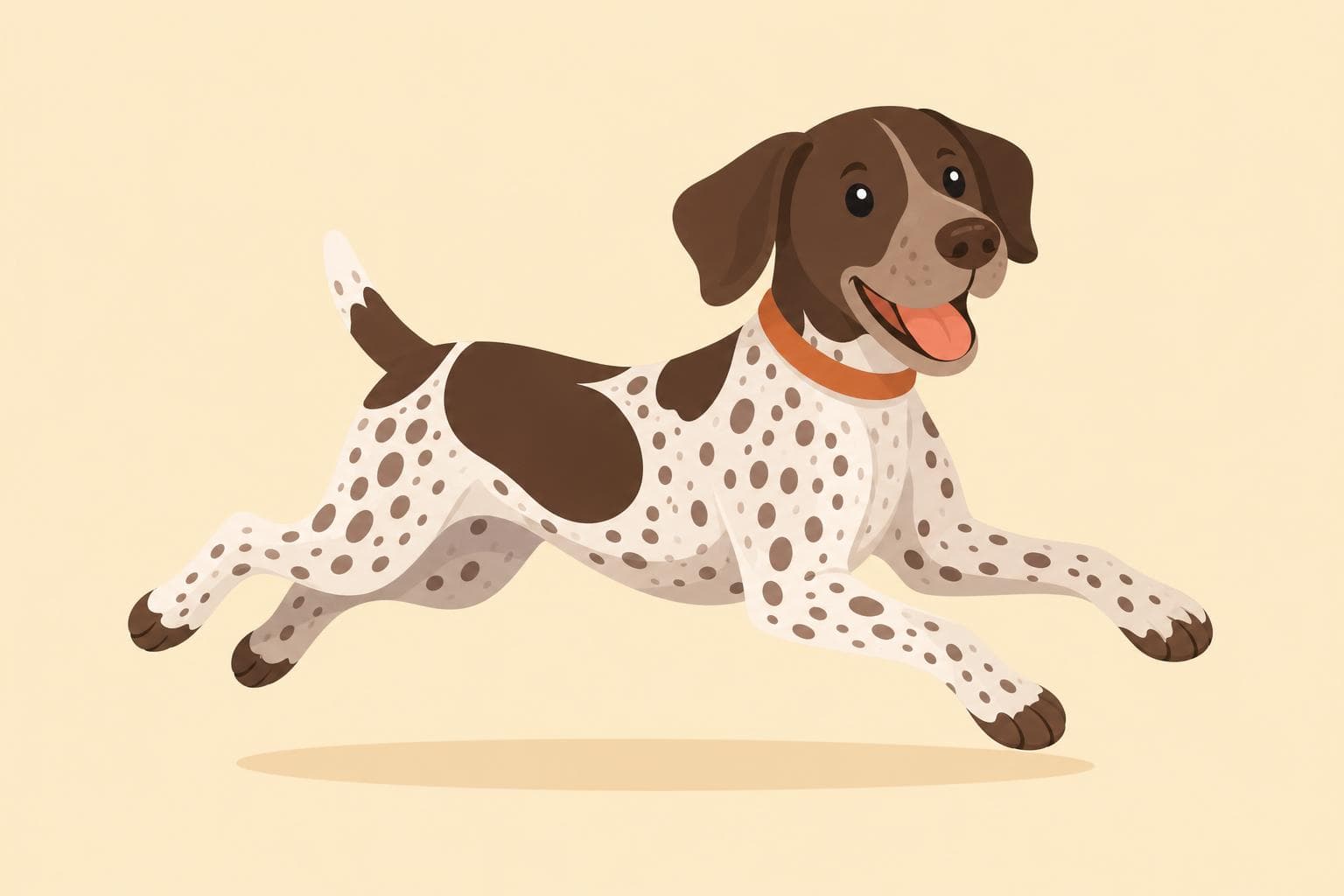
The German Shorthaired Pointer is a versatile sporting dog with a big heart and an even bigger appetite for adventure. In a family setting, they're affectionate, goofy, and deeply bonded to their people — often following family members from room to room. They thrive on inclusion and tend to do best when treated as a full member of the household rather than left alone for long stretches.
Behavior & traits
- loyal companion
- gentle with kids
- playful
- highly trainable
- strong prey drive
Health concerns
GSPs are generally a hardy breed but can be prone to hip dysplasia, bloat (gastric torsion), and certain eye conditions like entropion. Some lines are also susceptible to von Willebrand's disease and lymphedema. Regular vet checkups and choosing a reputable breeder who health-tests their dogs go a long way in catching issues early.
Responsible breeding and regular check-ups go a long way. Always ask breeders about health testing.
Feeding & nutrition
A high-quality, protein-rich diet suited for active sporting breeds works best, typically split into two meals a day to help reduce the risk of bloat. Most adult GSPs eat between 2 and 3 cups of food daily, adjusted based on their activity level. Avoid heavy exercise immediately before or after meals, and always keep fresh water available.
Exercise needs
GSPs need a minimum of 1–2 hours of vigorous exercise every day — walks alone won't cut it. Families do best when they fold the dog into active routines like hiking, running, biking, swimming, or fetch sessions in a securely fenced yard. Mental enrichment through training games, scent work, or puzzle toys is equally important to prevent boredom-driven mischief.
Living with a German Shorthaired Pointer
Living with a German Shorthaired Pointer means living with a shadow — these dogs want to be wherever you are, whether that's the kitchen, the couch, or the backyard. Mornings usually start early with a need to burn energy, and families quickly learn that a tired GSP is a well-behaved GSP. They're wonderful with kids, often patient and playful, though their exuberance can knock over toddlers, so supervision matters. Expect some quirky surprises: they love to lean against you, 'point' at squirrels mid-walk, and may try to claim the comfiest spot on the bed. The biggest reward is their loyalty — once a GSP bonds with your family, you have a devoted, joyful companion for life.
Recommended products
A sturdy front-clip harness or martingale collar is essential for managing their pulling power on walks, especially when prey drive kicks in. Invest in durable chew toys, puzzle feeders, and a long training lead for safe off-leash practice in open spaces. A raised slow-feeder bowl helps reduce bloat risk, and a warm dog coat is genuinely useful in winter since their short coats offer little insulation. A rubber grooming mitt or hound glove handles their minimal shedding nicely.
Reads for German Shorthaired Pointer owners
The Social Connector: The Owner Who Makes the Dog Park Feel Like a Neighborhood
You're the one who knows every dog on the block by name — and probably every owner too. The Social Connector turns a walk around the corner into a small social event, and the right dog makes that whole world richer. Here's the portrait, the growth edge no one warned you about, and the dog personalities that fit your rhythm best.
![[header] Illustration of a relaxed owner strolling a sunny neighborho](/_next/image?url=https%3A%2F%2Fimages.ctfassets.net%2Fq8y32akc6zms%2F6eSvQziNmOnrewqdpXkKdn%2Fe930e191be428211be063b7c4fb6ffb0%2Fheader.jpg&w=3840&q=75)
The Improviser: The Owner Who Rolls With Whatever the Day Brings
Your LiveLaughWoof result came back as The Improviser — the curious, socially wired, gloriously unstructured owner who treats every day as an opportunity to see what happens. Here's what that says about the life you're building with a dog, the dog personalities most likely to flourish alongside you, and the one habit worth locking in so your free-spirited rhythm doesn't leave your dog guessing.
![[header] A bouncy dog leaping joyfully through a sunlit park in flat](/_next/image?url=https%3A%2F%2Fimages.ctfassets.net%2Fq8y32akc6zms%2F4cFY2HKkMBNgbcHmNaqIDL%2F72d10e50225d48b1d956db70d928322f%2Fheader.jpg&w=3840&q=75)
The Zoomie Champion: The Dog Who Lives Life at Full Speed
Bold, bouncy, and always ready for the next thing — the Zoomie Champion is the dog who treats every day as an invitation to run, greet, and play. If your dog's assessment landed here, this portrait explains what makes them tick, where the friction points hide, and which kind of owner brings out their sunniest side.