German Wirehaired Pointer
German Wirehaired Pointers are devoted, lively companions who bond deeply with their people and thrive on being part of everything the family does. They're affectionate and playful at home, but their working-dog roots mean they're always ready for action, whether that's a hike, a game in the yard, or a training session. With proper socialization, they're warm and gentle with children in their own family, though they can be reserved around strangers, which makes them naturally watchful without being overly aggressive.
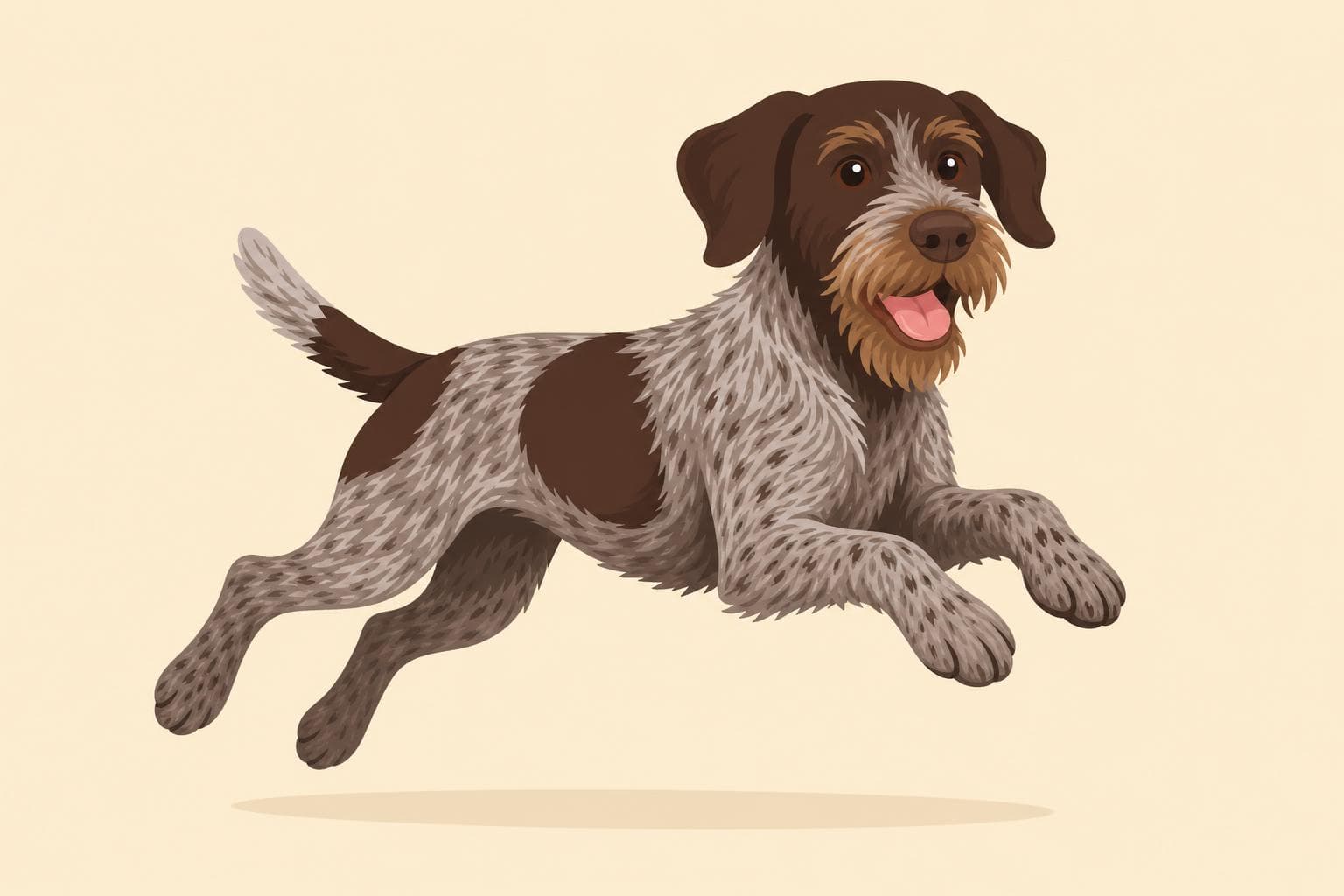
Behavior & traits
- devoted to family
- playful with kids
- protective
- highly trainable
- needs a job to do
Health concerns
German Wirehaired Pointers are generally healthy, but families should be aware of hip dysplasia, certain eye conditions like cataracts, and a predisposition to ear infections due to their floppy ears. Bloat (gastric torsion) is also a concern in deep-chested breeds like this one, so feeding habits matter. Regular vet checkups and screenings from a reputable breeder can go a long way toward catching issues early.
Responsible breeding and regular check-ups go a long way. Always ask breeders about health testing.
Feeding & nutrition
A high-quality diet formulated for active, large-breed dogs works best, typically split into two meals a day to reduce the risk of bloat. Most adult GWPs do well on 2.5 to 3 cups of food daily, adjusted for their activity level and age. Avoid heavy exercise right before or after meals, and keep an eye on weight since lean is healthier for their joints long-term.
Exercise needs
This is a high-octane breed that needs at least 1–2 hours of vigorous activity every day to stay balanced and happy. Families who love hiking, jogging, swimming, or playing fetch in a big yard will find a perfect partner here, and adding training games or scent work helps tire out their busy mind. Without enough exercise, a GWP can become restless and mischievous, so daily movement isn't optional — it's essential.
Living with a German Wirehaired Pointer
Living with a German Wirehaired Pointer means signing up for an active, engaged lifestyle — these dogs want to be where you are, all day, every day. Mornings often start with a brisk walk or run, and you'll quickly learn that a tired GWP is a well-behaved GWP, while a bored one might rearrange your shoes or dig up the garden. They're surprisingly affectionate cuddlers after a good adventure, often plopping down beside the kids during homework or movie time. Their wiry coat is low-maintenance compared to some breeds but does shed, and their natural protectiveness means they'll let you know when someone's at the door. Families who embrace the outdoors will find the GWP a loyal, hilarious, and deeply loving member of the household.
Recommended products
A sturdy front-clip harness and a 6-foot leash are must-haves for daily walks and training, since GWPs are strong and love to pull toward interesting scents. Invest in a slicker brush and stripping comb to manage their wiry coat, plus a gentle ear cleaner to prevent infections in those floppy ears. Durable chew toys, puzzle feeders, and a long-line for backyard recall practice will help channel their energy, and a raised slow-feeder bowl supports healthy mealtime habits.
Reads for German Wirehaired Pointer owners
![[header] Border Collie with puzzle toys](/_next/image?url=https%3A%2F%2Fimages.ctfassets.net%2Fq8y32akc6zms%2F7eTvC6qBF3gqDFvQSzcpXM%2Fa35b628bfd670bfc52bf4bcd532fc1b6%2Fheader.jpg&w=3840&q=75)
Engaging Activities for Border Collies: A How-To Guide
Is your Border Collie always on the lookout for something to do? Dive into engaging mental activities that will keep their sharp minds busy and entertained!
![[header] Senior dog resting on an orthopedic bed while a puppy waits](/_next/image?url=https%3A%2F%2Fimages.ctfassets.net%2Fq8y32akc6zms%2F4EwnObSBED8EN4IbvFJgaN%2Fc15a1446d531fd28d8e6854c46c3de7f%2Fheader.jpg&w=3840&q=75)
Before the Puppy Arrives: A Pre-Arrival Checklist for Your Senior Dog
Your calm senior dog has been quietly compensating for aches, stiffness, and fading senses for years — and a new puppy is about to expose all of it. This pre-arrival checklist walks you through the vet workup, pain baseline, and home setup to tackle in the weeks *before* pickup day, so your older dog isn't blindsided by the chaos.
![[header] Small dog wearing a soft mesh harness walking on a sunny pat](/_next/image?url=https%3A%2F%2Fimages.ctfassets.net%2Fq8y32akc6zms%2F3p03PzT9zANgbTC9dAOMJ2%2Ff95efe8539856e9489ef9bd4e861c4ba%2Fheader.jpg&w=3840&q=75)
Comfortable Harnesses for Small Dogs Prone to Tracheal Collapse
Is your small dog coughing from their collar? Discover harnesses designed for pups prone to tracheal collapse, offering protection and comfort with every walk.