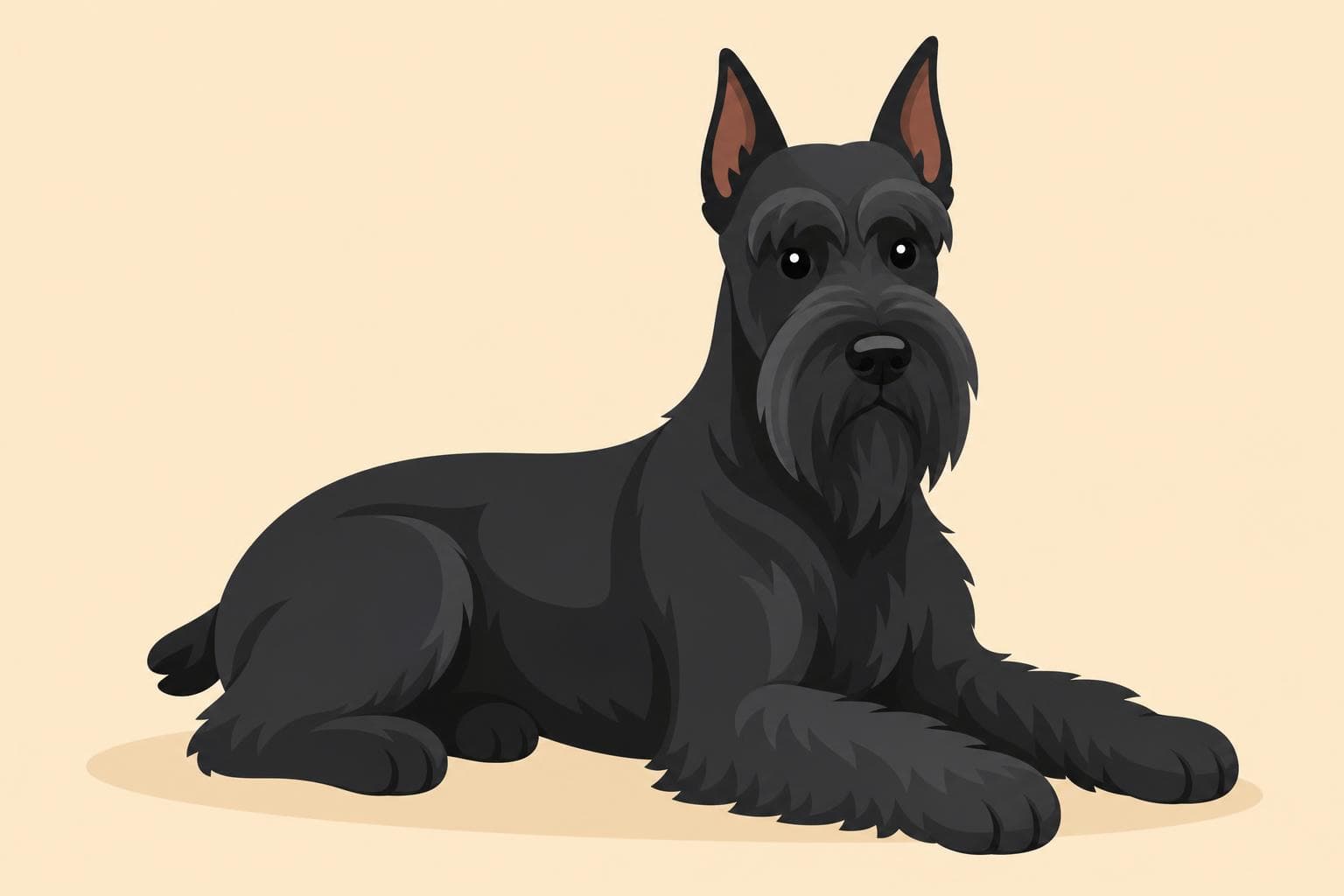
Giant Schnauzer
Giant Schnauzers are bold, brainy dogs who form incredibly tight bonds with their families. They're affectionate goofballs at home with the people they love, but naturally watchful and reserved with strangers. In a family setting, they often appoint themselves as the household guardian while staying playful and engaged with daily life. Their intelligence means they need a job to do, whether that's training games, fetch, or simply tagging along on errands.
Behavior & traits
- loyal to family
- protective watchdog
- playful with kids
- strong willed
- highly intelligent
Health concerns
Giant Schnauzers can be prone to hip dysplasia, bloat (gastric torsion), and certain eye conditions like progressive retinal atrophy. They may also experience hypothyroidism and, in some lines, autoimmune disorders. Regular vet checkups, a slow-feeder bowl to reduce bloat risk, and reputable breeders who health-test their dogs go a long way in supporting a long, healthy life.
Responsible breeding and regular check-ups go a long way. Always ask breeders about health testing.
Feeding & nutrition
Plan on 3–4 cups of high-quality large-breed dog food daily, split into two meals to help reduce the risk of bloat. Look for formulas with quality protein and joint-supporting ingredients like glucosamine. Avoid heavy exercise right before or after meals, and keep an eye on treats since these athletic dogs can pack on weight if overfed.
Exercise needs
Giant Schnauzers need at least 1–2 hours of vigorous exercise every day, including walks, runs, fetch, or off-leash play in a secure yard. They thrive on having a purpose, so families can meet their needs through hiking, agility, obedience work, or even backyard training sessions with the kids. A bored Giant Schnauzer can become destructive, so mental challenges are just as important as physical ones.
Living with a Giant Schnauzer
Living with a Giant Schnauzer means having a four-legged shadow who wants to be wherever you are — kitchen, couch, carpool line, you name it. They're often goofy and playful at home, surprising new owners with their sense of humor, but they take their watchdog duties seriously and will absolutely announce the mail carrier. Families quickly learn that this breed thrives on structure: consistent rules, daily exercise, and clear leadership make for a happy, well-mannered companion. Kids and Giant Schnauzers can be a wonderful match, especially when children are old enough to respect the dog's size and energy, and when everyone participates in training. Expect a dog who's deeply devoted, occasionally stubborn, fiercely loyal, and never, ever boring.
Recommended products
A sturdy front-clip harness and a 6-foot leash are must-haves for managing this powerful breed on walks. Invest in quality grooming tools — a slicker brush, metal comb, and stripping comb or clippers — since their wiry double coat needs brushing several times a week and professional grooming every 6–8 weeks. Puzzle feeders, durable chew toys like Kongs, and a raised slow-feeder bowl help channel their brainpower and reduce bloat risk. A comfortable orthopedic dog bed is also worth the investment to support their joints as they grow and age.
Reads for Giant Schnauzer owners
![[header] Border Collie with puzzle toys](/_next/image?url=https%3A%2F%2Fimages.ctfassets.net%2Fq8y32akc6zms%2F7eTvC6qBF3gqDFvQSzcpXM%2Fa35b628bfd670bfc52bf4bcd532fc1b6%2Fheader.jpg&w=3840&q=75)
Engaging Activities for Border Collies: A How-To Guide
Is your Border Collie always on the lookout for something to do? Dive into engaging mental activities that will keep their sharp minds busy and entertained!
![[header] Senior dog resting on an orthopedic bed while a puppy waits](/_next/image?url=https%3A%2F%2Fimages.ctfassets.net%2Fq8y32akc6zms%2F4EwnObSBED8EN4IbvFJgaN%2Fc15a1446d531fd28d8e6854c46c3de7f%2Fheader.jpg&w=3840&q=75)
Before the Puppy Arrives: A Pre-Arrival Checklist for Your Senior Dog
Your calm senior dog has been quietly compensating for aches, stiffness, and fading senses for years — and a new puppy is about to expose all of it. This pre-arrival checklist walks you through the vet workup, pain baseline, and home setup to tackle in the weeks *before* pickup day, so your older dog isn't blindsided by the chaos.
![[header] Small dog wearing a soft mesh harness walking on a sunny pat](/_next/image?url=https%3A%2F%2Fimages.ctfassets.net%2Fq8y32akc6zms%2F3p03PzT9zANgbTC9dAOMJ2%2Ff95efe8539856e9489ef9bd4e861c4ba%2Fheader.jpg&w=3840&q=75)
Comfortable Harnesses for Small Dogs Prone to Tracheal Collapse
Is your small dog coughing from their collar? Discover harnesses designed for pups prone to tracheal collapse, offering protection and comfort with every walk.