Gordon Setter
Gordon Setters are the most loyal and family-focused of the setter breeds, often described as 'velcro dogs' who want to be wherever their people are. They're affectionate and playful at home but carry themselves with a confident, dignified air outdoors. With proper socialization, they're patient and gentle with children, though their size and exuberance mean toddlers may get bumped during zoomies. They tend to be more reserved with strangers than other setters, making them surprisingly good watchdogs for a sporting breed.
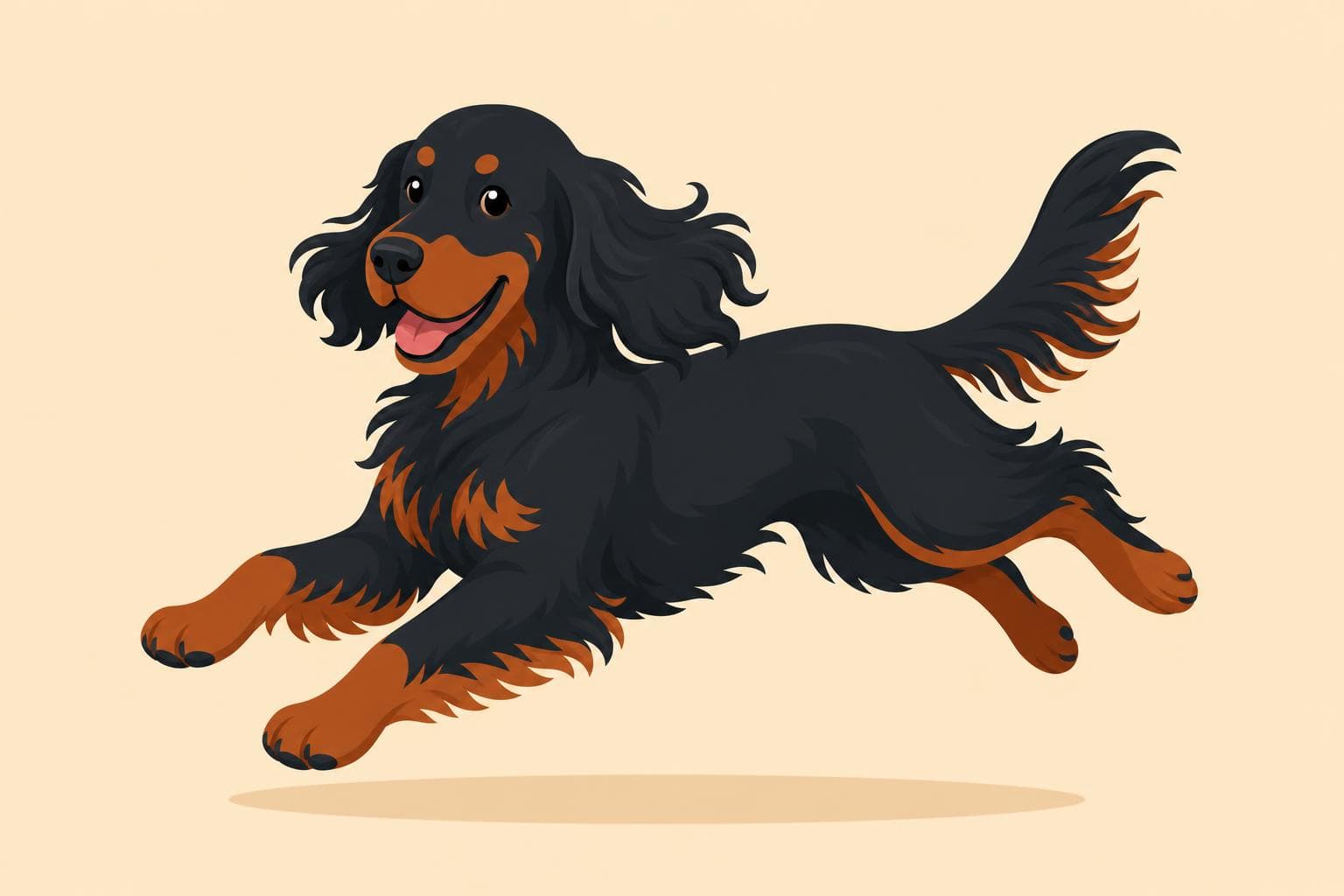
Behavior & traits
- devoted to family
- gentle with kids
- alert watchdog
- playful
- eager to please
Health concerns
Gordon Setters are prone to hip dysplasia, bloat (gastric torsion), and progressive retinal atrophy, so families should choose breeders who health-test their lines. Bloat is particularly important to understand — feeding smaller meals and avoiding heavy exercise right after eating can reduce risk. Regular vet checkups and keeping an eye on weight will help these athletic dogs stay healthy into their senior years.
Responsible breeding and regular check-ups go a long way. Always ask breeders about health testing.
Feeding & nutrition
A high-quality large-breed food split into two or three meals a day works best, both for digestion and to reduce bloat risk. Most adult Gordons do well on 2–3 cups of kibble daily, adjusted for their activity level. Slow-feeder bowls are a smart investment, and fresh water should always be available — though avoid heavy gulping right before or after exercise.
Exercise needs
Gordon Setters need at least 60–90 minutes of vigorous exercise daily, including off-leash running when possible. Families who hike, jog, bike, or have a large fenced yard will find this breed thrives in their routine. Mental stimulation matters just as much — scent games, retrieving, and training sessions help prevent the boredom-driven mischief these clever dogs can get into.
Living with a Gordon Setter
Living with a Gordon Setter means having a shadow — they follow their favorite people from room to room and aren't shy about leaning into you for affection. They settle nicely indoors once exercised, but a Gordon without enough activity can turn the living room into a racetrack or rearrange the couch cushions out of boredom. Their gorgeous black-and-tan coat needs brushing two or three times a week, with extra attention to the feathering on the legs and belly that loves to collect burrs and mud. Families are often surprised by their sense of humor — Gordons can be downright comedic — and by how protective and tuned-in they are to children's moods. Expect dog hair on your clothes, muddy paw prints after rainy walks, and a deeply devoted companion who considers your family the center of his universe.
Recommended products
A sturdy slicker brush and metal comb are essential for managing the silky feathering and preventing mats, along with grooming scissors for trimming around the ears and feet. A no-pull harness helps with leash manners during the enthusiastic adolescent stage, and a slow-feeder bowl plus an elevated feeder can help reduce bloat risk. Stock up on durable interactive toys like treat-dispensing puzzles and long-lasting chew toys, and consider a long training lead for safe off-leash practice in open spaces.
Reads for Gordon Setter owners
![[header] Border Collie with puzzle toys](/_next/image?url=https%3A%2F%2Fimages.ctfassets.net%2Fq8y32akc6zms%2F7eTvC6qBF3gqDFvQSzcpXM%2Fa35b628bfd670bfc52bf4bcd532fc1b6%2Fheader.jpg&w=3840&q=75)
Engaging Activities for Border Collies: A How-To Guide
Is your Border Collie always on the lookout for something to do? Dive into engaging mental activities that will keep their sharp minds busy and entertained!
![[header] Senior dog resting on an orthopedic bed while a puppy waits](/_next/image?url=https%3A%2F%2Fimages.ctfassets.net%2Fq8y32akc6zms%2F4EwnObSBED8EN4IbvFJgaN%2Fc15a1446d531fd28d8e6854c46c3de7f%2Fheader.jpg&w=3840&q=75)
Before the Puppy Arrives: A Pre-Arrival Checklist for Your Senior Dog
Your calm senior dog has been quietly compensating for aches, stiffness, and fading senses for years — and a new puppy is about to expose all of it. This pre-arrival checklist walks you through the vet workup, pain baseline, and home setup to tackle in the weeks *before* pickup day, so your older dog isn't blindsided by the chaos.
![[header] Small dog wearing a soft mesh harness walking on a sunny pat](/_next/image?url=https%3A%2F%2Fimages.ctfassets.net%2Fq8y32akc6zms%2F3p03PzT9zANgbTC9dAOMJ2%2Ff95efe8539856e9489ef9bd4e861c4ba%2Fheader.jpg&w=3840&q=75)
Comfortable Harnesses for Small Dogs Prone to Tracheal Collapse
Is your small dog coughing from their collar? Discover harnesses designed for pups prone to tracheal collapse, offering protection and comfort with every walk.