Great Pyrenees
Great Pyrenees are the gentle giants of the working group, known for their calm, almost regal demeanor at home and their deep devotion to their people. Bred to guard livestock, they have a natural protective streak that extends to every member of the family, especially children. Don't be surprised if your Pyr quietly positions themselves between your kids and the front door — that's just who they are. They're affectionate without being clingy, and independent enough to think for themselves, which gives them an old-soul charm families adore.
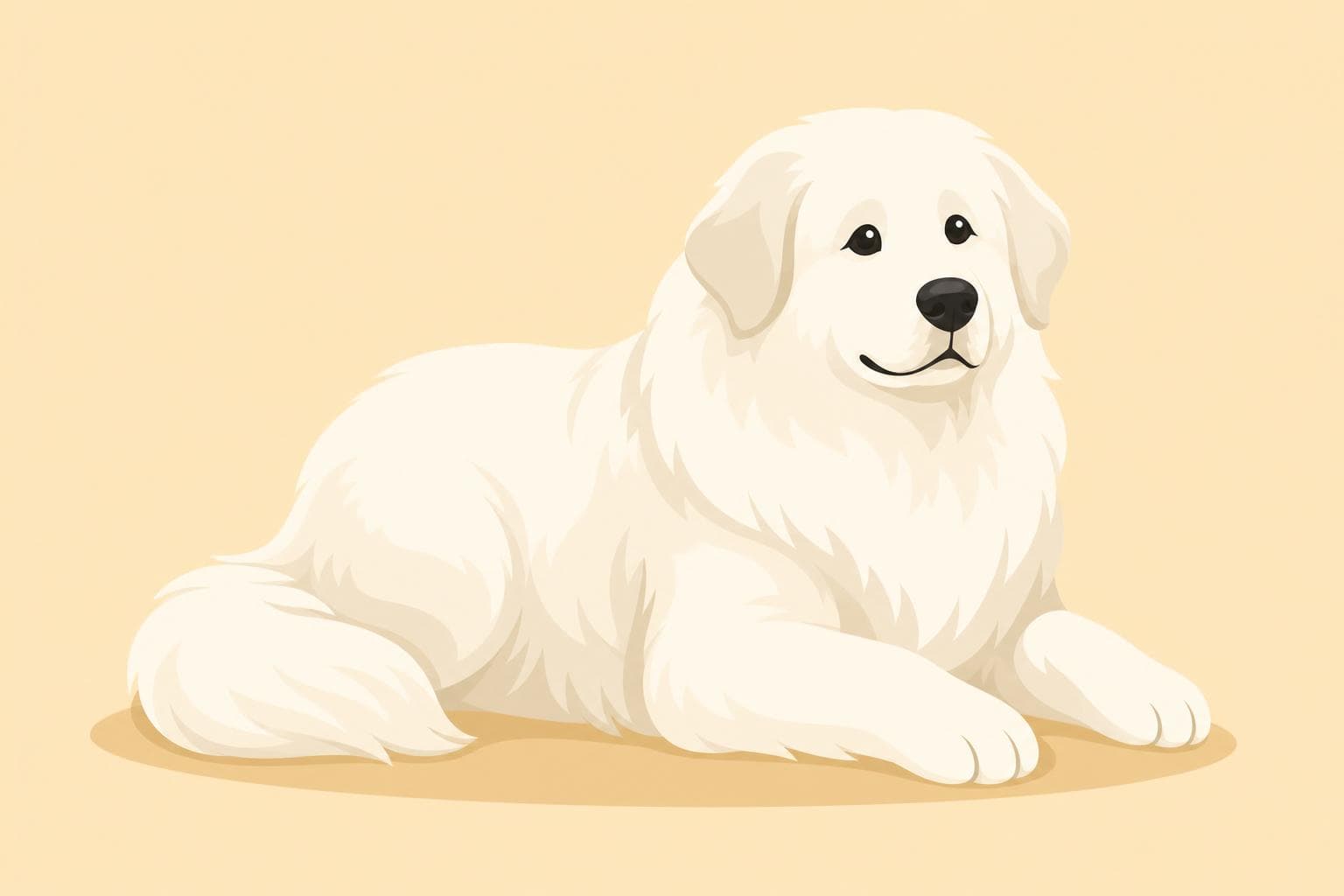
Behavior & traits
- devoted to family
- wonderful with children
- naturally protective
- independent thinker
- calm indoors
Health concerns
Like many large breeds, Great Pyrenees can be prone to hip and elbow dysplasia, as well as bloat (gastric torsion), which families should learn to recognize early. They can also experience patellar luxation and certain heart conditions, so regular vet checkups are important. Choosing a reputable breeder who health-tests their dogs goes a long way in setting your pup up for a healthy life.
Responsible breeding and regular check-ups go a long way. Always ask breeders about health testing.
Feeding & nutrition
Great Pyrenees do best on a high-quality large-breed formula that supports healthy joints and steady growth, especially during puppyhood when rapid growth can stress developing bones. Most adults eat 4–6 cups of food daily, split into two meals to reduce bloat risk. Always offer fresh water and avoid heavy exercise right after meals.
Exercise needs
Despite their size, Pyrs have moderate exercise needs — a couple of daily walks and some yard time usually satisfy them. They're not the breed for marathon runs, but they love leisurely hikes, exploring a fenced yard, and cool-weather adventures with the family. A securely fenced yard is essential, as their guardian instincts can lead them to roam and expand their 'territory.'
Living with a Great Pyrenees
Living with a Great Pyrenees is a bit like sharing your home with a fluffy, four-legged guardian angel who happens to weigh as much as a teenager. They're remarkably calm indoors — often content to sprawl across the coolest tile floor they can find — but they're always aware of what's going on. Families quickly learn that Pyrs are nocturnal barkers by nature, alerting to every rustle outside, so good training and understanding neighbors help. Their white coat sheds constantly, with two big 'coat blows' a year that will redecorate your floors in fluff. Still, most Pyr families say the trade-off is more than worth it: these dogs are patient with toddlers, watchful with older kids, and deeply bonded to the whole household in a way that feels almost human.
Recommended products
A heavy-duty slicker brush and an undercoat rake are absolute must-haves for managing that thick double coat, along with a high-velocity dryer if you want to stay ahead of shedding season. Invest in an elevated, large-breed feeder and a slow-feeder bowl to help reduce bloat risk, plus a sturdy no-pull harness designed for giant breeds. A cooling mat is a game-changer in summer, and durable chew toys like Nylabone Galileo or West Paw Hurley stand up to their powerful jaws.
Reads for Great Pyrenees owners
![[header] A white Great Pyrenees resting on an elevated cot bed on a s](/_next/image?url=https%3A%2F%2Fimages.ctfassets.net%2Fq8y32akc6zms%2F3EocI6OYKwZACILJyBUad9%2F39124defd37f49641b6e15d0c795905f%2Fheader.jpg&w=3840&q=75)
Great Pyrenees in Hot Climates: How This Mountain Breed Handles Southern Summers
Most breed guides warn vaguely that Great Pyrenees don't do well in heat — but plenty of them live happy lives in Texas and Florida. The secret isn't shaving them (please don't) or moving to Colorado. It's understanding how that double coat actually works and shifting your daily rhythm to match a dog built for dawn patrols and midday naps.
![[header] Border Collie with puzzle toys](/_next/image?url=https%3A%2F%2Fimages.ctfassets.net%2Fq8y32akc6zms%2F7eTvC6qBF3gqDFvQSzcpXM%2Fa35b628bfd670bfc52bf4bcd532fc1b6%2Fheader.jpg&w=3840&q=75)
Engaging Activities for Border Collies: A How-To Guide
Is your Border Collie always on the lookout for something to do? Dive into engaging mental activities that will keep their sharp minds busy and entertained!
![[header] Senior dog resting on an orthopedic bed while a puppy waits](/_next/image?url=https%3A%2F%2Fimages.ctfassets.net%2Fq8y32akc6zms%2F4EwnObSBED8EN4IbvFJgaN%2Fc15a1446d531fd28d8e6854c46c3de7f%2Fheader.jpg&w=3840&q=75)
Before the Puppy Arrives: A Pre-Arrival Checklist for Your Senior Dog
Your calm senior dog has been quietly compensating for aches, stiffness, and fading senses for years — and a new puppy is about to expose all of it. This pre-arrival checklist walks you through the vet workup, pain baseline, and home setup to tackle in the weeks *before* pickup day, so your older dog isn't blindsided by the chaos.