Greater Swiss Mountain Dog
Greater Swiss Mountain Dogs, affectionately called 'Swissies,' are big-hearted gentle giants who thrive on being part of the family. They're confident and watchful enough to make excellent natural watchdogs, but at home they're remarkably calm, affectionate, and patient — especially with children they've grown up alongside. Swissies bond closely with their people and don't love being left alone for long stretches, preferring to be wherever the family is.
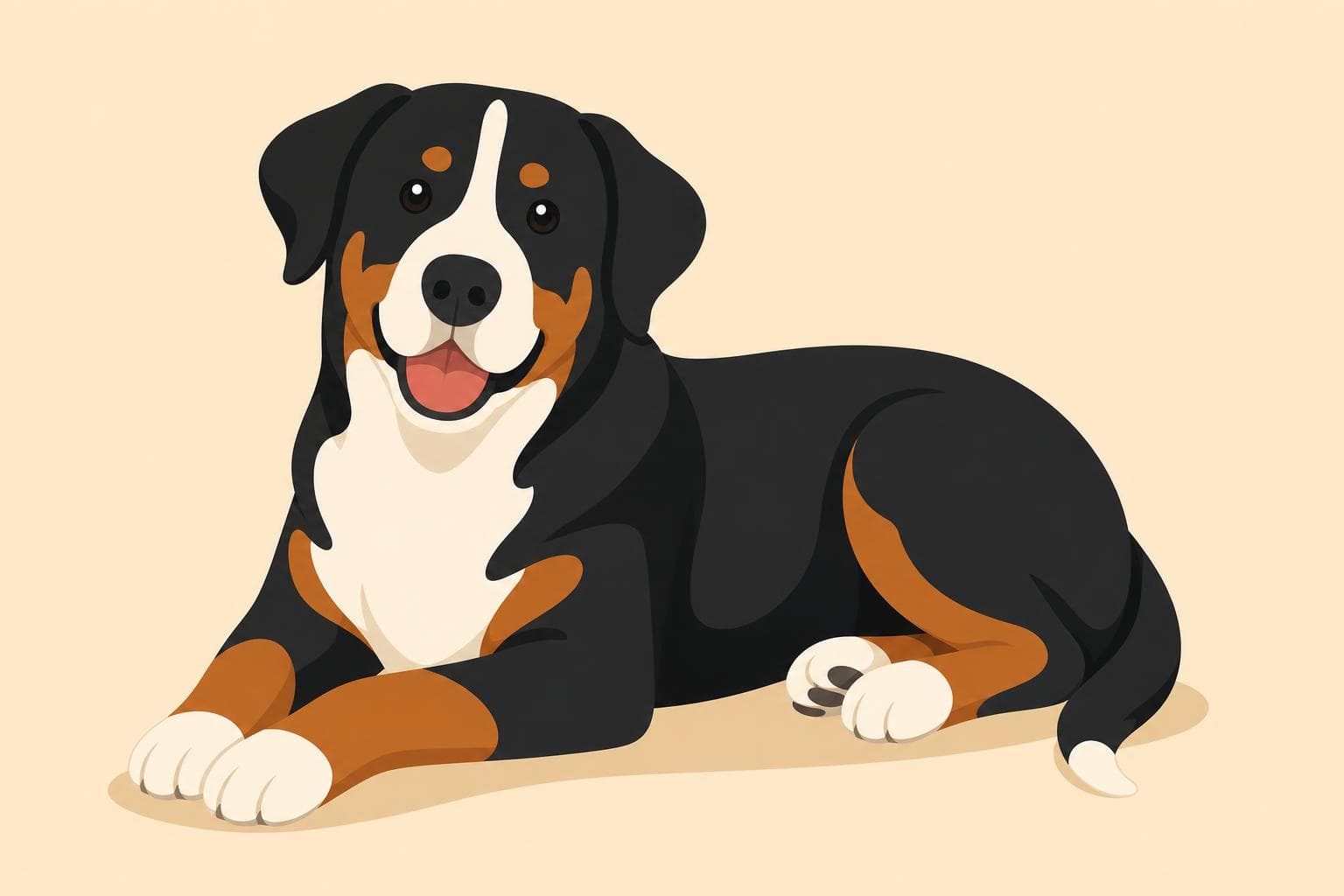
Behavior & traits
- gentle with kids
- loyal companion
- watchful and alert
- eager to please
- calm indoors
Health concerns
Like many large breeds, Greater Swiss Mountain Dogs are prone to hip and elbow dysplasia, as well as bloat (gastric torsion), which families should learn to recognize early. They can also be susceptible to epilepsy and certain orthopedic conditions like osteochondrosis. Regular vet checkups, a healthy weight, and avoiding heavy exercise right after meals go a long way in keeping them well.
Responsible breeding and regular check-ups go a long way. Always ask breeders about health testing.
Feeding & nutrition
Swissies need a high-quality large-breed formula that supports joint health and steady growth, especially during puppyhood when rapid development can stress their bones. Most adults do well on two measured meals per day rather than one large feeding, which also helps reduce bloat risk. Watch portion sizes carefully — these dogs love their food, and extra weight is hard on their frames.
Exercise needs
Despite their size, Swissies have moderate exercise needs — about 45–60 minutes of daily activity like brisk walks, hikes, or backyard play keeps them happy. They love having a job, so families can engage them with cart-pulling, weight-pulling sports, or simply helping carry the groceries in from the car. Avoid intense exercise in hot weather, as their thick coats make them prone to overheating.
Living with a Greater Swiss Mountain Dog
Living with a Swissy means sharing your home with a calm, devoted shadow who genuinely wants to be in the same room as you — preferably sprawled across your feet. They're surprisingly mellow indoors for such a large breed, often content to lounge while the kids do homework or watch a movie, but they perk up instantly for a walk or a romp in the yard. Families are often charmed (and occasionally surprised) by their deep, booming bark, their tendency to 'lean' affectionately against people, and the impressive amount of drool and shedding that comes with such a big coat. They're patient and protective with children, though their sheer size means toddlers should always be supervised — a happy tail wag can knock over a small child without meaning to. Expect muddy paw prints, a fur-covered couch, and one of the most loving, loyal companions your family will ever know.
Recommended products
A sturdy no-pull harness and a strong six-foot leash are essential for managing their size and strength on walks. Invest in an elevated, slow-feeder bowl to help reduce bloat risk and slow down enthusiastic eaters, plus an extra-large orthopedic bed to cushion those big joints. For grooming, a deshedding tool like a Furminator and a slicker brush will be your best friends during shedding season — and keep a stash of drool rags handy near the water bowl!
Reads for Greater Swiss Mountain Dog owners
![[header] Border Collie with puzzle toys](/_next/image?url=https%3A%2F%2Fimages.ctfassets.net%2Fq8y32akc6zms%2F7eTvC6qBF3gqDFvQSzcpXM%2Fa35b628bfd670bfc52bf4bcd532fc1b6%2Fheader.jpg&w=3840&q=75)
Engaging Activities for Border Collies: A How-To Guide
Is your Border Collie always on the lookout for something to do? Dive into engaging mental activities that will keep their sharp minds busy and entertained!
![[header] Senior dog resting on an orthopedic bed while a puppy waits](/_next/image?url=https%3A%2F%2Fimages.ctfassets.net%2Fq8y32akc6zms%2F4EwnObSBED8EN4IbvFJgaN%2Fc15a1446d531fd28d8e6854c46c3de7f%2Fheader.jpg&w=3840&q=75)
Before the Puppy Arrives: A Pre-Arrival Checklist for Your Senior Dog
Your calm senior dog has been quietly compensating for aches, stiffness, and fading senses for years — and a new puppy is about to expose all of it. This pre-arrival checklist walks you through the vet workup, pain baseline, and home setup to tackle in the weeks *before* pickup day, so your older dog isn't blindsided by the chaos.
![[header] Small dog wearing a soft mesh harness walking on a sunny pat](/_next/image?url=https%3A%2F%2Fimages.ctfassets.net%2Fq8y32akc6zms%2F3p03PzT9zANgbTC9dAOMJ2%2Ff95efe8539856e9489ef9bd4e861c4ba%2Fheader.jpg&w=3840&q=75)
Comfortable Harnesses for Small Dogs Prone to Tracheal Collapse
Is your small dog coughing from their collar? Discover harnesses designed for pups prone to tracheal collapse, offering protection and comfort with every walk.