Irish Water Spaniel
Often called the 'clown of the spaniel family,' the Irish Water Spaniel brings a wonderful mix of silly antics and sweet devotion into the home. They're deeply bonded to their people, eager to be part of every family activity, and tend to be playful and patient with children they've grown up around. While friendly with the family, they can be a bit reserved with strangers, which makes them surprisingly good little watchdogs without being overly barky.
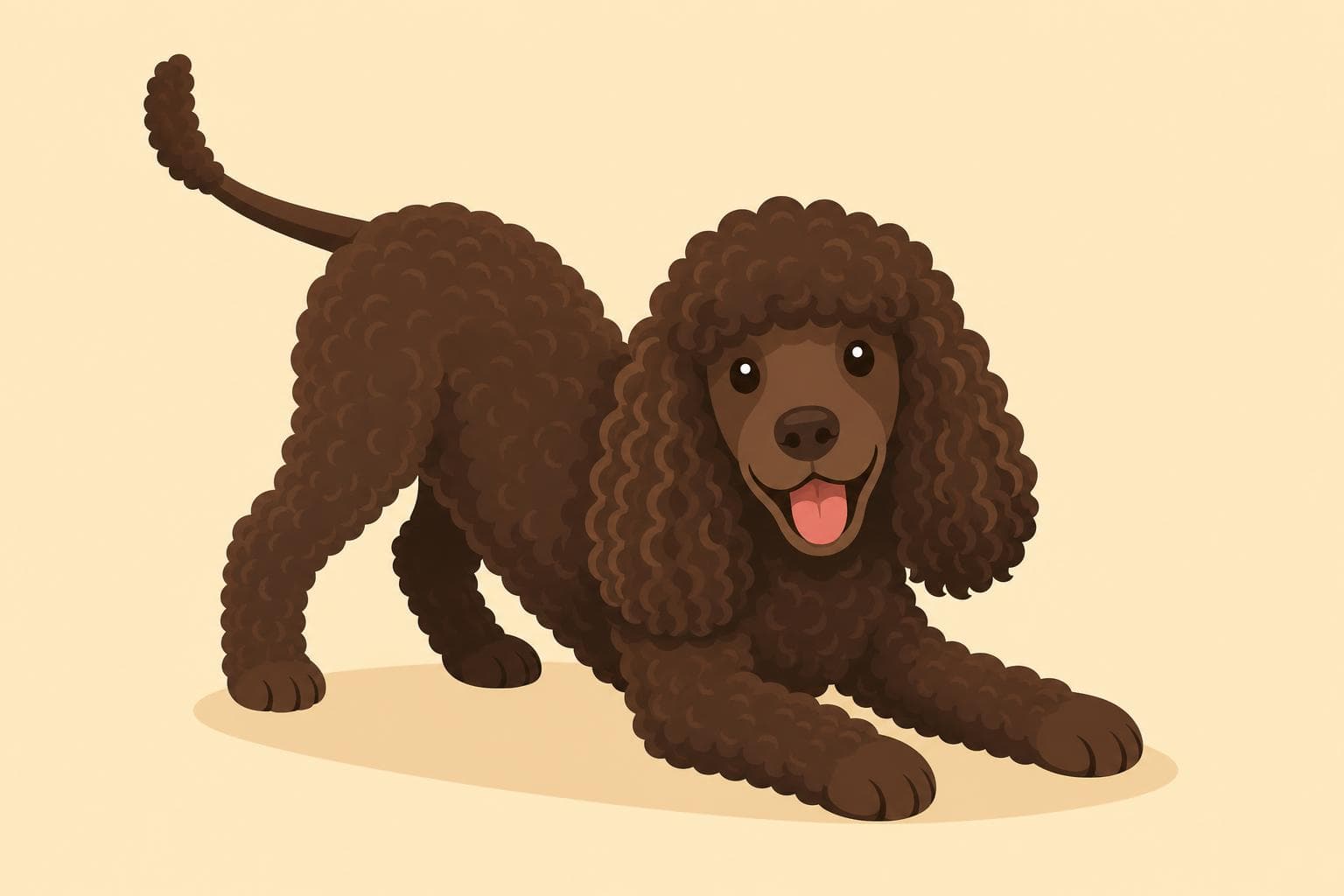
Behavior & traits
- goofy and fun loving
- devoted to family
- gentle with kids
- water loving
- alert watchdog
Health concerns
Irish Water Spaniels are generally a hardy breed, but families should watch for hip and elbow dysplasia, as well as eye conditions like progressive retinal atrophy. They can also be sensitive to certain medications and vaccines, so it's worth finding a vet familiar with the breed. Ear infections are another common issue due to their floppy, curly-coated ears, which trap moisture after swims and baths.
Responsible breeding and regular check-ups go a long way. Always ask breeders about health testing.
Feeding & nutrition
A high-quality diet formulated for active medium-to-large breeds works well, typically 1.5 to 2.5 cups of dry food per day split into two meals. Because they're enthusiastic and athletic, look for foods with good protein levels and joint-supporting ingredients like glucosamine. Keep an eye on portions, as a less-active IWS can put on weight that stresses their joints.
Exercise needs
Plan on at least an hour of vigorous exercise daily — these are working sporting dogs and they need to burn energy to stay happy. Families who love hiking, swimming, fetch in the yard, or dog sports like agility will find a perfect partner here. Bonus points if you live near a lake, river, or beach, because nothing makes an IWS happier than a good swim.
Living with a Irish Water Spaniel
Living with an Irish Water Spaniel is a little like having a curly-coated comedian in the house — they're constantly making the family laugh with their goofy antics and expressive faces. They love being where their people are, so expect a fuzzy shadow following you from the kitchen to the couch to the backyard. Their low-shedding coat is a big plus for households sensitive to dog hair, but it does mean regular brushing and trims become part of your routine. They thrive when included in family adventures, and a bored IWS left alone too long can get mischievous, so plan for plenty of mental and physical engagement. Kids often adore them because they're playful and game for almost anything, especially if water or a tennis ball is involved.
Recommended products
A slicker brush and metal comb are essential for keeping their tight curls free of mats, along with a good detangling spray and quality grooming scissors (or a trusted groomer on speed dial). Invest in a sturdy front-clip harness for walks, ear-cleaning solution to prevent infections after swims, and a quick-dry towel for post-water adventures. Durable fetch toys, floating retrievers, and puzzle feeders will help channel their energy and sharp minds into productive fun.
Reads for Irish Water Spaniel owners
![[header] Curly-haired dog playing with a toy in a backyard](/_next/image?url=https%3A%2F%2Fimages.ctfassets.net%2Fq8y32akc6zms%2F6fGlPNjUGDyXA8RKUqcebp%2Fcfaacba54f91b65c34ede4119ec7ae08%2Fheader.jpg&w=3840&q=75)
Safe and Engaging Toys for Chewers: A Guide for Curly-Coated Dogs
Choosing the right toy for your curly-coated dog helps to prevent coat damage and provide mental stimulation. Discover which toys work best to keep their curls intact and your pup entertained.
![[header] Border Collie with puzzle toys](/_next/image?url=https%3A%2F%2Fimages.ctfassets.net%2Fq8y32akc6zms%2F7eTvC6qBF3gqDFvQSzcpXM%2Fa35b628bfd670bfc52bf4bcd532fc1b6%2Fheader.jpg&w=3840&q=75)
Engaging Activities for Border Collies: A How-To Guide
Is your Border Collie always on the lookout for something to do? Dive into engaging mental activities that will keep their sharp minds busy and entertained!
![[header] Senior dog resting on an orthopedic bed while a puppy waits](/_next/image?url=https%3A%2F%2Fimages.ctfassets.net%2Fq8y32akc6zms%2F4EwnObSBED8EN4IbvFJgaN%2Fc15a1446d531fd28d8e6854c46c3de7f%2Fheader.jpg&w=3840&q=75)
Before the Puppy Arrives: A Pre-Arrival Checklist for Your Senior Dog
Your calm senior dog has been quietly compensating for aches, stiffness, and fading senses for years — and a new puppy is about to expose all of it. This pre-arrival checklist walks you through the vet workup, pain baseline, and home setup to tackle in the weeks *before* pickup day, so your older dog isn't blindsided by the chaos.