Irish Wolfhound
Irish Wolfhounds are often called 'gentle giants' for very good reason — they combine an imposing size with one of the sweetest, most easygoing temperaments in the dog world. At home they're typically calm, affectionate couch companions who quietly follow their family from room to room. Despite their hunting heritage, they're rarely aggressive and tend to greet visitors with friendly curiosity rather than suspicion.
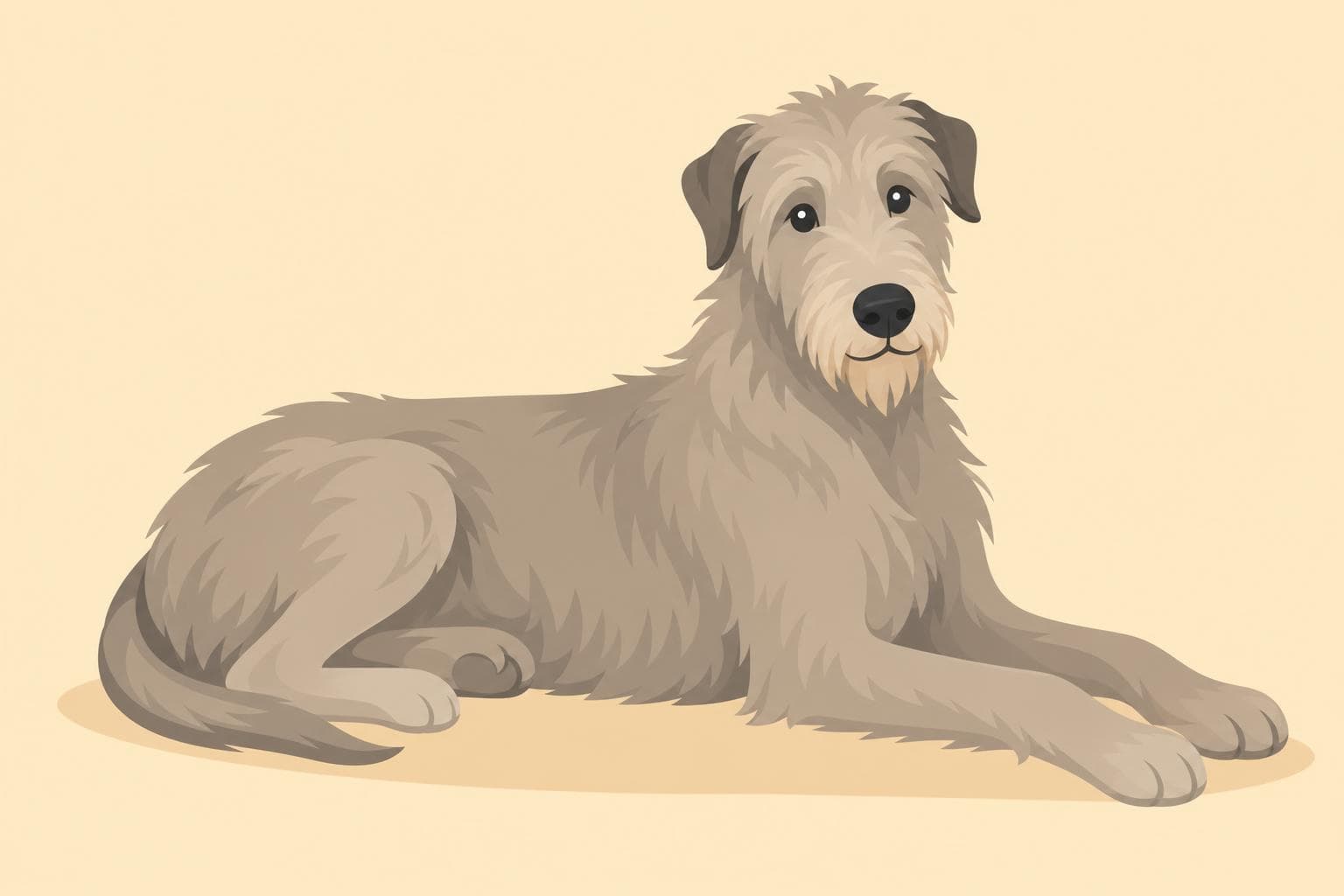
Behavior & traits
- gentle with kids
- calm indoors
- sociable
- sensitive
- low aggression
Health concerns
Irish Wolfhounds are sadly prone to several serious health issues, including dilated cardiomyopathy (heart disease), bone cancer (osteosarcoma), and bloat (gastric torsion), which is a life-threatening emergency. Their giant size also makes them susceptible to hip dysplasia and joint problems. Working with a reputable breeder who screens for heart and bone issues, plus regular vet checkups, is essential for catching problems early.
Responsible breeding and regular check-ups go a long way. Always ask breeders about health testing.
Feeding & nutrition
Expect to feed a large-breed adult formula with controlled calcium and protein levels to support healthy growth, especially during puppyhood when bones develop rapidly. Adults typically eat 4–8 cups of high-quality food daily, split into two or three meals to help reduce the risk of bloat. Avoid vigorous activity right before or after meals, and consider an elevated feeder only if your vet recommends it.
Exercise needs
Despite their size, Irish Wolfhounds have moderate exercise needs — daily walks of 30–60 minutes plus some off-leash running in a safely fenced area usually keeps them content. Puppies should have limited, gentle exercise to protect growing joints, while adults enjoy a good stretch of their long legs followed by long naps at home. Families with a yard and time for daily walks will easily meet their needs.
Living with a Irish Wolfhound
Living with an Irish Wolfhound is a beautifully unique experience — imagine a quiet, dignified presence the size of a small pony lounging across your living room floor. They are remarkably mellow indoors and often surprise new owners with just how lazy and cuddly they can be between walks. Families quickly learn to dog-proof higher than usual, because tails can clear a coffee table in one happy swing and counter-surfing is effortless for them. Their bond with children is typically very tender, though their sheer size means supervision around toddlers is wise — a wagging Wolfhound can accidentally knock over a small child without meaning any harm. The hardest part of sharing your life with one is their short lifespan; families who love this breed often say the years are heartbreakingly brief but unforgettable.
Recommended products
Invest in an extra-large orthopedic dog bed (or two — they'll claim the couch otherwise) to support those big joints and aging hips. A sturdy, padded harness and a strong 6-foot leash give you better control on walks than a collar alone, and a heavy-duty stainless steel food and water station sized for giant breeds is a must. Don't forget a slicker brush or grooming rake for their wiry coat, plus durable chew toys and puzzle feeders sized for powerful jaws to keep their gentle minds engaged.
Reads for Irish Wolfhound owners
![[header] Border Collie with puzzle toys](/_next/image?url=https%3A%2F%2Fimages.ctfassets.net%2Fq8y32akc6zms%2F7eTvC6qBF3gqDFvQSzcpXM%2Fa35b628bfd670bfc52bf4bcd532fc1b6%2Fheader.jpg&w=3840&q=75)
Engaging Activities for Border Collies: A How-To Guide
Is your Border Collie always on the lookout for something to do? Dive into engaging mental activities that will keep their sharp minds busy and entertained!
![[header] Senior dog resting on an orthopedic bed while a puppy waits](/_next/image?url=https%3A%2F%2Fimages.ctfassets.net%2Fq8y32akc6zms%2F4EwnObSBED8EN4IbvFJgaN%2Fc15a1446d531fd28d8e6854c46c3de7f%2Fheader.jpg&w=3840&q=75)
Before the Puppy Arrives: A Pre-Arrival Checklist for Your Senior Dog
Your calm senior dog has been quietly compensating for aches, stiffness, and fading senses for years — and a new puppy is about to expose all of it. This pre-arrival checklist walks you through the vet workup, pain baseline, and home setup to tackle in the weeks *before* pickup day, so your older dog isn't blindsided by the chaos.
![[header] Small dog wearing a soft mesh harness walking on a sunny pat](/_next/image?url=https%3A%2F%2Fimages.ctfassets.net%2Fq8y32akc6zms%2F3p03PzT9zANgbTC9dAOMJ2%2Ff95efe8539856e9489ef9bd4e861c4ba%2Fheader.jpg&w=3840&q=75)
Comfortable Harnesses for Small Dogs Prone to Tracheal Collapse
Is your small dog coughing from their collar? Discover harnesses designed for pups prone to tracheal collapse, offering protection and comfort with every walk.