Komondor
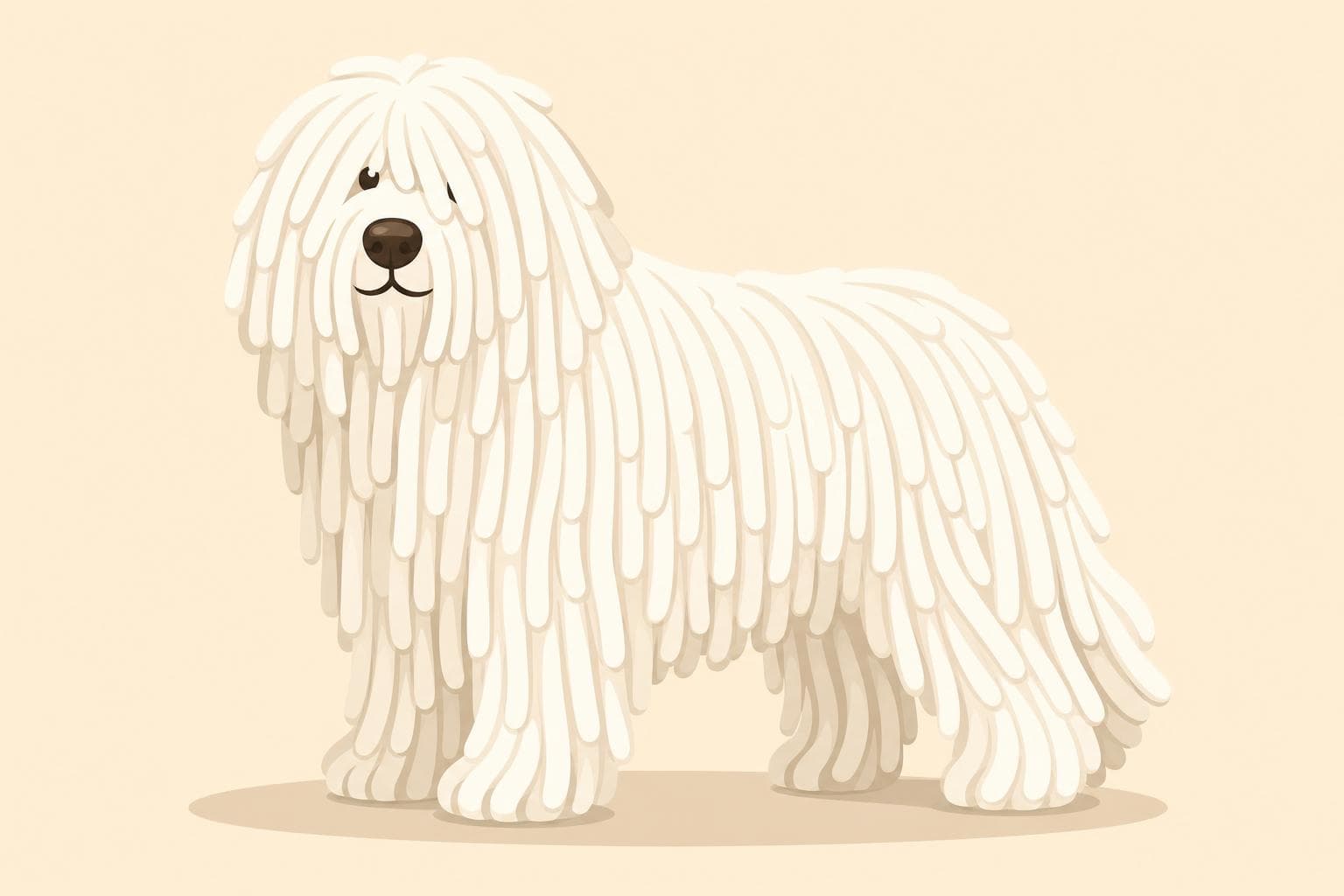
The Komondor is a serious, devoted guardian wrapped in a famously corded white coat. With their own family, they are affectionate, calm, and deeply loyal, often forming an especially close bond with the children they see as their charges. They take their watchdog duties seriously, so expect a dog that is alert, dignified, and naturally suspicious of strangers until properly introduced.
Behavior & traits
- protective guardian
- gentle with family
- independent thinker
- wary of strangers
- calm indoors
Health concerns
Komondors are generally hardy but can be prone to hip dysplasia and, like many deep-chested breeds, bloat (gastric torsion), which is a medical emergency. Skin and ear issues can also occur if the cords are not kept clean and dry. Routine vet checkups and awareness of bloat symptoms are essential for family owners.
Responsible breeding and regular check-ups go a long way. Always ask breeders about health testing.
Feeding & nutrition
A high-quality large-breed food, portioned to maintain a lean body condition, works best for this powerful breed. Splitting meals into two smaller servings per day and avoiding heavy exercise around mealtime helps lower the risk of bloat. Always provide fresh water and monitor treats, since extra weight is hard on their joints.
Exercise needs
Komondors need moderate daily exercise — think long walks, secure off-leash play in a fenced yard, and mental enrichment rather than high-intensity sports. A couple of solid outings a day usually keeps them content, and they genuinely enjoy having a job, even if that job is patrolling the backyard. Families with a safely fenced space will find them easier to satisfy than apartment dwellers.
Living with a Komondor
Living with a Komondor is a bit like sharing your home with a watchful, four-legged member of the family who takes their role very seriously. Indoors they are surprisingly calm and often happiest lying near the kids, quietly keeping an eye on the household's comings and goings. The cords are the big lifestyle factor — they take 1–2 years to fully form and need regular separating, plus they take a long time to dry after baths, so plan for towel time and a designated drying spot. Expect a dog that barks at unfamiliar noises, is naturally protective of children (theirs and sometimes their friends), and needs early, consistent socialization so guests feel welcome. Families who love their independent, old-soul personality and don't mind the coat maintenance often say there's truly no other breed like them.
Recommended products
Plan on a sturdy slicker brush and quality grooming shears for separating cords, plus absorbent microfiber towels and a high-velocity dog dryer to handle bath day. A strong, well-padded harness and a 6-foot leash give you control on walks, while a raised, large-breed feeder helps with comfortable eating. Durable chew toys and puzzle feeders keep their sharp minds engaged, and a big, supportive orthopedic bed gives this heavy breed a joint-friendly place to rest.
Reads for Komondor owners
![[header] Border Collie with puzzle toys](/_next/image?url=https%3A%2F%2Fimages.ctfassets.net%2Fq8y32akc6zms%2F7eTvC6qBF3gqDFvQSzcpXM%2Fa35b628bfd670bfc52bf4bcd532fc1b6%2Fheader.jpg&w=3840&q=75)
Engaging Activities for Border Collies: A How-To Guide
Is your Border Collie always on the lookout for something to do? Dive into engaging mental activities that will keep their sharp minds busy and entertained!
![[header] Senior dog resting on an orthopedic bed while a puppy waits](/_next/image?url=https%3A%2F%2Fimages.ctfassets.net%2Fq8y32akc6zms%2F4EwnObSBED8EN4IbvFJgaN%2Fc15a1446d531fd28d8e6854c46c3de7f%2Fheader.jpg&w=3840&q=75)
Before the Puppy Arrives: A Pre-Arrival Checklist for Your Senior Dog
Your calm senior dog has been quietly compensating for aches, stiffness, and fading senses for years — and a new puppy is about to expose all of it. This pre-arrival checklist walks you through the vet workup, pain baseline, and home setup to tackle in the weeks *before* pickup day, so your older dog isn't blindsided by the chaos.
![[header] Small dog wearing a soft mesh harness walking on a sunny pat](/_next/image?url=https%3A%2F%2Fimages.ctfassets.net%2Fq8y32akc6zms%2F3p03PzT9zANgbTC9dAOMJ2%2Ff95efe8539856e9489ef9bd4e861c4ba%2Fheader.jpg&w=3840&q=75)
Comfortable Harnesses for Small Dogs Prone to Tracheal Collapse
Is your small dog coughing from their collar? Discover harnesses designed for pups prone to tracheal collapse, offering protection and comfort with every walk.