Mastiff
Mastiffs are the proverbial gentle giants — massive in size but wonderfully mellow in spirit. They form deep bonds with their families and are known for their patient, easygoing nature around children, often acting like a furry babysitter who'd rather nap at your feet than cause a fuss. While naturally protective and watchful of strangers, they're rarely aggressive without cause, preferring quiet observation to noisy displays. Expect a dog who is dignified, sensitive to your moods, and surprisingly aware of their own size around little ones.
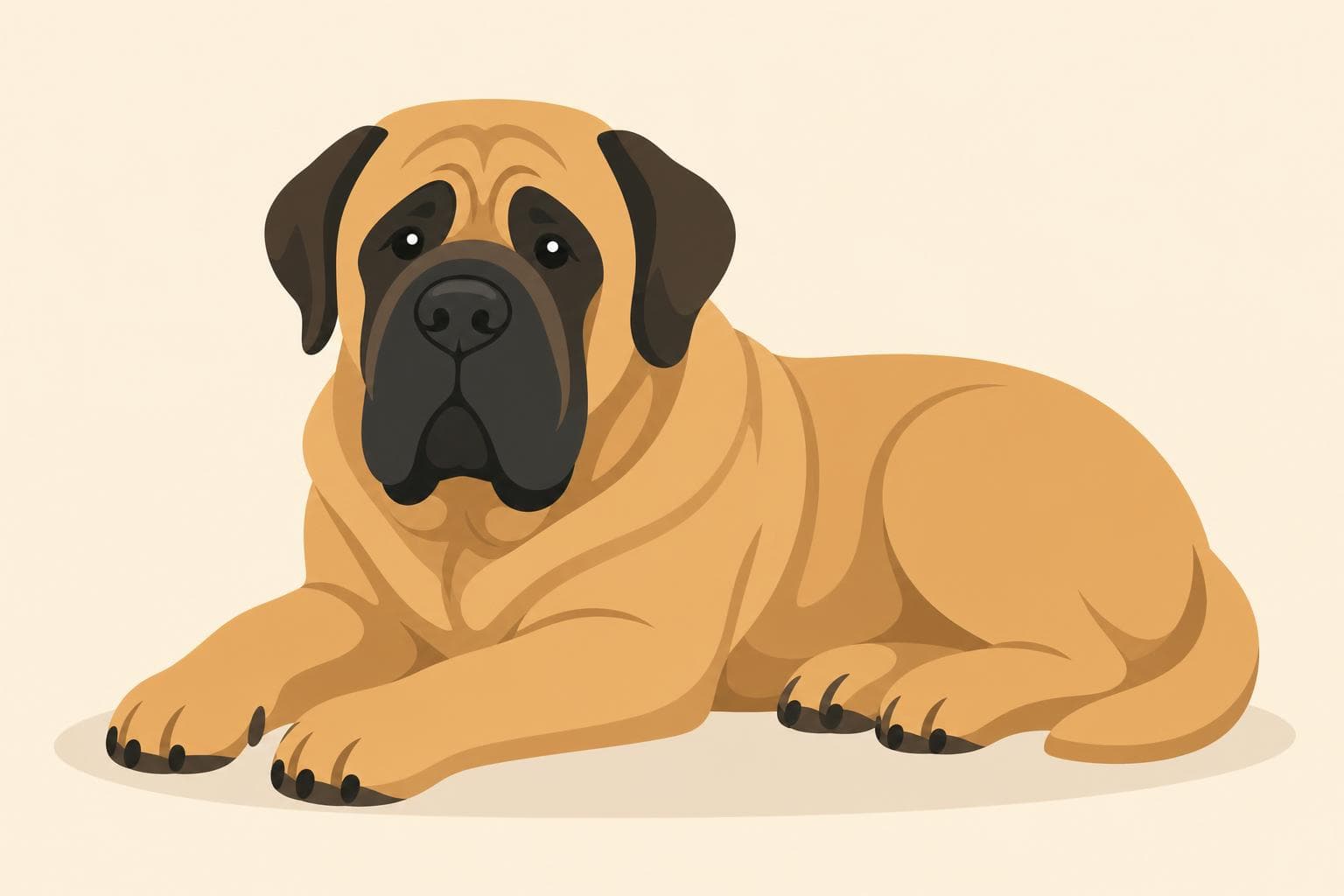
Behavior & traits
- gentle with kids
- naturally protective
- calm indoors
- deeply loyal
- quietly watchful
Health concerns
Mastiffs are prone to hip and elbow dysplasia, bloat (gastric torsion), and certain heart conditions like cardiomyopathy. Their large size also predisposes them to joint issues and a sadly shorter lifespan than smaller breeds. Regular vet checkups, weight management, and feeding smaller meals throughout the day can go a long way in keeping them healthy.
Responsible breeding and regular check-ups go a long way. Always ask breeders about health testing.
Feeding & nutrition
A large-breed dog food formulated for giant breeds is essential, with controlled calcium and protein levels to support healthy bone growth, especially in puppies. Adult Mastiffs typically eat 6–10 cups of high-quality kibble daily, split into two or three meals to help prevent bloat. Avoid heavy exercise right before or after eating, and always keep fresh water available.
Exercise needs
Despite their size, Mastiffs have modest exercise needs — a couple of leisurely 20–30 minute walks per day usually does the trick. They enjoy gentle play in the yard and short outings, but families should avoid overexertion in puppies whose joints are still developing. Hot weather can be hard on them, so stick to cooler morning or evening walks in the summer.
Living with a Mastiff
Living with a Mastiff is like sharing your home with a giant, snoring couch potato who happens to adore you completely. They'll follow you from room to room, plop down beside the kids during homework time, and somehow always end up sprawled across the most inconvenient doorway. Be prepared for drool — lots of it — along with a chorus of impressive snores and the occasional knocked-over coffee cup from a happily wagging tail. They're surprisingly quiet and well-mannered indoors, but their sheer size means everything from feeding bowls to vet bills runs supersized. Families who welcome a Mastiff often say they can't imagine life without their gentle, devoted shadow.
Recommended products
Stock up on extra-large, raised feeding bowls to support their joints and reduce gulping that can lead to bloat, plus an orthopedic dog bed that can handle their weight and cushion aging hips. A sturdy, padded harness (rather than a collar) gives you better control on walks without straining their neck, and plenty of drool rags or microfiber cloths placed around the house will save your walls and furniture. Don't forget durable chew toys built for powerful jaws and a heavy-duty grooming mitt to manage seasonal shedding.
Reads for Mastiff owners
![[header] Border Collie with puzzle toys](/_next/image?url=https%3A%2F%2Fimages.ctfassets.net%2Fq8y32akc6zms%2F7eTvC6qBF3gqDFvQSzcpXM%2Fa35b628bfd670bfc52bf4bcd532fc1b6%2Fheader.jpg&w=3840&q=75)
Engaging Activities for Border Collies: A How-To Guide
Is your Border Collie always on the lookout for something to do? Dive into engaging mental activities that will keep their sharp minds busy and entertained!
![[header] Senior dog resting on an orthopedic bed while a puppy waits](/_next/image?url=https%3A%2F%2Fimages.ctfassets.net%2Fq8y32akc6zms%2F4EwnObSBED8EN4IbvFJgaN%2Fc15a1446d531fd28d8e6854c46c3de7f%2Fheader.jpg&w=3840&q=75)
Before the Puppy Arrives: A Pre-Arrival Checklist for Your Senior Dog
Your calm senior dog has been quietly compensating for aches, stiffness, and fading senses for years — and a new puppy is about to expose all of it. This pre-arrival checklist walks you through the vet workup, pain baseline, and home setup to tackle in the weeks *before* pickup day, so your older dog isn't blindsided by the chaos.
![[header] Small dog wearing a soft mesh harness walking on a sunny pat](/_next/image?url=https%3A%2F%2Fimages.ctfassets.net%2Fq8y32akc6zms%2F3p03PzT9zANgbTC9dAOMJ2%2Ff95efe8539856e9489ef9bd4e861c4ba%2Fheader.jpg&w=3840&q=75)
Comfortable Harnesses for Small Dogs Prone to Tracheal Collapse
Is your small dog coughing from their collar? Discover harnesses designed for pups prone to tracheal collapse, offering protection and comfort with every walk.