Miniature Pinscher
Often called the 'King of Toys,' the Miniature Pinscher carries himself with the confidence of a much larger dog. Min Pins are spirited, endlessly curious, and deeply bonded to their people, often shadowing family members from room to room. They're playful and entertaining, but they also have a strong independent streak and a sharp watchdog instinct, which means they'll alert you to every delivery, squirrel, or rustling leaf.
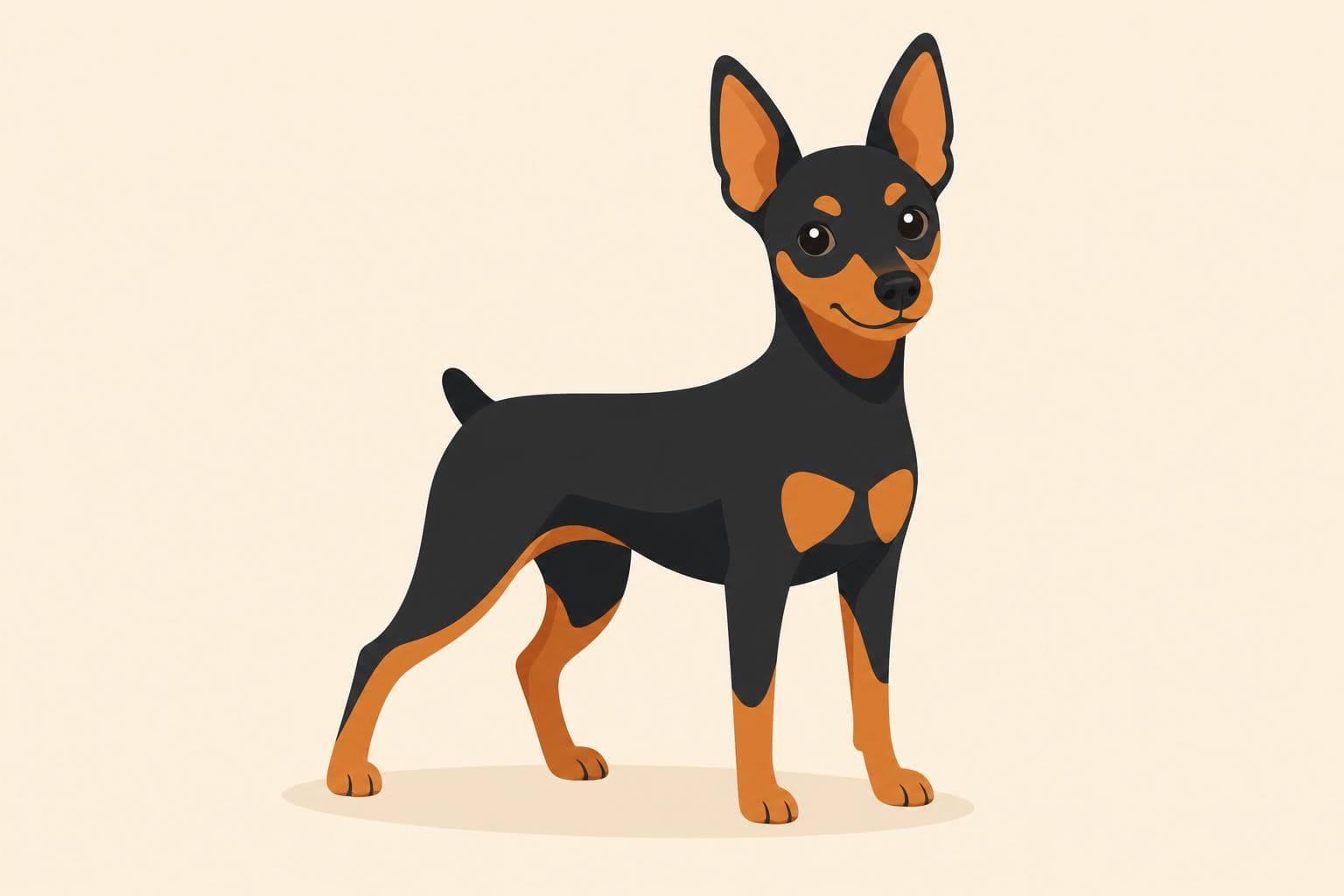
Behavior & traits
- bold and fearless
- highly alert
- playful
- strong willed
- loyal to family
Health concerns
Min Pins are generally hardy little dogs, but families should watch for patellar luxation (slipping kneecaps), Legg-Calvé-Perthes disease, and progressive retinal atrophy. Their thin coats offer little insulation, so they can be prone to chilling in cold weather, and their small size means they're at risk of injury from rough handling or jumps from furniture. Regular vet checkups and dental care are important, as small breeds are especially prone to dental disease.
Responsible breeding and regular check-ups go a long way. Always ask breeders about health testing.
Feeding & nutrition
A high-quality small-breed formula fed in two measured meals per day works well for most Min Pins, typically around ½ to 1 cup daily depending on activity level. Because they're tiny and love food, weight gain can sneak up quickly, so families should measure portions carefully and limit table scraps. Small-breed kibble shapes also help support dental health, which is a common concern in toy breeds.
Exercise needs
Don't let the small size fool you — Min Pins have big-dog energy and need 30–60 minutes of daily activity to stay happy and well-behaved. Brisk walks, indoor fetch, puzzle toys, and securely fenced playtime all work beautifully, and they're great companions for active families. A bored Min Pin can quickly become a mischievous one, so consistent mental and physical outlets are key.
Living with a Miniature Pinscher
Living with a Min Pin is a bit like having a tiny, four-legged comedian with the confidence of a CEO. They're entertaining, expressive, and full of personality — you'll catch yourself laughing at their antics daily. Because they're naturally bold and curious, they're notorious escape artists and counter-surfers, so families need to puppy-proof thoroughly and invest in secure fencing. They do best with older, respectful children who understand that this is a small, sturdy-but-not-indestructible dog; toddlers and Min Pins aren't always the best match because of the size difference and the breed's no-nonsense attitude. Once your Min Pin trusts and bonds with the family, though, you'll have a devoted, snuggly shadow who burrows under blankets and greets every homecoming like it's a national holiday.
Recommended products
A well-fitted step-in harness is essential — Min Pins have delicate necks and can slip traditional collars easily, so a secure harness keeps walks safe. Families should also invest in a cozy sweater or coat for cold weather, since this breed's short coat offers little warmth. Interactive puzzle toys and durable chew toys help channel their busy minds, and a soft, covered bed (they love to burrow) plus a sturdy playpen or exercise pen for unsupervised moments round out the essentials.
Reads for Miniature Pinscher owners
![[header] Border Collie with puzzle toys](/_next/image?url=https%3A%2F%2Fimages.ctfassets.net%2Fq8y32akc6zms%2F7eTvC6qBF3gqDFvQSzcpXM%2Fa35b628bfd670bfc52bf4bcd532fc1b6%2Fheader.jpg&w=3840&q=75)
Engaging Activities for Border Collies: A How-To Guide
Is your Border Collie always on the lookout for something to do? Dive into engaging mental activities that will keep their sharp minds busy and entertained!
![[header] Senior dog resting on an orthopedic bed while a puppy waits](/_next/image?url=https%3A%2F%2Fimages.ctfassets.net%2Fq8y32akc6zms%2F4EwnObSBED8EN4IbvFJgaN%2Fc15a1446d531fd28d8e6854c46c3de7f%2Fheader.jpg&w=3840&q=75)
Before the Puppy Arrives: A Pre-Arrival Checklist for Your Senior Dog
Your calm senior dog has been quietly compensating for aches, stiffness, and fading senses for years — and a new puppy is about to expose all of it. This pre-arrival checklist walks you through the vet workup, pain baseline, and home setup to tackle in the weeks *before* pickup day, so your older dog isn't blindsided by the chaos.
![[header] Small dog wearing a soft mesh harness walking on a sunny pat](/_next/image?url=https%3A%2F%2Fimages.ctfassets.net%2Fq8y32akc6zms%2F3p03PzT9zANgbTC9dAOMJ2%2Ff95efe8539856e9489ef9bd4e861c4ba%2Fheader.jpg&w=3840&q=75)
Comfortable Harnesses for Small Dogs Prone to Tracheal Collapse
Is your small dog coughing from their collar? Discover harnesses designed for pups prone to tracheal collapse, offering protection and comfort with every walk.