Mudi
The Mudi is a bright, busy little Hungarian herder with a big personality packed into a medium-sized frame. In a family home, they're affectionate and deeply bonded to their people, often picking a favorite while still loving everyone in the household. They thrive on having a job — whether that's herding the kids in the backyard or learning new tricks — and they tend to be reserved with strangers but warm and silly with their inner circle.
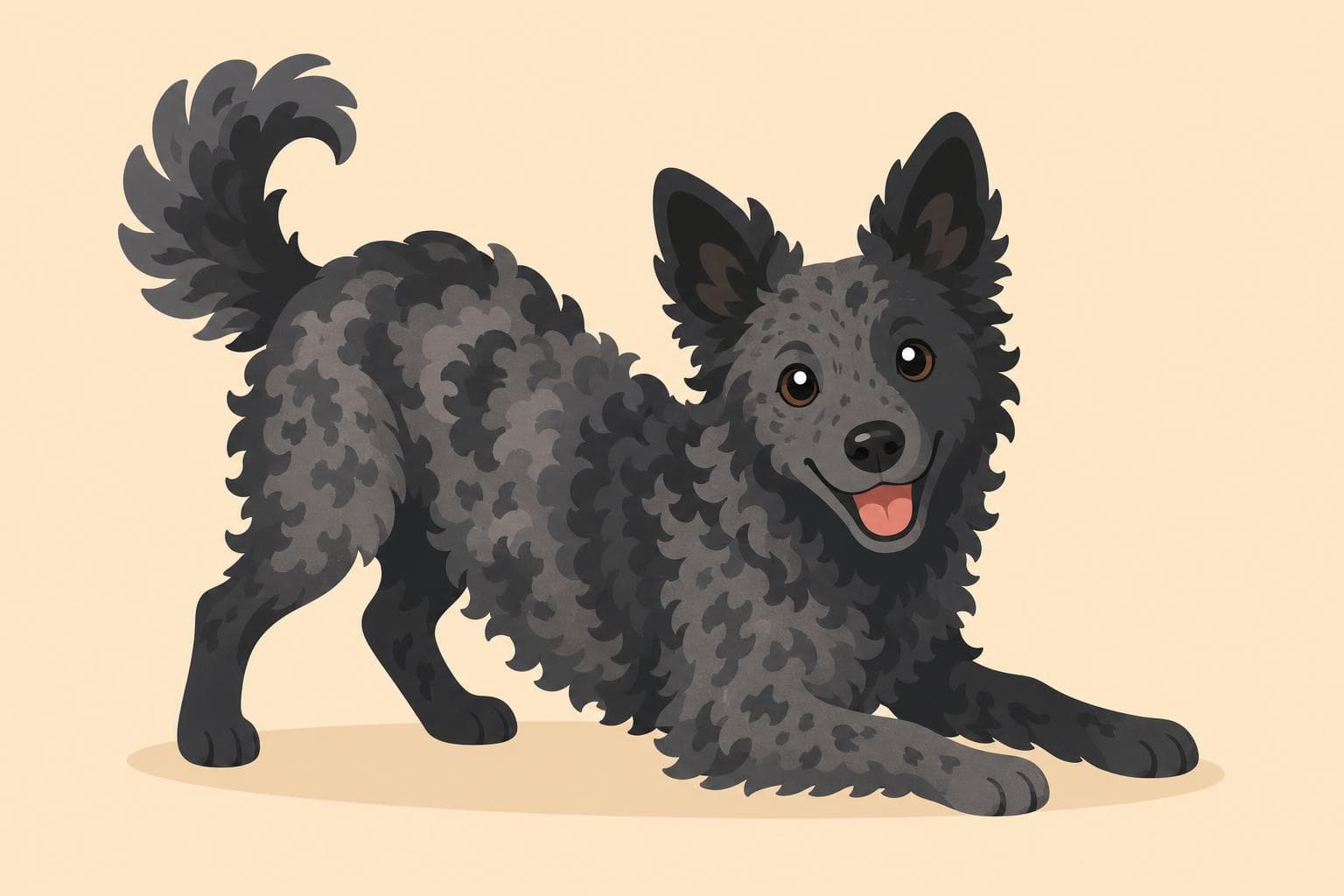
Behavior & traits
- devoted to family
- great with kids they know
- naturally protective
- quick learner
- barks to alert
Health concerns
Mudis are generally a hardy, healthy breed thanks to their working-dog heritage and small gene pool managed by careful breeders. Families should still be aware of occasional hip dysplasia, elbow dysplasia, and eye conditions like cataracts. Annual vet checkups and choosing a reputable breeder who screens parents go a long way toward a long, healthy life.
Responsible breeding and regular check-ups go a long way. Always ask breeders about health testing.
Feeding & nutrition
A high-quality dog food formulated for active medium-sized breeds works well, typically 1 to 1.5 cups split into two daily meals. Because Mudis are athletic and busy, they do well on protein-rich kibble that supports their energy needs without leading to weight gain. Always keep fresh water available, especially after play sessions or outdoor adventures.
Exercise needs
Plan on at least 60–90 minutes of active exercise daily — this isn't a couch-potato breed. Families can meet these needs through hikes, fetch, agility, frisbee, or dog sports like herding trials and rally. Mental exercise matters just as much as physical, so puzzle toys and training sessions should be part of the daily routine.
Living with a Mudi
Living with a Mudi means living with a dog who notices everything and has opinions about most of it. They're vocal — expect alert barking when the mail arrives or a squirrel dares cross the yard — but they're also incredibly tuned in to their family's rhythms, often shadowing you from room to room. Kids generally adore them because Mudis are playful, athletic, and up for backyard games, though young children should be taught to respect the dog's herding instincts (they may nip at heels during exciting moments). Mornings tend to start with enthusiasm, and a tired Mudi is a happy Mudi, so families who build in walks, training, or play before settling into the day are usually rewarded with a calm, content companion in the evening. They're rare in the U.S., so you'll likely answer 'What breed is that?' on every walk — a fun perk for proud owners.
Recommended products
A sturdy front-clip harness is essential for walks and training, since Mudis are athletic and benefit from gentle leash guidance. Invest in a slicker brush and undercoat rake for their wavy double coat, which needs weekly brushing to manage shedding. Interactive puzzle feeders, flirt poles, and durable fetch toys help burn mental and physical energy, and a long training leash is perfect for practicing recall in open spaces. A comfortable crate also gives this sensitive, intelligent breed a secure home base during downtime.
Reads for Mudi owners
![[header] Border Collie with puzzle toys](/_next/image?url=https%3A%2F%2Fimages.ctfassets.net%2Fq8y32akc6zms%2F7eTvC6qBF3gqDFvQSzcpXM%2Fa35b628bfd670bfc52bf4bcd532fc1b6%2Fheader.jpg&w=3840&q=75)
Engaging Activities for Border Collies: A How-To Guide
Is your Border Collie always on the lookout for something to do? Dive into engaging mental activities that will keep their sharp minds busy and entertained!
![[header] Senior dog resting on an orthopedic bed while a puppy waits](/_next/image?url=https%3A%2F%2Fimages.ctfassets.net%2Fq8y32akc6zms%2F4EwnObSBED8EN4IbvFJgaN%2Fc15a1446d531fd28d8e6854c46c3de7f%2Fheader.jpg&w=3840&q=75)
Before the Puppy Arrives: A Pre-Arrival Checklist for Your Senior Dog
Your calm senior dog has been quietly compensating for aches, stiffness, and fading senses for years — and a new puppy is about to expose all of it. This pre-arrival checklist walks you through the vet workup, pain baseline, and home setup to tackle in the weeks *before* pickup day, so your older dog isn't blindsided by the chaos.
![[header] Small dog wearing a soft mesh harness walking on a sunny pat](/_next/image?url=https%3A%2F%2Fimages.ctfassets.net%2Fq8y32akc6zms%2F3p03PzT9zANgbTC9dAOMJ2%2Ff95efe8539856e9489ef9bd4e861c4ba%2Fheader.jpg&w=3840&q=75)
Comfortable Harnesses for Small Dogs Prone to Tracheal Collapse
Is your small dog coughing from their collar? Discover harnesses designed for pups prone to tracheal collapse, offering protection and comfort with every walk.