Neapolitan Mastiff
The Neapolitan Mastiff is a gentle giant with a deeply devoted heart, often forming an unbreakable bond with the family it considers its own. Despite their imposing, wrinkled appearance, Neos are typically calm, affectionate homebodies who love nothing more than lounging near their people. They are naturally wary of strangers and instinctively protective, which means thoughtful socialization from puppyhood is essential. With family, especially the children they grow up with, they tend to be patient, tolerant, and surprisingly sweet.
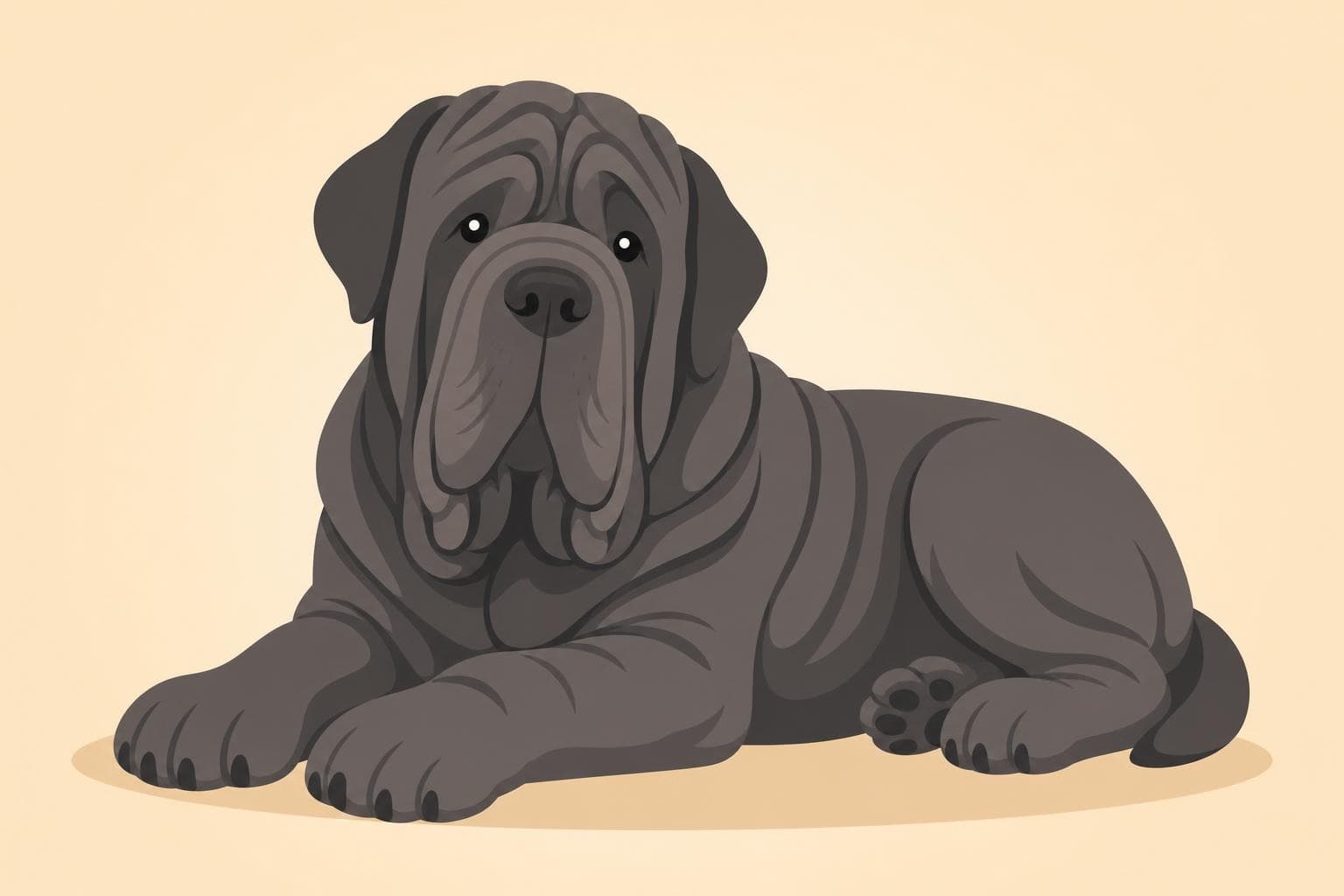
Behavior & traits
- devoted to family
- naturally protective
- gentle with their people
- reserved with strangers
- low key indoors
Health concerns
Like many giant breeds, Neapolitan Mastiffs are prone to hip and elbow dysplasia, bloat (gastric torsion), and heart conditions such as cardiomyopathy. Their abundant skin folds require regular cleaning to prevent infections, and cherry eye or other eyelid issues are also fairly common. Their relatively short lifespan is something families should prepare for emotionally before bringing one home.
Responsible breeding and regular check-ups go a long way. Always ask breeders about health testing.
Feeding & nutrition
A high-quality large-breed dog food is essential, with puppies needing a specifically formulated large-breed puppy diet to support slow, healthy growth. Adults typically eat 6–8 cups a day split into two or three meals to reduce bloat risk, and food costs can be significant. Always avoid heavy exercise around mealtimes and consider an elevated, slow-feed bowl.
Exercise needs
Despite their size, Neos have surprisingly modest exercise needs — a couple of moderate daily walks and some backyard time usually suffice. Avoid strenuous activity in puppyhood to protect developing joints, and skip exercise in hot weather since they overheat easily. Mental stimulation through gentle training and family interaction matters more than long workouts.
Living with a Neapolitan Mastiff
Living with a Neapolitan Mastiff is a uniquely heartwarming and slightly messy adventure. Expect drool — lots of it — on walls, furniture, and your favorite jeans, plus the soundtrack of contented snoring from whichever couch they've claimed. They're remarkably low-energy indoors, content to follow you from room to room like a giant, wrinkly shadow, and they thrive on being part of family life rather than left in the yard. Kids in the household usually adore them, and Neos tend to be wonderfully tolerant, though their sheer size means supervision around small children is a must. Visitors will get a deep, rumbling bark and a cautious once-over, but once you signal approval, your Neo will usually settle right back down at your feet.
Recommended products
A heavy-duty orthopedic dog bed is non-negotiable to protect those big joints, along with an elevated slow-feeder bowl to reduce bloat risk and aid digestion. Stock up on soft microfiber 'drool rags' to keep around the house, and invest in a sturdy no-pull harness and a strong leather or biothane leash to manage their power on walks. For grooming, keep gentle wipes or a damp cloth handy for daily face-fold cleaning, plus a rubber curry brush for their short coat.
Reads for Neapolitan Mastiff owners
![[header] Border Collie with puzzle toys](/_next/image?url=https%3A%2F%2Fimages.ctfassets.net%2Fq8y32akc6zms%2F7eTvC6qBF3gqDFvQSzcpXM%2Fa35b628bfd670bfc52bf4bcd532fc1b6%2Fheader.jpg&w=3840&q=75)
Engaging Activities for Border Collies: A How-To Guide
Is your Border Collie always on the lookout for something to do? Dive into engaging mental activities that will keep their sharp minds busy and entertained!
![[header] Senior dog resting on an orthopedic bed while a puppy waits](/_next/image?url=https%3A%2F%2Fimages.ctfassets.net%2Fq8y32akc6zms%2F4EwnObSBED8EN4IbvFJgaN%2Fc15a1446d531fd28d8e6854c46c3de7f%2Fheader.jpg&w=3840&q=75)
Before the Puppy Arrives: A Pre-Arrival Checklist for Your Senior Dog
Your calm senior dog has been quietly compensating for aches, stiffness, and fading senses for years — and a new puppy is about to expose all of it. This pre-arrival checklist walks you through the vet workup, pain baseline, and home setup to tackle in the weeks *before* pickup day, so your older dog isn't blindsided by the chaos.
![[header] Small dog wearing a soft mesh harness walking on a sunny pat](/_next/image?url=https%3A%2F%2Fimages.ctfassets.net%2Fq8y32akc6zms%2F3p03PzT9zANgbTC9dAOMJ2%2Ff95efe8539856e9489ef9bd4e861c4ba%2Fheader.jpg&w=3840&q=75)
Comfortable Harnesses for Small Dogs Prone to Tracheal Collapse
Is your small dog coughing from their collar? Discover harnesses designed for pups prone to tracheal collapse, offering protection and comfort with every walk.