Petit Basset Griffon Vendeen
Often called the 'happy breed,' the Petit Basset Griffon Vendeen (PBGV) brings a cheerful, extroverted personality into the family home. They thrive on togetherness and tend to be wonderfully patient and playful with children, happily joining in backyard games or curling up at someone's feet after a long day. As a French scenthound, they're independent thinkers with a strong nose, which means they're charmingly mischievous and rarely shy about voicing their opinions.
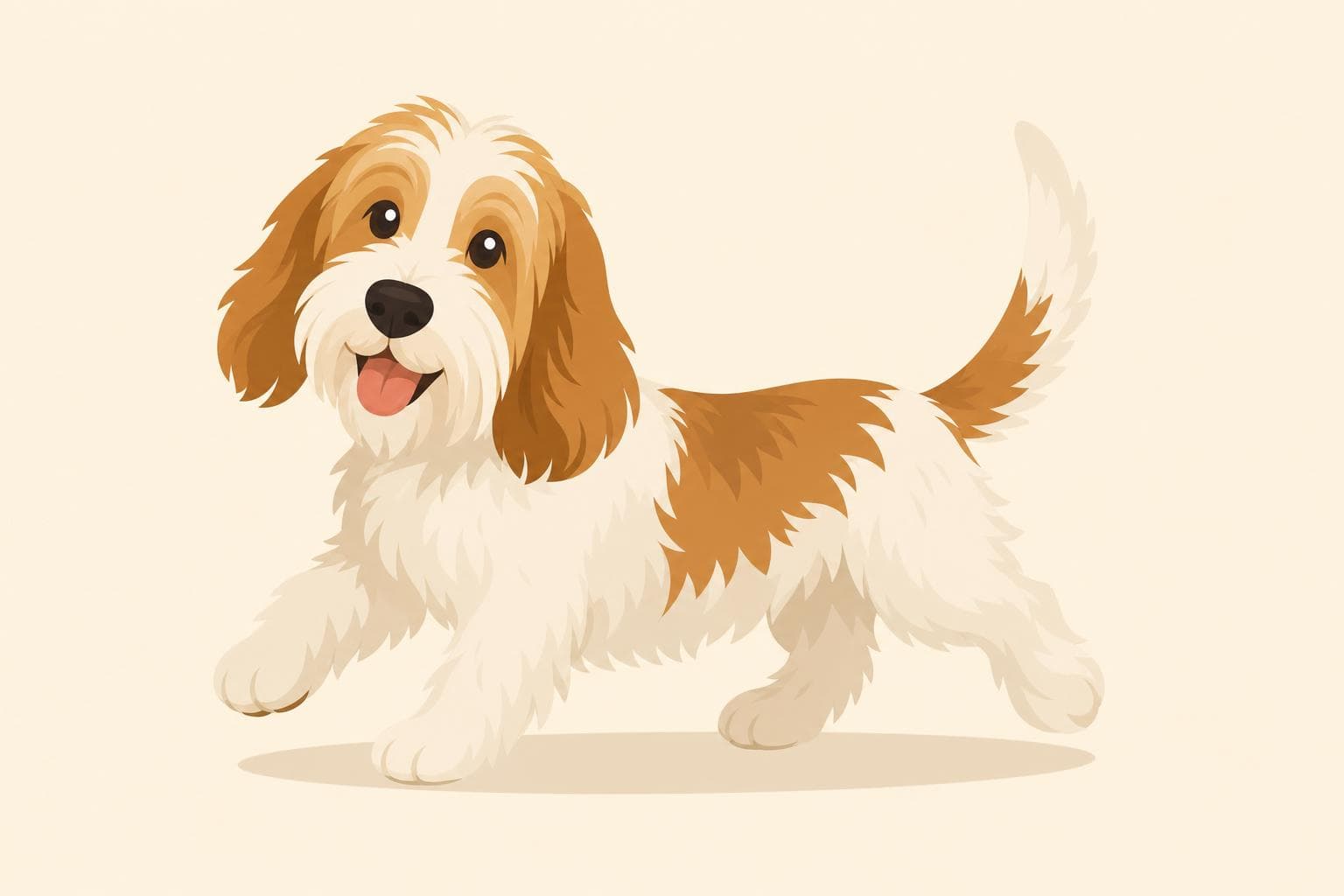
Behavior & traits
- affectionate with kids
- social with other dogs
- scent driven
- vocal
- playful
Health concerns
PBGVs are generally a sturdy, long-lived breed, but families should watch for ear infections due to their long, floppy ears and occasional eye conditions like glaucoma or persistent pupillary membranes. Hip dysplasia and epilepsy can occur but are less common. Regular vet checkups, ear cleaning, and weight management go a long way in keeping this breed healthy into their teens.
Responsible breeding and regular check-ups go a long way. Always ask breeders about health testing.
Feeding & nutrition
Feed a high-quality dog food appropriate for active small-to-medium breeds, typically 1 to 1.5 cups split into two meals per day. PBGVs love food and can easily become overweight, which puts strain on their long backs, so measured portions and limited table scraps are important. Treats are great training motivators, but balance them with their daily calorie needs.
Exercise needs
This is an energetic hound that needs at least an hour of activity daily, including walks, play sessions, and opportunities to sniff and explore. Families can meet their needs with brisk neighborhood walks, fenced-yard fetch, scent games, or even canine sports like agility and tracking. A bored PBGV may dig, bark, or follow their nose right out of the yard, so a securely fenced space is a must.
Living with a Petit Basset Griffon Vendeen
Living with a PBGV means living with a little bundle of joy who genuinely loves being part of the family. Expect a dog who follows the kids from room to room, greets visitors with enthusiasm, and lets you know — loudly — when the mail carrier arrives. Their rough, tousled coat picks up leaves and mud from outdoor adventures, so a quick weekly brushing and the occasional bath become part of the routine. They're scent-driven to their core, so an unattended door or unfenced yard can quickly turn into an off-leash adventure. In return for a securely fenced yard and plenty of together-time, you get a sturdy, healthy, long-lived companion with a sense of humor that keeps the whole household laughing.
Recommended products
A sturdy slicker brush and metal comb are essential for keeping that wiry, weather-resistant coat tangle-free, along with gentle ear-cleaning solution for their long, floppy ears. Invest in a well-fitted harness and a 6-foot leash — retractable leashes are risky with a nose-driven breed — plus a long line for safe sniffing adventures. Puzzle feeders, snuffle mats, and scent-based toys help channel their hound instincts indoors, and a comfortable orthopedic bed supports their long backs as they age.
Reads for Petit Basset Griffon Vendeen owners
![[header] Border Collie with puzzle toys](/_next/image?url=https%3A%2F%2Fimages.ctfassets.net%2Fq8y32akc6zms%2F7eTvC6qBF3gqDFvQSzcpXM%2Fa35b628bfd670bfc52bf4bcd532fc1b6%2Fheader.jpg&w=3840&q=75)
Engaging Activities for Border Collies: A How-To Guide
Is your Border Collie always on the lookout for something to do? Dive into engaging mental activities that will keep their sharp minds busy and entertained!
![[header] Senior dog resting on an orthopedic bed while a puppy waits](/_next/image?url=https%3A%2F%2Fimages.ctfassets.net%2Fq8y32akc6zms%2F4EwnObSBED8EN4IbvFJgaN%2Fc15a1446d531fd28d8e6854c46c3de7f%2Fheader.jpg&w=3840&q=75)
Before the Puppy Arrives: A Pre-Arrival Checklist for Your Senior Dog
Your calm senior dog has been quietly compensating for aches, stiffness, and fading senses for years — and a new puppy is about to expose all of it. This pre-arrival checklist walks you through the vet workup, pain baseline, and home setup to tackle in the weeks *before* pickup day, so your older dog isn't blindsided by the chaos.
![[header] Small dog wearing a soft mesh harness walking on a sunny pat](/_next/image?url=https%3A%2F%2Fimages.ctfassets.net%2Fq8y32akc6zms%2F3p03PzT9zANgbTC9dAOMJ2%2Ff95efe8539856e9489ef9bd4e861c4ba%2Fheader.jpg&w=3840&q=75)
Comfortable Harnesses for Small Dogs Prone to Tracheal Collapse
Is your small dog coughing from their collar? Discover harnesses designed for pups prone to tracheal collapse, offering protection and comfort with every walk.