Pharaoh Hound
Pharaoh Hounds are warm, lively companions who form deep bonds with their families and love being part of the daily action. They're known for their playful goofiness at home and their dignified, athletic grace outdoors. With children, they tend to be gentle and patient, especially when raised alongside them, though their bursts of zoomies mean toddlers should be supervised during playtime.
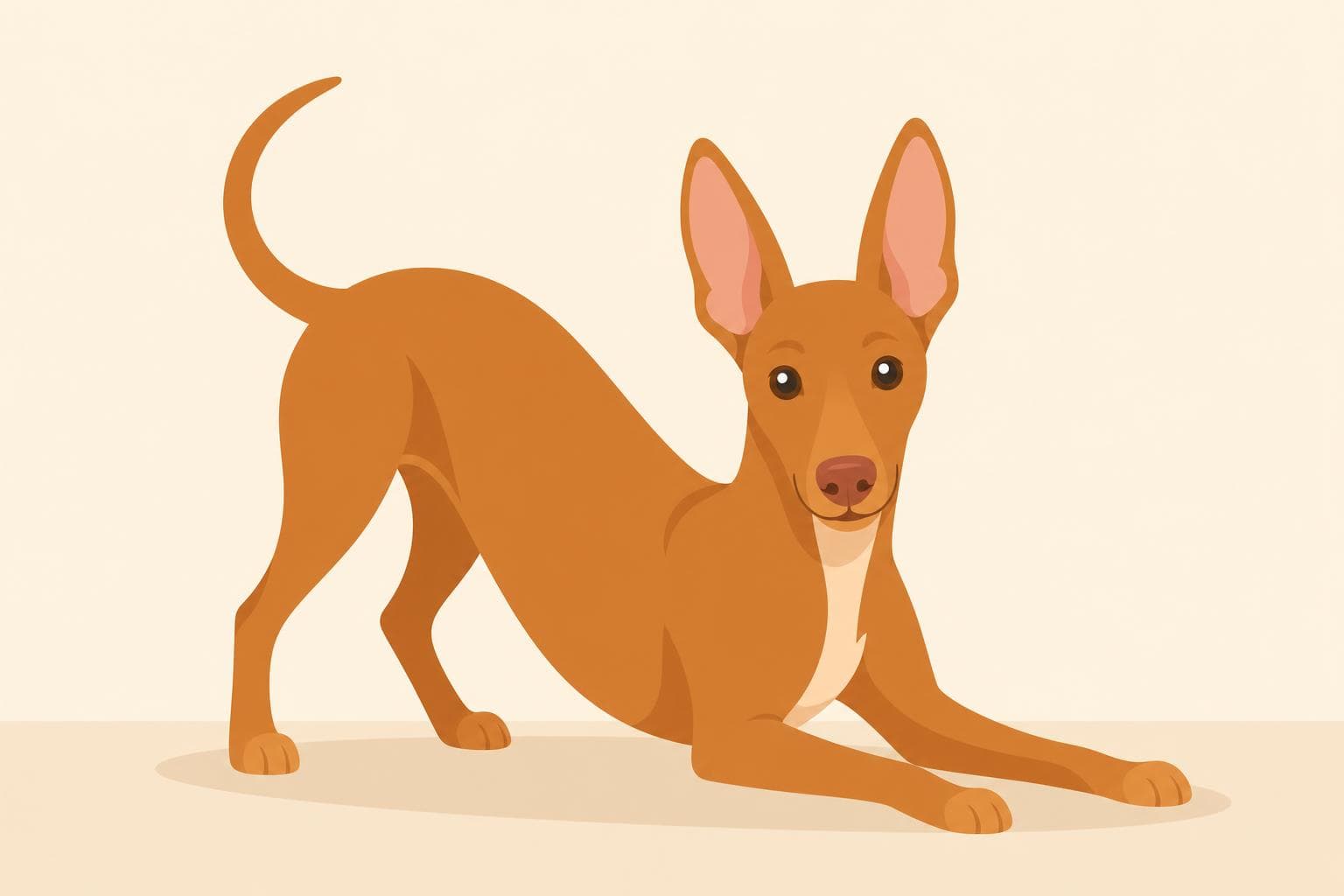
Behavior & traits
- loving with family
- playful with kids
- alert watchdog
- strong prey drive
- famously 'blushes' when happy
Health concerns
Pharaoh Hounds are generally a healthy, long-lived breed with few major genetic issues. Families should be aware of potential sensitivities to anesthesia (common in sighthounds), occasional hip dysplasia, and allergies. Their thin coats also make them prone to chills and minor skin nicks, so a winter coat and gentle handling go a long way.
Responsible breeding and regular check-ups go a long way. Always ask breeders about health testing.
Feeding & nutrition
A high-quality diet rich in lean protein supports their athletic, muscular build. Most adults do well on 1.5 to 2 cups of premium kibble split into two meals, adjusted for activity level. Because they're lean by nature, families shouldn't panic at visible ribs — but do monitor weight to keep them in fit, healthy condition.
Exercise needs
Pharaoh Hounds need at least an hour of vigorous daily exercise, including running, fetch, or lure coursing to satisfy their sighthound instincts. A securely fenced yard is a must, since their prey drive can send them sprinting after squirrels in a heartbeat. Families with active kids, joggers, or hikers will find a perfect adventure partner in this breed.
Living with a Pharaoh Hound
Living with a Pharaoh Hound is like having a sleek, comedic athlete in the house — they're dignified one moment and bouncing off the couch the next. Families quickly learn about their famous 'blush,' where their nose and ears turn rosy pink when they're excited or happy, which never fails to charm visitors. They're cuddle-seekers who adore soft beds, sunny spots, and snuggling under blankets, often surprising new owners with how affectionate they are. Daily life involves balancing their need for hard exercise with their love of lounging, and most families settle into a rhythm of morning runs followed by long, lazy afternoons. Just remember: off-leash adventures aren't safe in open areas, since their chase instinct will override even the best recall.
Recommended products
Because of their thin coat and low body fat, a well-fitted winter jacket and a padded, orthopedic bed are essentials for keeping them cozy. A martingale collar or escape-proof harness is critical for walks, since their narrow heads can slip standard collars and their speed is remarkable. Long-line leads for safe sniff-and-run sessions, puzzle toys to engage their bright minds, and a sturdy flirt pole for backyard prey-drive play round out the must-have list.
Reads for Pharaoh Hound owners
![[header] Border Collie with puzzle toys](/_next/image?url=https%3A%2F%2Fimages.ctfassets.net%2Fq8y32akc6zms%2F7eTvC6qBF3gqDFvQSzcpXM%2Fa35b628bfd670bfc52bf4bcd532fc1b6%2Fheader.jpg&w=3840&q=75)
Engaging Activities for Border Collies: A How-To Guide
Is your Border Collie always on the lookout for something to do? Dive into engaging mental activities that will keep their sharp minds busy and entertained!
![[header] Senior dog resting on an orthopedic bed while a puppy waits](/_next/image?url=https%3A%2F%2Fimages.ctfassets.net%2Fq8y32akc6zms%2F4EwnObSBED8EN4IbvFJgaN%2Fc15a1446d531fd28d8e6854c46c3de7f%2Fheader.jpg&w=3840&q=75)
Before the Puppy Arrives: A Pre-Arrival Checklist for Your Senior Dog
Your calm senior dog has been quietly compensating for aches, stiffness, and fading senses for years — and a new puppy is about to expose all of it. This pre-arrival checklist walks you through the vet workup, pain baseline, and home setup to tackle in the weeks *before* pickup day, so your older dog isn't blindsided by the chaos.
![[header] Small dog wearing a soft mesh harness walking on a sunny pat](/_next/image?url=https%3A%2F%2Fimages.ctfassets.net%2Fq8y32akc6zms%2F3p03PzT9zANgbTC9dAOMJ2%2Ff95efe8539856e9489ef9bd4e861c4ba%2Fheader.jpg&w=3840&q=75)
Comfortable Harnesses for Small Dogs Prone to Tracheal Collapse
Is your small dog coughing from their collar? Discover harnesses designed for pups prone to tracheal collapse, offering protection and comfort with every walk.