Rhodesian Ridgeback
Rhodesian Ridgebacks are the gentle giants of the hound world — deeply bonded to their families while carrying themselves with quiet confidence. At home, they tend to be calm, affectionate couch companions who love being near their people, often following family members from room to room. Outdoors, their hound instincts kick in: they're athletic, alert, and naturally watchful, making them devoted protectors without being overly barky or aggressive.
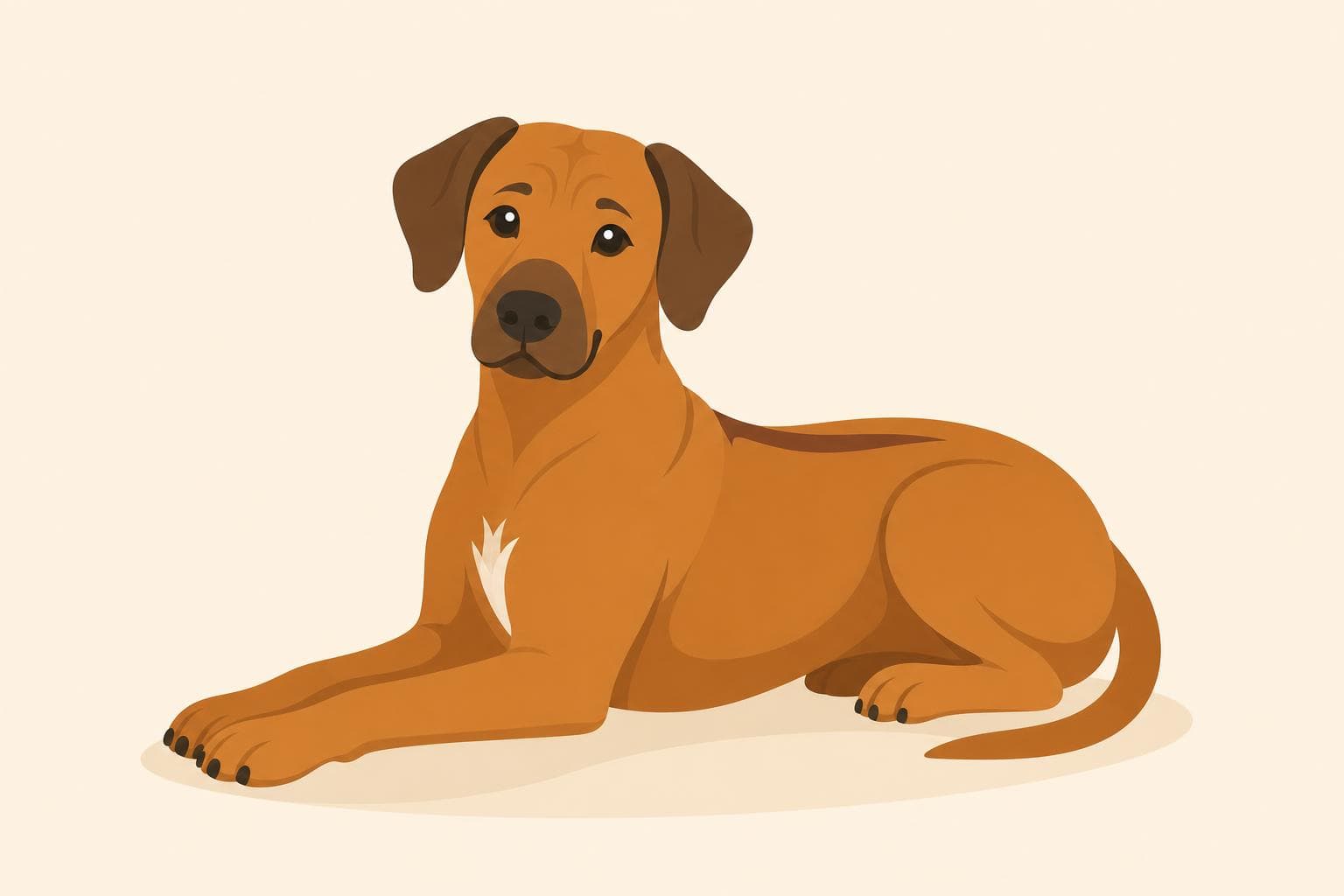
Behavior & traits
- devoted to family
- gentle with known children
- naturally protective
- strong willed
- calm indoors
Health concerns
Ridgebacks are generally a hardy breed but can be prone to hip and elbow dysplasia, hypothyroidism, and a hereditary condition called dermoid sinus that responsible breeders screen for. Bloat (gastric torsion) is a serious concern in deep-chested breeds like this one, so families should learn the signs and avoid heavy exercise right after meals. Regular vet checkups and choosing a breeder who health-tests their dogs go a long way.
Responsible breeding and regular check-ups go a long way. Always ask breeders about health testing.
Feeding & nutrition
A high-quality large-breed dog food with balanced protein and joint-supporting nutrients works well for Ridgebacks at every life stage. Most adults thrive on two measured meals a day rather than one large meal to help reduce bloat risk. Keep an eye on body condition — Ridgebacks should stay lean and athletic, not stocky, to protect their joints long-term.
Exercise needs
This is an athletic hound that needs at least 60–90 minutes of daily exercise, including brisk walks, jogs, or off-leash running in a securely fenced area. Families with active lifestyles will find a wonderful adventure partner here — they love hiking, trail running, and backyard play with the kids. Without enough exercise, a bored Ridgeback can become restless or mischievous indoors, so daily activity is non-negotiable.
Living with a Rhodesian Ridgeback
Living with a Rhodesian Ridgeback is a beautiful mix of athletic adventure and snuggly downtime. Mornings often start with a vigorous walk or run, after which your Ridgeback will happily transform into a 75-pound lap dog who genuinely believes he's small enough to share your armchair. They're surprisingly quiet around the house — not big barkers — but they're always aware of who's coming and going, giving families a built-in sense of security. With their own kids they're patient, gentle, and tolerant, though their size and exuberance mean toddlers can get accidentally bumped, so supervision during play is wise. Expect a strong-willed companion who tests boundaries during adolescence but rewards consistent, loving training with unwavering devotion for life.
Recommended products
A sturdy no-pull harness is essential for walks, since Ridgebacks are powerful and can pull hard when they catch an interesting scent. Invest in a large elevated dog bed (they love to lounge), a slow-feeder or elevated bowl to support healthy eating, and durable chew toys like Kongs or Benebones that can stand up to strong jaws. A rubber curry brush or grooming mitt handles their short coat beautifully, and a long lead is perfect for safe exploration in open spaces where their hound instincts can shine.
Reads for Rhodesian Ridgeback owners
![[header] Illustrated owner and athletic dog hiking a mountain trail t](/_next/image?url=https%3A%2F%2Fimages.ctfassets.net%2Fq8y32akc6zms%2F7DNPyseenZ7Tn8tGjdRmVN%2F8db03a8d9ee4dbc7b75637e6f5d162fc%2Fheader.jpg&w=3840&q=75)
The Adventure Buddy: The Owner Archetype Who Treats the World as a Playgrounda
Got The Adventure Buddy on your LiveLaughWoof assessment? Here's what it actually says about you — and the dog personalities most likely to thrive at your pace. Plus the one skill most adventure-forward owners forget to teach their athletic dogs, and the breeds that tend to fit best.
![[header] Illustration of an independent, alert dog standing tall on a](/_next/image?url=https%3A%2F%2Fimages.ctfassets.net%2Fq8y32akc6zms%2F2gzuqwZwZ14Q09lboD5AMo%2F15d52448517f45946bc4f35a41d74cfa%2Fheader.jpg&w=3840&q=75)
The Free Spirit: The Dog Who Writes Their Own Rulebook
Independent, opinionated, and ruled by a glorious chase instinct — The Free Spirit is the dog who came into your life with their own agenda and no plans to update it. If that sounds like your dog (or your dream dog), this portrait is for you. Inside: the traits, the best-matched owners, and the breeds that tend to land here.
![[header] Border Collie with puzzle toys](/_next/image?url=https%3A%2F%2Fimages.ctfassets.net%2Fq8y32akc6zms%2F7eTvC6qBF3gqDFvQSzcpXM%2Fa35b628bfd670bfc52bf4bcd532fc1b6%2Fheader.jpg&w=3840&q=75)
Engaging Activities for Border Collies: A How-To Guide
Is your Border Collie always on the lookout for something to do? Dive into engaging mental activities that will keep their sharp minds busy and entertained!