Scottish Deerhound
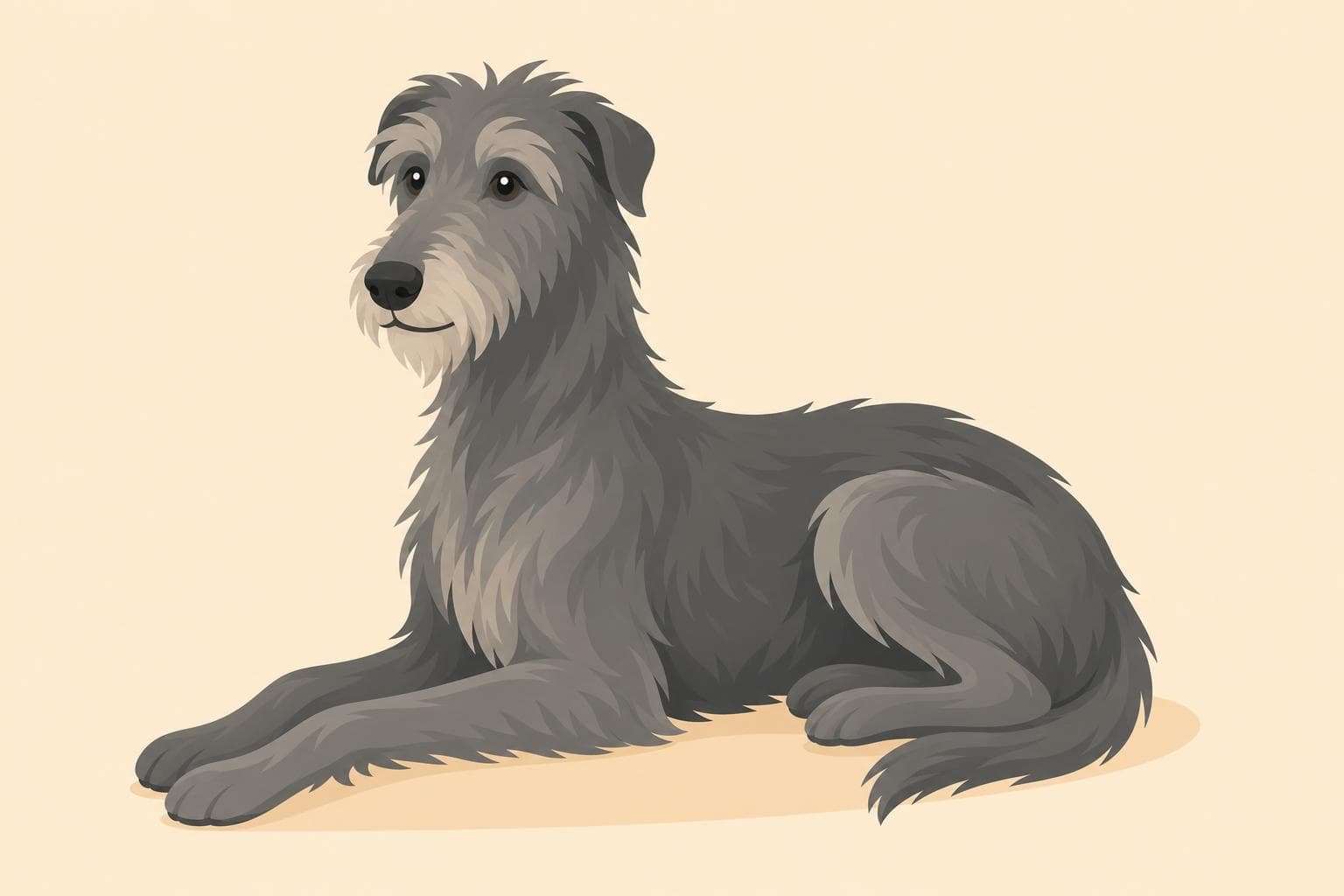
Scottish Deerhounds are often described as the gentle giants of the hound world — dignified and polite, yet deeply affectionate with their people. At home they're remarkably calm, often content to stretch out on a soft rug while the family bustles around them. Outdoors, however, their sighthound instincts kick in, and they love to stretch their long legs in a good gallop. They bond closely with every member of the household and dislike being left alone for long stretches.
Behavior & traits
- gentle with kids
- quiet indoors
- sociable
- sensitive
- strong prey drive outdoors
Health concerns
Like many giant breeds, Scottish Deerhounds are prone to bloat (gastric torsion), dilated cardiomyopathy, and bone cancer (osteosarcoma). Their lifespan is shorter than smaller breeds, which is something families should mentally prepare for. Regular vet checkups, a healthy weight, and avoiding heavy exercise right after meals can help reduce risks.
Responsible breeding and regular check-ups go a long way. Always ask breeders about health testing.
Feeding & nutrition
Deerhounds do best on a high-quality large-breed diet appropriate to their life stage, fed in two smaller meals per day rather than one large one to reduce the risk of bloat. Puppies need carefully managed nutrition to support slow, steady growth. Always keep fresh water available, and avoid vigorous play for at least an hour after eating.
Exercise needs
Despite their couch-potato reputation indoors, Deerhounds need daily exercise — long walks plus regular opportunities to run in a safely fenced area where they can really stretch out. A securely enclosed yard or access to a large open space is ideal, since their prey drive makes off-leash adventures in unfenced areas risky. Families with older kids who enjoy hiking or jogging will find a wonderful companion in this breed.
Living with a Scottish Deerhound
Living with a Scottish Deerhound is a bit like having a polite, oversized roommate who happens to love cuddles. They're surprisingly quiet and mellow indoors, often sprawling across the largest piece of furniture they can find — and yes, you'll need to make room for them on the couch. Families are often surprised by how sensitive and emotionally tuned-in they are; harsh tones genuinely hurt their feelings. With children, they tend to be patient and gentle, though their sheer size means toddlers can be knocked over by an enthusiastic tail or a turning body. The bittersweet truth is that their years with you are precious but few, so families embrace every slow morning snuggle and every joyful run across an open field.
Recommended products
Invest in an extra-large orthopedic dog bed (or two — they'll claim every soft spot) to support their long limbs and protect aging joints. A sturdy martingale collar and a padded Y-shaped harness work well for their deep chests and slim necks, paired with a strong six-foot leash for walks. An elevated feeder helps reduce strain at mealtimes, and slow-feeder bowls can lower bloat risk. Round out the basics with a soft slicker brush and grooming comb for their wiry coat, plus a few durable plush toys for gentle indoor play.
Reads for Scottish Deerhound owners
![[header] Border Collie with puzzle toys](/_next/image?url=https%3A%2F%2Fimages.ctfassets.net%2Fq8y32akc6zms%2F7eTvC6qBF3gqDFvQSzcpXM%2Fa35b628bfd670bfc52bf4bcd532fc1b6%2Fheader.jpg&w=3840&q=75)
Engaging Activities for Border Collies: A How-To Guide
Is your Border Collie always on the lookout for something to do? Dive into engaging mental activities that will keep their sharp minds busy and entertained!
![[header] Senior dog resting on an orthopedic bed while a puppy waits](/_next/image?url=https%3A%2F%2Fimages.ctfassets.net%2Fq8y32akc6zms%2F4EwnObSBED8EN4IbvFJgaN%2Fc15a1446d531fd28d8e6854c46c3de7f%2Fheader.jpg&w=3840&q=75)
Before the Puppy Arrives: A Pre-Arrival Checklist for Your Senior Dog
Your calm senior dog has been quietly compensating for aches, stiffness, and fading senses for years — and a new puppy is about to expose all of it. This pre-arrival checklist walks you through the vet workup, pain baseline, and home setup to tackle in the weeks *before* pickup day, so your older dog isn't blindsided by the chaos.
![[header] Small dog wearing a soft mesh harness walking on a sunny pat](/_next/image?url=https%3A%2F%2Fimages.ctfassets.net%2Fq8y32akc6zms%2F3p03PzT9zANgbTC9dAOMJ2%2Ff95efe8539856e9489ef9bd4e861c4ba%2Fheader.jpg&w=3840&q=75)
Comfortable Harnesses for Small Dogs Prone to Tracheal Collapse
Is your small dog coughing from their collar? Discover harnesses designed for pups prone to tracheal collapse, offering protection and comfort with every walk.