Scottish Terrier
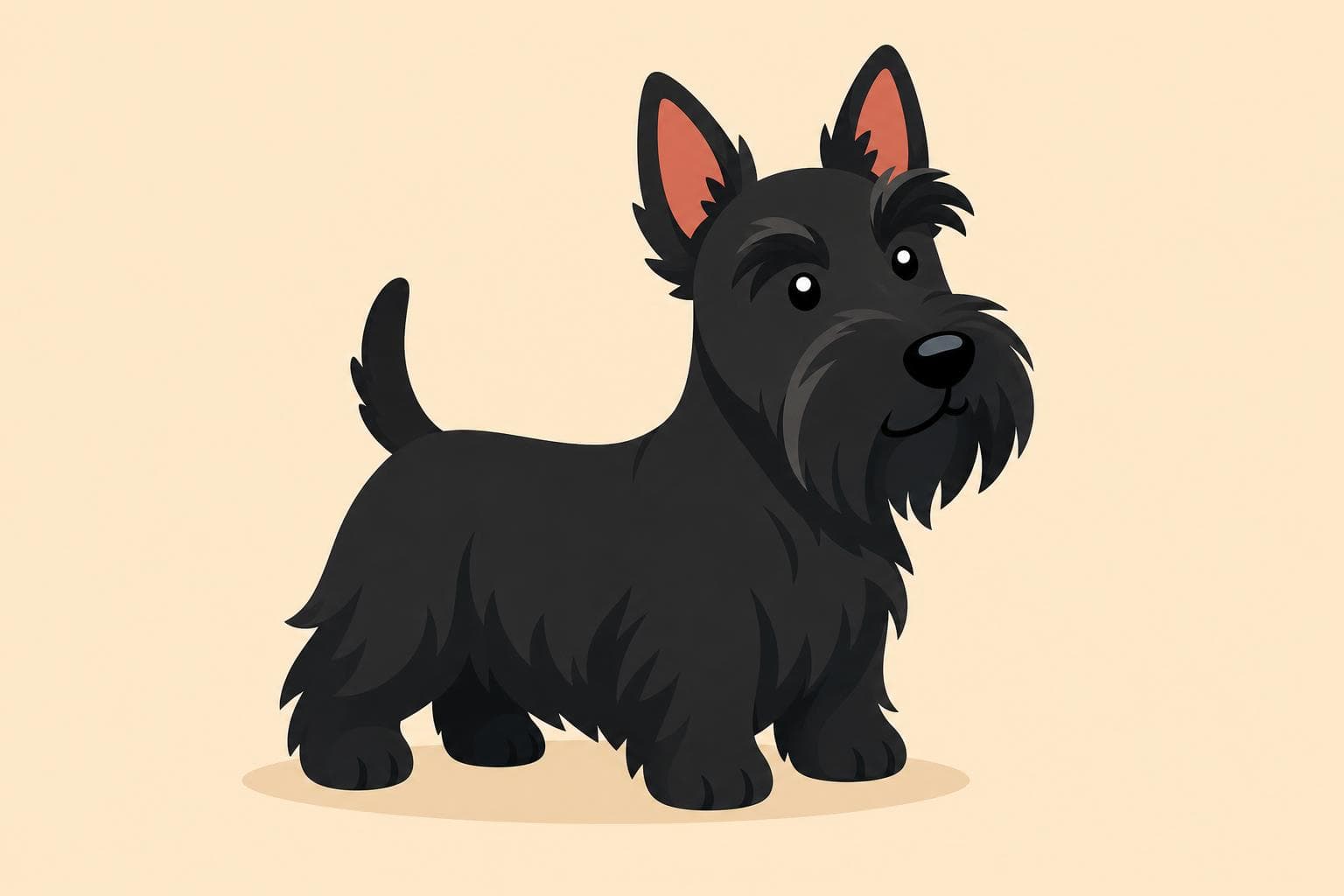
Scottish Terriers, affectionately known as 'Scotties,' are dignified little dogs with big personalities packed into a compact, sturdy frame. They tend to bond deeply with their families while remaining politely reserved with strangers, making them excellent (and surprisingly vocal) watchdogs. Scotties have a famously independent streak — they're loving but not clingy, content to be near you rather than on top of you. With older children who respect their space, they make wonderfully loyal companions.
Behavior & traits
- loyal to family
- independent minded
- alert watchdog
- reserved with strangers
- bold and brave
Health concerns
Scottish Terriers are prone to a few breed-specific health issues, including Scottie cramp (a benign movement disorder), von Willebrand's disease (a bleeding disorder), and a higher-than-average risk of certain cancers, particularly bladder cancer. They can also experience patellar luxation and craniomandibular osteopathy in puppies. Regular vet checkups and a watchful eye on any unusual symptoms go a long way toward keeping your Scottie healthy for the long haul.
Responsible breeding and regular check-ups go a long way. Always ask breeders about health testing.
Feeding & nutrition
A high-quality dog food formulated for small breeds works well for most Scotties, typically about 1 to 1.5 cups per day split into two meals. Because they're a stockier breed with a lower activity level than some terriers, it's easy for them to gain weight, so measuring portions and limiting treats is important. Always provide fresh water, especially after grooming or outdoor play.
Exercise needs
Scotties need about 30 to 60 minutes of daily exercise — a couple of brisk walks plus some playtime in a securely fenced yard usually does the trick. They love to dig and 'hunt,' so puzzle toys and scent games are a great way to engage their terrier instincts indoors. Families can easily fit a Scottie's exercise needs into their daily routine without major lifestyle changes.
Living with a Scottish Terrier
Living with a Scottish Terrier is a little like sharing your home with a wise, slightly opinionated friend. They're affectionate but not needy — they'll happily settle in the same room as you rather than demand constant cuddles, and they have a delightful knack for making you laugh with their stubborn, dignified antics. Expect some barking at the doorbell, passing squirrels, or anything they deem suspicious; Scotties take their watchdog duties seriously. They do best with older children who understand that not every dog wants to be picked up or roughhoused, and they appreciate a predictable daily rhythm of meals, walks, and quiet time. Many families are surprised by how much personality fits into such a small package — and how quickly a Scottie becomes the heart of the household.
Recommended products
A slicker brush and metal comb are essential for maintaining a Scottie's wiry double coat, and most families schedule professional grooming every 6–8 weeks for hand-stripping or clipping. A well-fitted harness (rather than a collar) protects their short neck on walks, and sturdy chew toys plus puzzle feeders help satisfy their busy terrier minds. A comfortable, supportive dog bed in a quiet corner gives your Scottie the personal space they value, and a digging box for the yard can save your garden from their natural instincts.
Reads for Scottish Terrier owners
![[header] Border Collie with puzzle toys](/_next/image?url=https%3A%2F%2Fimages.ctfassets.net%2Fq8y32akc6zms%2F7eTvC6qBF3gqDFvQSzcpXM%2Fa35b628bfd670bfc52bf4bcd532fc1b6%2Fheader.jpg&w=3840&q=75)
Engaging Activities for Border Collies: A How-To Guide
Is your Border Collie always on the lookout for something to do? Dive into engaging mental activities that will keep their sharp minds busy and entertained!
![[header] Senior dog resting on an orthopedic bed while a puppy waits](/_next/image?url=https%3A%2F%2Fimages.ctfassets.net%2Fq8y32akc6zms%2F4EwnObSBED8EN4IbvFJgaN%2Fc15a1446d531fd28d8e6854c46c3de7f%2Fheader.jpg&w=3840&q=75)
Before the Puppy Arrives: A Pre-Arrival Checklist for Your Senior Dog
Your calm senior dog has been quietly compensating for aches, stiffness, and fading senses for years — and a new puppy is about to expose all of it. This pre-arrival checklist walks you through the vet workup, pain baseline, and home setup to tackle in the weeks *before* pickup day, so your older dog isn't blindsided by the chaos.
![[header] Small dog wearing a soft mesh harness walking on a sunny pat](/_next/image?url=https%3A%2F%2Fimages.ctfassets.net%2Fq8y32akc6zms%2F3p03PzT9zANgbTC9dAOMJ2%2Ff95efe8539856e9489ef9bd4e861c4ba%2Fheader.jpg&w=3840&q=75)
Comfortable Harnesses for Small Dogs Prone to Tracheal Collapse
Is your small dog coughing from their collar? Discover harnesses designed for pups prone to tracheal collapse, offering protection and comfort with every walk.