Tibetan Mastiff
Tibetan Mastiffs are ancient guardian dogs who take their job of watching over the family very seriously. At home they tend to be calm, dignified, and deeply bonded to their people, often choosing a favorite spot where they can keep an eye on everyone. They're affectionate with family members but naturally aloof with strangers, and they think for themselves rather than waiting for instructions. With proper socialization, they can be wonderfully gentle and patient with the children they've grown up alongside.
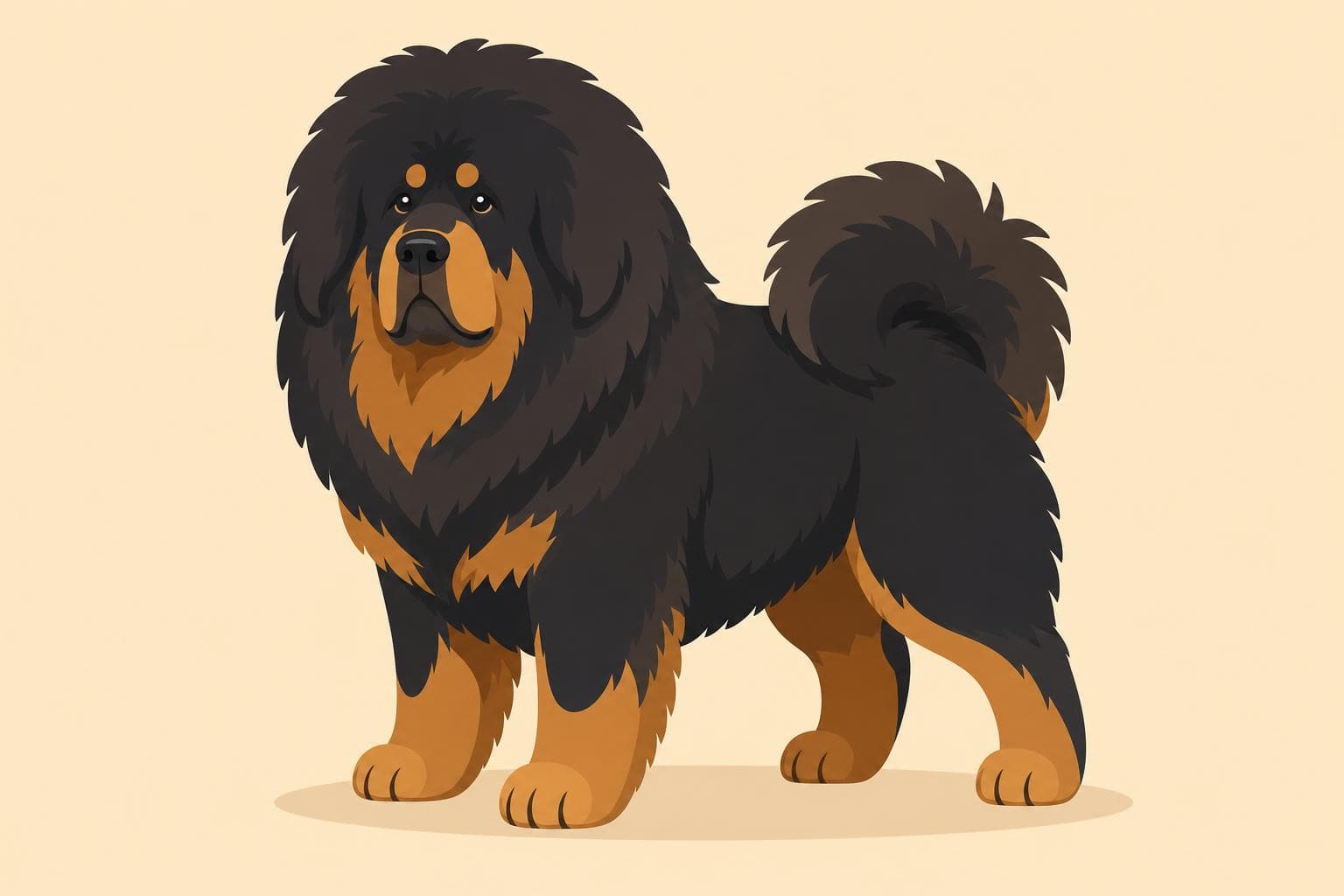
Behavior & traits
- devoted to family
- naturally protective
- reserved with strangers
- independent thinker
- gentle with their own kids
Health concerns
Tibetan Mastiffs are generally a hardy breed but can be prone to hip and elbow dysplasia, hypothyroidism, and an inherited neurological condition called canine inherited demyelinative neuropathy (CIDN). Bloat is also a concern given their large size. Reputable breeders screen for these issues, and regular vet checkups help catch problems early.
Responsible breeding and regular check-ups go a long way. Always ask breeders about health testing.
Feeding & nutrition
A high-quality large-breed dog food is essential, with portions carefully measured since Tibetan Mastiffs are surprisingly light eaters for their size and can self-regulate. Many adults thrive on just one meal a day, though puppies need slow, controlled growth on large-breed puppy formulas to protect developing joints. Always provide fresh water and avoid heavy exercise right after meals to reduce bloat risk.
Exercise needs
Despite their size, Tibetan Mastiffs have moderate exercise needs — usually a couple of brisk daily walks and some yard time will keep them content. They're not jogging companions and prefer a steady patrol of their territory to high-intensity play. A securely fenced yard is ideal, as they love being outdoors, especially in cooler weather.
Living with a Tibetan Mastiff
Living with a Tibetan Mastiff is a bit like sharing your home with a wise, furry sentinel who has firm opinions about everything. They're famously nocturnal barkers, alerting you to every rustle in the yard, which is something families in close-quarters neighborhoods need to consider seriously. During the day they're often calm and even lazy indoors, content to nap near the kids and observe household life. Expect a massive seasonal 'coat blow' in spring where tufts of fur appear everywhere for several weeks. They're not dogs who follow commands eagerly, but they form profound, loving bonds and will quietly protect every family member — including the smallest ones — with their whole heart.
Recommended products
Invest in a heavy-duty undercoat rake and slicker brush to manage their thick double coat, especially during shedding season. A sturdy, well-padded harness and a strong six-foot leash are must-haves given their size and strength. An elevated, large-breed feeding station helps with comfort and digestion, and a cooling mat is a thoughtful addition since their heavy coats make warm weather uncomfortable. A reinforced, oversized dog bed in a quiet corner gives them the dignified resting spot they prefer.
Reads for Tibetan Mastiff owners
![[header] Border Collie with puzzle toys](/_next/image?url=https%3A%2F%2Fimages.ctfassets.net%2Fq8y32akc6zms%2F7eTvC6qBF3gqDFvQSzcpXM%2Fa35b628bfd670bfc52bf4bcd532fc1b6%2Fheader.jpg&w=3840&q=75)
Engaging Activities for Border Collies: A How-To Guide
Is your Border Collie always on the lookout for something to do? Dive into engaging mental activities that will keep their sharp minds busy and entertained!
![[header] Senior dog resting on an orthopedic bed while a puppy waits](/_next/image?url=https%3A%2F%2Fimages.ctfassets.net%2Fq8y32akc6zms%2F4EwnObSBED8EN4IbvFJgaN%2Fc15a1446d531fd28d8e6854c46c3de7f%2Fheader.jpg&w=3840&q=75)
Before the Puppy Arrives: A Pre-Arrival Checklist for Your Senior Dog
Your calm senior dog has been quietly compensating for aches, stiffness, and fading senses for years — and a new puppy is about to expose all of it. This pre-arrival checklist walks you through the vet workup, pain baseline, and home setup to tackle in the weeks *before* pickup day, so your older dog isn't blindsided by the chaos.
![[header] Small dog wearing a soft mesh harness walking on a sunny pat](/_next/image?url=https%3A%2F%2Fimages.ctfassets.net%2Fq8y32akc6zms%2F3p03PzT9zANgbTC9dAOMJ2%2Ff95efe8539856e9489ef9bd4e861c4ba%2Fheader.jpg&w=3840&q=75)
Comfortable Harnesses for Small Dogs Prone to Tracheal Collapse
Is your small dog coughing from their collar? Discover harnesses designed for pups prone to tracheal collapse, offering protection and comfort with every walk.