Tibetan Terrier
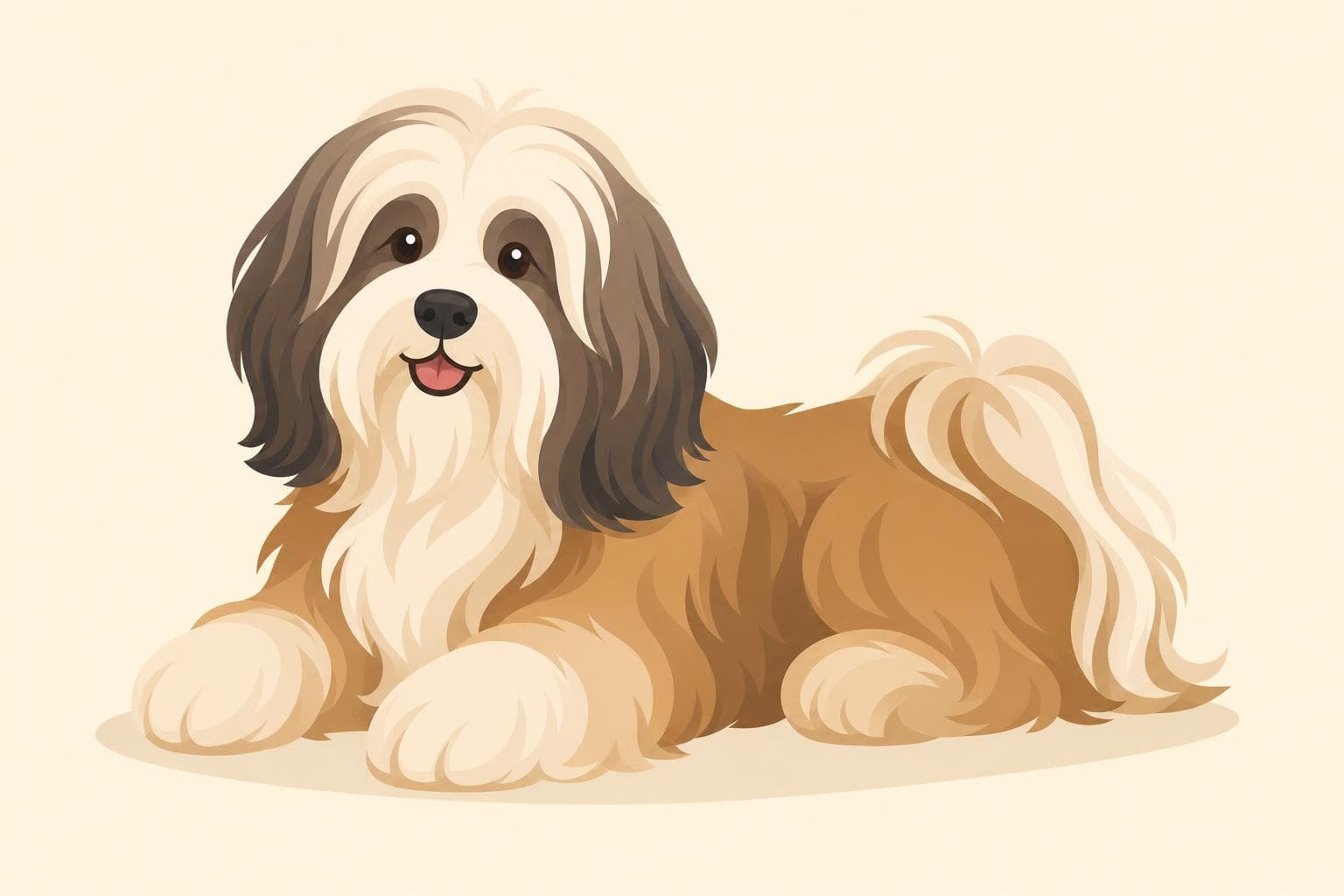
Tibetan Terriers are charming, people-loving dogs who form deep bonds with their families and want to be involved in everything you do. Despite the name, they aren't true terriers — they're more thoughtful and even-tempered, with a playful streak that delights children. They're alert enough to announce visitors but rarely yappy, and they tend to be reserved (not aggressive) with strangers until they warm up.
Behavior & traits
- devoted to family
- playful with kids
- watchful
- adaptable
- sensitive to moods
Health concerns
Tibetan Terriers are generally a hardy, long-lived breed, but families should be aware of hip dysplasia, progressive retinal atrophy (PRA), and lens luxation, which can affect their eyes. Responsible breeders screen for these conditions, so always ask to see health clearances. Regular vet checkups and keeping them at a healthy weight go a long way toward a happy 15+ years together.
Responsible breeding and regular check-ups go a long way. Always ask breeders about health testing.
Feeding & nutrition
A high-quality dog food appropriate for medium breeds, fed in two measured meals a day, suits most Tibetan Terriers well. They aren't typically prone to obesity, but their thick coat can hide weight gain, so keep an eye on body condition rather than just looks. Fresh water and limited table scraps will help keep them feeling their best.
Exercise needs
Plan on about an hour of activity each day — a couple of brisk walks plus some backyard play or a game of fetch usually does the trick. They also love hikes, agility, and family adventures, making them a great match for households that enjoy being outdoors. Mental enrichment like puzzle toys and training games is just as important as physical exercise.
Living with a Tibetan Terrier
Living with a Tibetan Terrier means having a constant, joyful shadow — they want to be wherever the family is, whether that's the couch, the kitchen, or the backyard. They're surprisingly agile and have unique cat-like feet that let them leap onto furniture and navigate stairs with ease, so don't be shocked when you find one perched at the back of the sofa watching the world. Their long double coat is beautiful but demands real commitment: expect to brush several times a week to prevent mats, especially behind the ears and under the legs. They're sensitive souls who pick up on household tension, so a calm, affectionate home brings out their best. Families often describe them as clownish and full of personality — playful with kids, gentle with grandparents, and endlessly entertaining once they trust you.
Recommended products
A quality pin brush, metal greyhound comb, and detangling spray are non-negotiables for managing that long double coat, along with a good pair of grooming scissors for trimming around the eyes and paws. A front-clip harness works better than a collar for walks, since it prevents pulling without straining the neck. Round out the basics with interactive puzzle toys to keep their clever minds busy, a sturdy elevated bed, and a slow-feeder bowl if your TT tends to inhale meals.
Reads for Tibetan Terrier owners
![[header] Border Collie with puzzle toys](/_next/image?url=https%3A%2F%2Fimages.ctfassets.net%2Fq8y32akc6zms%2F7eTvC6qBF3gqDFvQSzcpXM%2Fa35b628bfd670bfc52bf4bcd532fc1b6%2Fheader.jpg&w=3840&q=75)
Engaging Activities for Border Collies: A How-To Guide
Is your Border Collie always on the lookout for something to do? Dive into engaging mental activities that will keep their sharp minds busy and entertained!
![[header] Senior dog resting on an orthopedic bed while a puppy waits](/_next/image?url=https%3A%2F%2Fimages.ctfassets.net%2Fq8y32akc6zms%2F4EwnObSBED8EN4IbvFJgaN%2Fc15a1446d531fd28d8e6854c46c3de7f%2Fheader.jpg&w=3840&q=75)
Before the Puppy Arrives: A Pre-Arrival Checklist for Your Senior Dog
Your calm senior dog has been quietly compensating for aches, stiffness, and fading senses for years — and a new puppy is about to expose all of it. This pre-arrival checklist walks you through the vet workup, pain baseline, and home setup to tackle in the weeks *before* pickup day, so your older dog isn't blindsided by the chaos.
![[header] Small dog wearing a soft mesh harness walking on a sunny pat](/_next/image?url=https%3A%2F%2Fimages.ctfassets.net%2Fq8y32akc6zms%2F3p03PzT9zANgbTC9dAOMJ2%2Ff95efe8539856e9489ef9bd4e861c4ba%2Fheader.jpg&w=3840&q=75)
Comfortable Harnesses for Small Dogs Prone to Tracheal Collapse
Is your small dog coughing from their collar? Discover harnesses designed for pups prone to tracheal collapse, offering protection and comfort with every walk.