Wirehaired Pointing Griffon
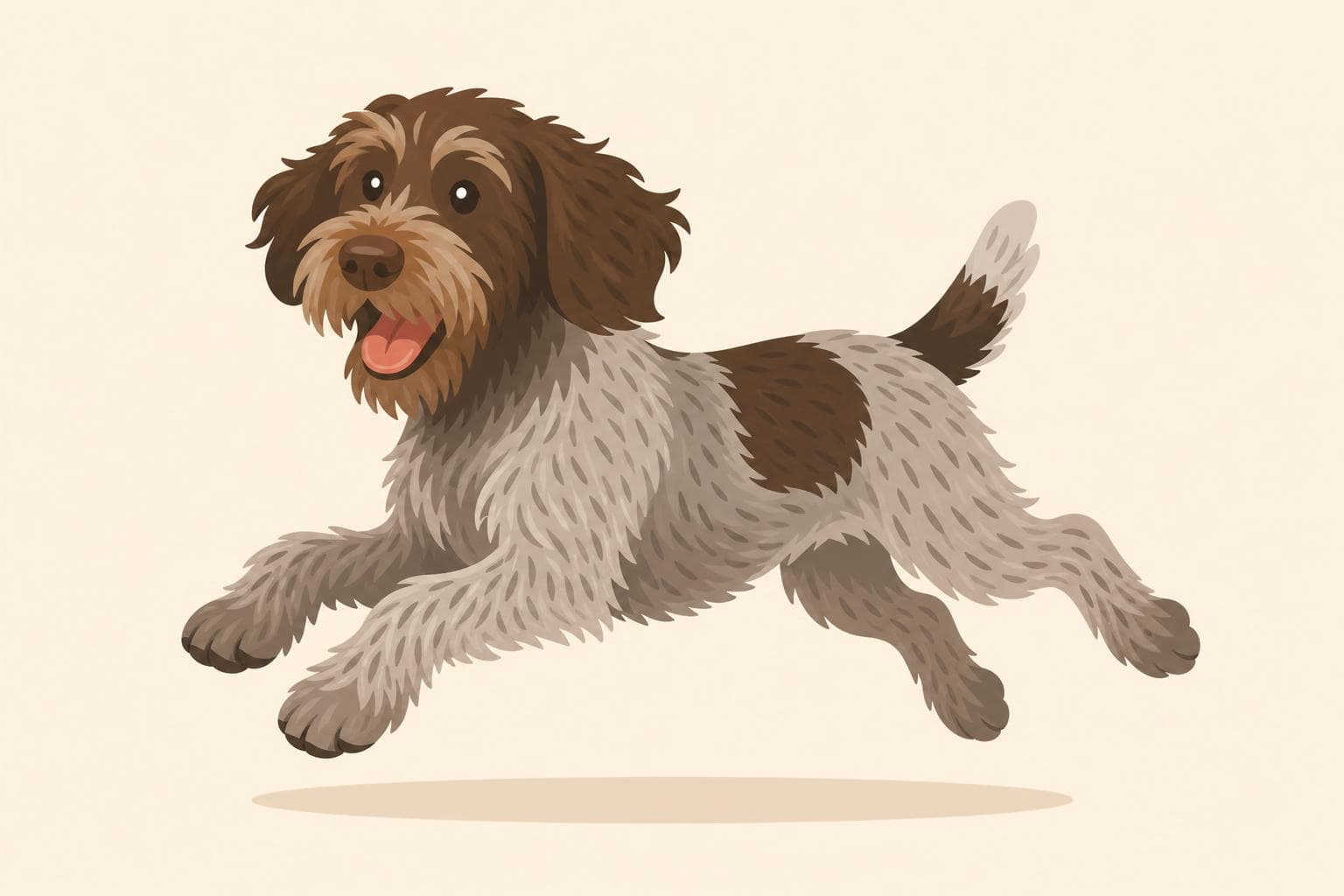
Wirehaired Pointing Griffons are often called the 'supreme gundog' for good reason — they're devoted, intelligent, and deeply bonded to their people. In a family setting, they tend to be sweet-natured goofballs who follow their humans from room to room and thrive on being included in everything. They're typically patient and gentle with children, though their bouncy enthusiasm means very young kids may get accidentally bumped during playtime.
Behavior & traits
- gentle with kids
- people oriented
- trainable
- playful
- loves the outdoors
Health concerns
Wirehaired Pointing Griffons are generally a hardy, healthy breed, but families should be aware of hip dysplasia, elbow dysplasia, and certain eye conditions like cataracts and progressive retinal atrophy. Ear infections can also be a concern due to their floppy, hair-lined ears, especially after swimming. Working with a reputable breeder who health-tests parents goes a long way toward avoiding preventable issues.
Responsible breeding and regular check-ups go a long way. Always ask breeders about health testing.
Feeding & nutrition
Feed a high-quality dog food formulated for active, medium-sized sporting breeds, typically 2–3 cups per day split into two meals. Because they're so energetic, growing puppies and working adults may need extra calories, but watch portions during quieter winter months to prevent weight gain. Always provide fresh water, especially after exercise sessions.
Exercise needs
This is an athletic, working breed that needs at least 1–2 hours of vigorous exercise daily — a quick walk around the block won't cut it. Families can meet these needs with hiking, jogging, swimming, fetch sessions, and games that engage their nose and brain. Without enough activity, Griffons can become restless and find their own entertainment, often involving your shoes or the couch cushions.
Living with a Wirehaired Pointing Griffon
Living with a Wirehaired Pointing Griffon means having a constant, scruffy-bearded shadow who wants to be part of every moment — cooking dinner, folding laundry, school drop-off, you name it. Their wiry coat sheds very little, which is a win for tidy households, but it does need brushing weekly and hand-stripping or trimming every few months to stay healthy. Expect a dog who's calm and cuddly indoors once exercised, but bouncy and mischievous if cooped up too long. Many families are surprised by how 'human' Griffons feel — they make eye contact, seem to understand routines, and have big, expressive personalities. They're also notorious for muddy paws and beards that drip water everywhere after a drink, so a towel by the door becomes a household staple.
Recommended products
A sturdy slicker brush and a stripping comb are essential for maintaining that signature wiry coat, along with a quality ear cleaner to prevent infections after swims and baths. Invest in a no-pull harness for walks and hikes, plus a long training lead for safely practicing recall in open spaces. Durable puzzle toys, scent-work kits, and a tough rope or fetch toy will help channel their working-dog brain, and a microfiber drying towel kept near the door will save your floors from that famously drippy beard.
Reads for Wirehaired Pointing Griffon owners
![[header] Border Collie with puzzle toys](/_next/image?url=https%3A%2F%2Fimages.ctfassets.net%2Fq8y32akc6zms%2F7eTvC6qBF3gqDFvQSzcpXM%2Fa35b628bfd670bfc52bf4bcd532fc1b6%2Fheader.jpg&w=3840&q=75)
Engaging Activities for Border Collies: A How-To Guide
Is your Border Collie always on the lookout for something to do? Dive into engaging mental activities that will keep their sharp minds busy and entertained!
![[header] Senior dog resting on an orthopedic bed while a puppy waits](/_next/image?url=https%3A%2F%2Fimages.ctfassets.net%2Fq8y32akc6zms%2F4EwnObSBED8EN4IbvFJgaN%2Fc15a1446d531fd28d8e6854c46c3de7f%2Fheader.jpg&w=3840&q=75)
Before the Puppy Arrives: A Pre-Arrival Checklist for Your Senior Dog
Your calm senior dog has been quietly compensating for aches, stiffness, and fading senses for years — and a new puppy is about to expose all of it. This pre-arrival checklist walks you through the vet workup, pain baseline, and home setup to tackle in the weeks *before* pickup day, so your older dog isn't blindsided by the chaos.
![[header] Small dog wearing a soft mesh harness walking on a sunny pat](/_next/image?url=https%3A%2F%2Fimages.ctfassets.net%2Fq8y32akc6zms%2F3p03PzT9zANgbTC9dAOMJ2%2Ff95efe8539856e9489ef9bd4e861c4ba%2Fheader.jpg&w=3840&q=75)
Comfortable Harnesses for Small Dogs Prone to Tracheal Collapse
Is your small dog coughing from their collar? Discover harnesses designed for pups prone to tracheal collapse, offering protection and comfort with every walk.