Chinese Crested
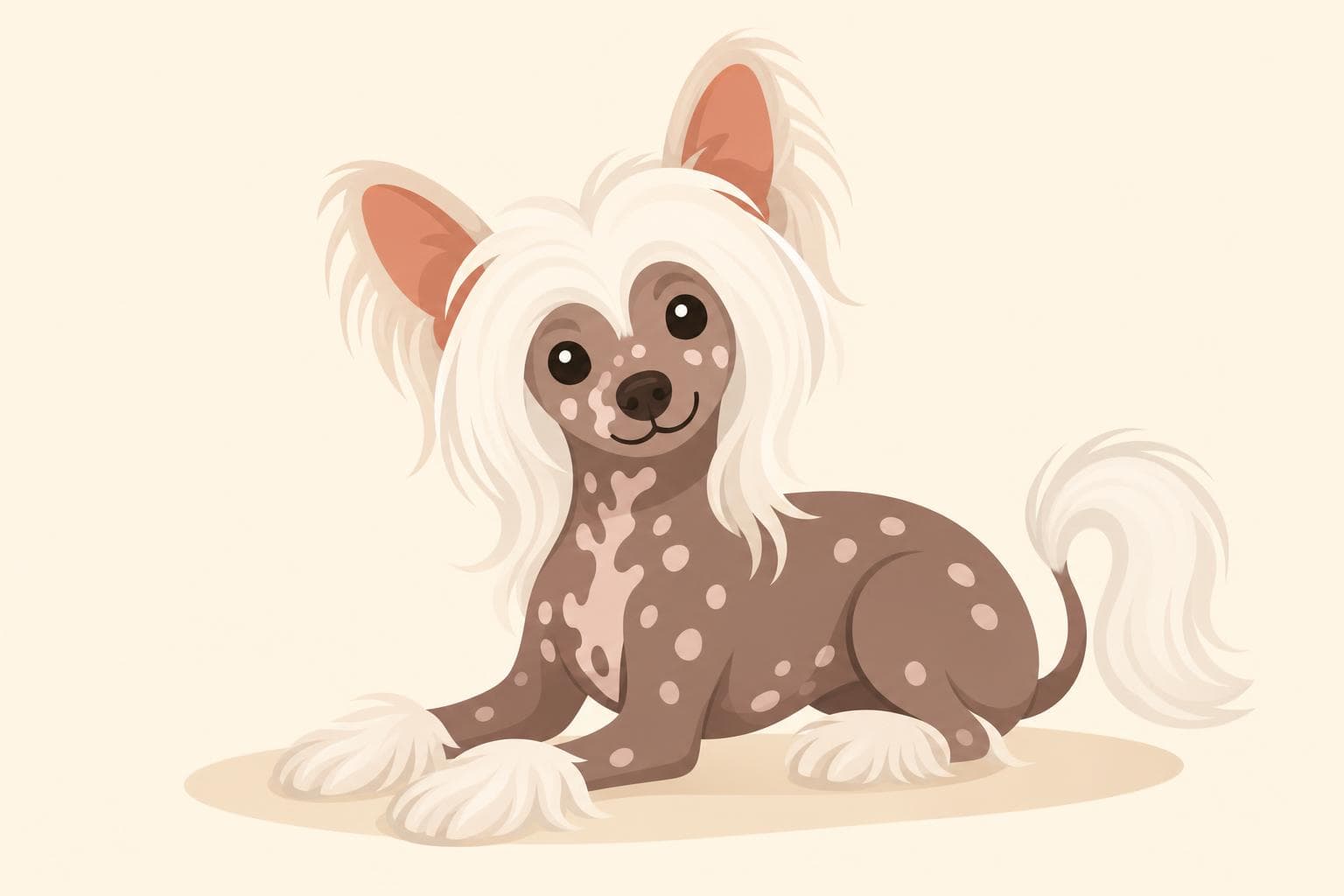
Chinese Cresteds are loving little companions who genuinely thrive on human connection — they want to be wherever their family is, whether that's snuggled on the couch or trotting alongside you during chores. They're playful and surprisingly agile, often described as part cat, part monkey because they love to climb, perch, and observe. In a family home, they tend to bond closely with everyone but often pick one favorite person to shadow throughout the day.
Behavior & traits
- loving lap dog
- gentle with kids
- people oriented
- playful
- sensitive
Health concerns
Hairless Cresteds need careful skin care, as they're prone to acne, sunburn, and dry skin without regular moisturizing and sunscreen. The breed can also experience dental issues (especially the hairless variety, which often has missing or weak teeth), luxating patellas, and eye conditions like progressive retinal atrophy. Routine vet checkups and good dental hygiene at home go a long way in keeping them healthy.
Responsible breeding and regular check-ups go a long way. Always ask breeders about health testing.
Feeding & nutrition
A high-quality small-breed kibble or fresh food diet, measured into two small meals a day, suits most Cresteds well. Because they're tiny, even a little extra food can lead to weight gain, so families should be mindful with treats — especially when kids are slipping snacks under the table. Dental-friendly foods or kibble shapes can also help support their often-fragile teeth.
Exercise needs
Despite their delicate looks, Chinese Cresteds enjoy daily walks and lively play sessions, usually needing about 30 minutes of activity a day. They love fetch, gentle agility, and bouncing around the yard, but they're equally happy with indoor games when the weather is rough. Families can easily meet their needs through short walks and play with the kids in the living room.
Living with a Chinese Crested
Living with a Chinese Crested is a little like having a tiny, warm shadow — they want to be touching you whenever possible, and many love to burrow under blankets or curl up on a lap. The hairless variety feels almost like a hot water bottle, which kids find delightful, though families quickly learn to keep sweaters on hand for chilly days and sunscreen for sunny ones. They're alert little watchdogs and may bark to announce visitors, but they're not yappy when well-socialized. Expect some quirky behavior: climbing onto the back of the couch, pawing at you for affection, and 'velcro dog' tendencies that mean they don't love being left alone for long stretches. Families with older, gentle children tend to have the easiest time, since these dogs are small and fine-boned and can be overwhelmed by rough toddler handling.
Recommended products
Because of their sensitive skin, hairless Cresteds need quality dog-safe sunscreen, gentle moisturizer, and soft sweaters or pajamas for cooler weather. A small step-in harness is gentler on their delicate necks than a collar, and a cozy heated bed or plush blanket nest will quickly become their favorite spot. For the Powderpuff variety, a slicker brush and metal comb help prevent matting, and both types benefit from a small-breed toothbrush and enzymatic toothpaste to support their dental health.
Reads for Chinese Crested owners
![[header] Border Collie with puzzle toys](/_next/image?url=https%3A%2F%2Fimages.ctfassets.net%2Fq8y32akc6zms%2F7eTvC6qBF3gqDFvQSzcpXM%2Fa35b628bfd670bfc52bf4bcd532fc1b6%2Fheader.jpg&w=3840&q=75)
Engaging Activities for Border Collies: A How-To Guide
Is your Border Collie always on the lookout for something to do? Dive into engaging mental activities that will keep their sharp minds busy and entertained!
![[header] Senior dog resting on an orthopedic bed while a puppy waits](/_next/image?url=https%3A%2F%2Fimages.ctfassets.net%2Fq8y32akc6zms%2F4EwnObSBED8EN4IbvFJgaN%2Fc15a1446d531fd28d8e6854c46c3de7f%2Fheader.jpg&w=3840&q=75)
Before the Puppy Arrives: A Pre-Arrival Checklist for Your Senior Dog
Your calm senior dog has been quietly compensating for aches, stiffness, and fading senses for years — and a new puppy is about to expose all of it. This pre-arrival checklist walks you through the vet workup, pain baseline, and home setup to tackle in the weeks *before* pickup day, so your older dog isn't blindsided by the chaos.
![[header] Small dog wearing a soft mesh harness walking on a sunny pat](/_next/image?url=https%3A%2F%2Fimages.ctfassets.net%2Fq8y32akc6zms%2F3p03PzT9zANgbTC9dAOMJ2%2Ff95efe8539856e9489ef9bd4e861c4ba%2Fheader.jpg&w=3840&q=75)
Comfortable Harnesses for Small Dogs Prone to Tracheal Collapse
Is your small dog coughing from their collar? Discover harnesses designed for pups prone to tracheal collapse, offering protection and comfort with every walk.