Redbone Coonhound
Redbone Coonhounds are warm-hearted, easygoing dogs who genuinely adore being part of the family pack. They tend to be patient and playful with children, happy to romp in the yard one moment and snuggle on the couch the next. While they have a strong hunting heritage and a nose that's always working, at home they're surprisingly mellow and affectionate companions who don't like being left out of family activities.
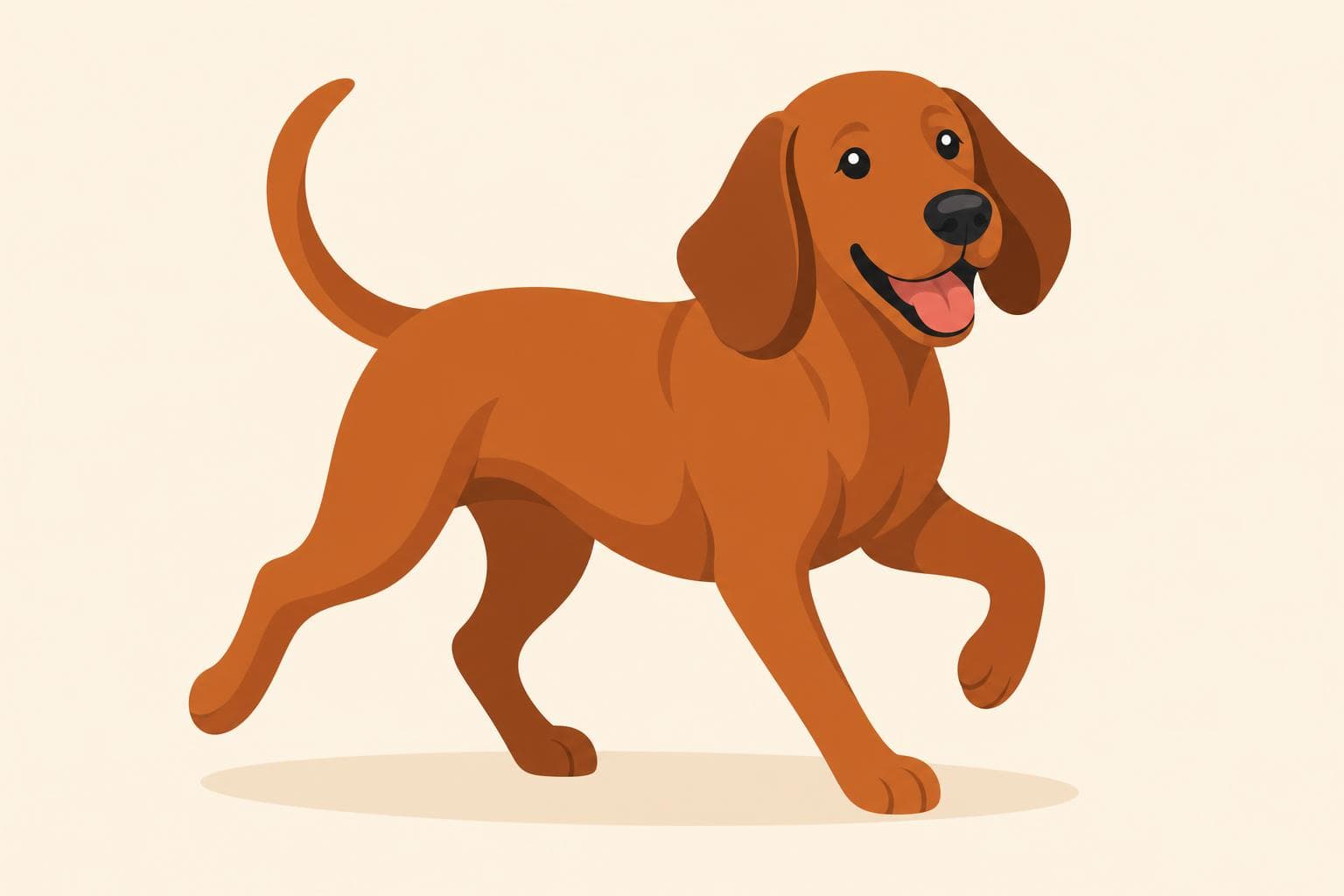
Behavior & traits
- gentle with kids
- people loving
- vocal
- scent driven
- playful
Health concerns
Redbones are generally a hardy, healthy breed, but families should watch for hip dysplasia and ear infections, since those long, floppy ears can trap moisture. Bloat (gastric torsion) can also be a concern in deep-chested hounds, so feeding habits matter. Regular vet checkups and ear cleanings go a long way in keeping them thriving.
Responsible breeding and regular check-ups go a long way. Always ask breeders about health testing.
Feeding & nutrition
A high-quality large-breed kibble with balanced protein and healthy fats will fuel a Redbone's active lifestyle. Most adults do well on 2.5–3 cups of food per day, split into two meals to reduce the risk of bloat. Watch portions carefully, as these food-motivated hounds will happily overeat if given the chance.
Exercise needs
Redbone Coonhounds need at least 60–90 minutes of vigorous exercise daily to stay happy and well-behaved at home. Families can meet this with long walks, hikes, fenced-yard play, and scent games that engage their natural tracking instincts. A tired Redbone is a calm, well-mannered Redbone — without enough activity, they can become restless or destructive.
Living with a Redbone Coonhound
Living with a Redbone Coonhound means sharing your home with a velcro dog who wants to be wherever you are — including, often, on the couch with you. Their signature bay and bark can surprise new owners; they're vocal communicators who'll let you (and the neighbors) know when something interesting is happening. Off-leash adventures require caution because that nose will absolutely override their recall when a scent catches them, so a securely fenced yard is a real game-changer. Day to day, they're surprisingly chill indoors after exercise, wonderful with kids, and tolerant of household chaos like birthday parties or busy mornings. Expect short reddish hairs on your furniture and clothes, a hound-y smell that needs occasional bathing, and a loyal shadow who turns ordinary family moments into joyful ones.
Recommended products
A sturdy front-clip harness and a 6-foot leash are essentials for managing that scent-driven pull on walks, and a long-line lead is perfect for safe sniffing adventures in open spaces. Invest in a slow-feeder bowl to reduce bloat risk and gulping, plus a weekly ear-cleaning solution to keep those floppy ears healthy. A durable rubber chew toy or snuffle mat helps satisfy their need for mental stimulation, and a comfy orthopedic dog bed gives their large frame a cozy spot to crash after a day of family fun.
Reads for Redbone Coonhound owners
![[header] Border Collie with puzzle toys](/_next/image?url=https%3A%2F%2Fimages.ctfassets.net%2Fq8y32akc6zms%2F7eTvC6qBF3gqDFvQSzcpXM%2Fa35b628bfd670bfc52bf4bcd532fc1b6%2Fheader.jpg&w=3840&q=75)
Engaging Activities for Border Collies: A How-To Guide
Is your Border Collie always on the lookout for something to do? Dive into engaging mental activities that will keep their sharp minds busy and entertained!
![[header] Senior dog resting on an orthopedic bed while a puppy waits](/_next/image?url=https%3A%2F%2Fimages.ctfassets.net%2Fq8y32akc6zms%2F4EwnObSBED8EN4IbvFJgaN%2Fc15a1446d531fd28d8e6854c46c3de7f%2Fheader.jpg&w=3840&q=75)
Before the Puppy Arrives: A Pre-Arrival Checklist for Your Senior Dog
Your calm senior dog has been quietly compensating for aches, stiffness, and fading senses for years — and a new puppy is about to expose all of it. This pre-arrival checklist walks you through the vet workup, pain baseline, and home setup to tackle in the weeks *before* pickup day, so your older dog isn't blindsided by the chaos.
![[header] Small dog wearing a soft mesh harness walking on a sunny pat](/_next/image?url=https%3A%2F%2Fimages.ctfassets.net%2Fq8y32akc6zms%2F3p03PzT9zANgbTC9dAOMJ2%2Ff95efe8539856e9489ef9bd4e861c4ba%2Fheader.jpg&w=3840&q=75)
Comfortable Harnesses for Small Dogs Prone to Tracheal Collapse
Is your small dog coughing from their collar? Discover harnesses designed for pups prone to tracheal collapse, offering protection and comfort with every walk.