Standard Poodle
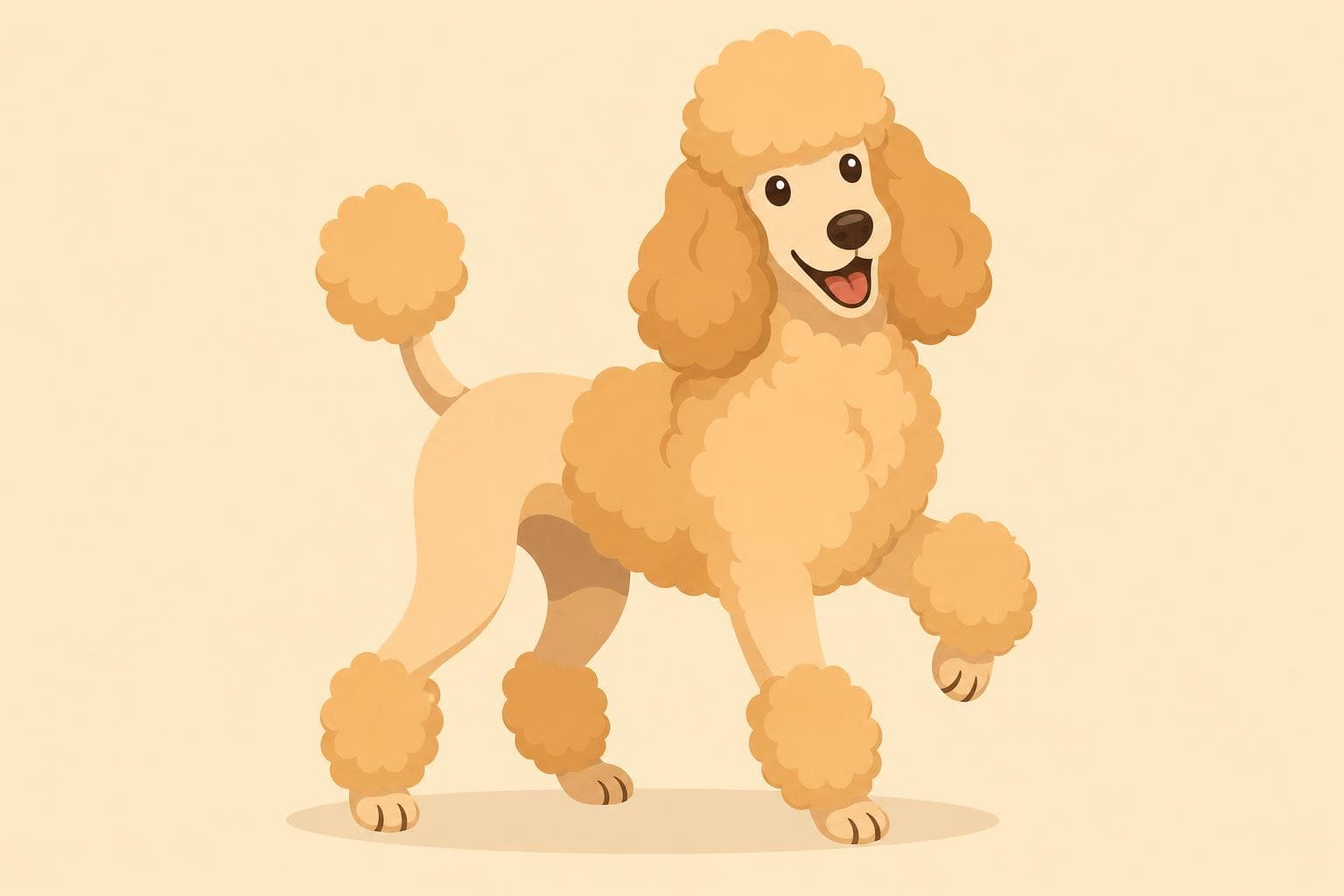
Standard Poodles are remarkably bright, sensitive dogs that thrive on being part of the family. They're known for their playful goofiness paired with surprising elegance — one moment they're doing zoomies in the yard, the next they're calmly resting at your feet. Their intelligence means they pick up on household routines quickly and often seem to understand exactly what's going on with each family member.
Behavior & traits
- gentle with kids
- highly intelligent
- eager to please
- playful
- social
Health concerns
Standard Poodles can be prone to hip dysplasia, Addison's disease, bloat (gastric dilatation-volvulus), and certain eye conditions like progressive retinal atrophy. Because bloat is a real risk for deep-chested breeds, families should avoid heavy exercise right after meals. Choosing a reputable breeder who screens for genetic conditions can significantly reduce health risks.
Responsible breeding and regular check-ups go a long way. Always ask breeders about health testing.
Feeding & nutrition
Feed a high-quality dog food formulated for large, active breeds, typically split into two meals a day to help reduce bloat risk. Most adult Standard Poodles eat about 2–3 cups daily, but exact amounts depend on age, activity level, and metabolism. Keep treats sensible during training sessions, since this smart breed loves to work for food.
Exercise needs
Standard Poodles need at least 60 minutes of active exercise daily, plus mental stimulation to keep their busy brains satisfied. Families can meet this with brisk walks, fetch in the backyard, swimming (they love water!), and puzzle toys or training games. A bored Poodle can become mischievous, so mixing physical and mental activity is key.
Living with a Standard Poodle
Living with a Standard Poodle often feels like having a four-legged family member who's tuned into every mood and routine. They're famously velcro dogs — expect your Poodle to follow you from room to room, supervise meal prep, and check on the kids during homework time. Many families are surprised by their sense of humor; Standard Poodles are known to invent games, 'steal' socks for attention, and even seem to laugh at themselves. They're gentle and patient with children, though their size means supervision is wise with toddlers during play. Day to day, you'll find them adaptable to your schedule, as long as they get their exercise, mental challenges, and plenty of togetherness.
Recommended products
A slicker brush, metal comb, and quality grooming clippers are must-haves — Standard Poodle coats mat easily without regular brushing every 2–3 days. Invest in a sturdy no-pull harness for walks, an elevated slow-feeder bowl to support digestion and help reduce bloat risk, and plenty of puzzle toys like Kongs or treat-dispensing balls to engage their sharp minds. A cozy, supportive orthopedic bed is also worth it for this large, active breed, and budgeting for a professional groomer every 4–6 weeks will save your sanity.
Reads for Standard Poodle owners
The One-of-a-Kind: The Dog Who Doesn't Fit Any Single Profile
Your dog didn't fit any single profile — and that's the whole point. The One-of-a-Kind is the archetype for dogs whose traits blend in their own original way, and it comes with a specific challenge: it's easy to under-serve a dog who never quite complains. Here's what balanced really looks like, and how to build a life around the dog in front of you.
![[header] A bright-eyed retriever sitting attentively during a trainin](/_next/image?url=https%3A%2F%2Fimages.ctfassets.net%2Fq8y32akc6zms%2FbyFKA75qo2eOoVldguoMJ%2F242d87d316d4088fdd998979443448de%2Fheader.jpg&w=3840&q=75)
The Honor-Roll Hound: The Dog Who Was Born to Learn
If your dog would rather train than nap and treats a puzzle feeder like a personal challenge, you may be living with an Honor-Roll Hound. This is the class valedictorian of the dog world — brainy, biddable, and built to work alongside you. Here's what makes them tick, and the owner styles that bring out their best.
![[header] Border Collie with puzzle toys](/_next/image?url=https%3A%2F%2Fimages.ctfassets.net%2Fq8y32akc6zms%2F7eTvC6qBF3gqDFvQSzcpXM%2Fa35b628bfd670bfc52bf4bcd532fc1b6%2Fheader.jpg&w=3840&q=75)
Engaging Activities for Border Collies: A How-To Guide
Is your Border Collie always on the lookout for something to do? Dive into engaging mental activities that will keep their sharp minds busy and entertained!